


Animal feed
Good animal feeding plays a critical role in animal health and welfare and is a fundamental prerequisite for the production of safe and good‑quality foods of animal origin, as hazards present in feed can be transferred along the food chain to consumers.
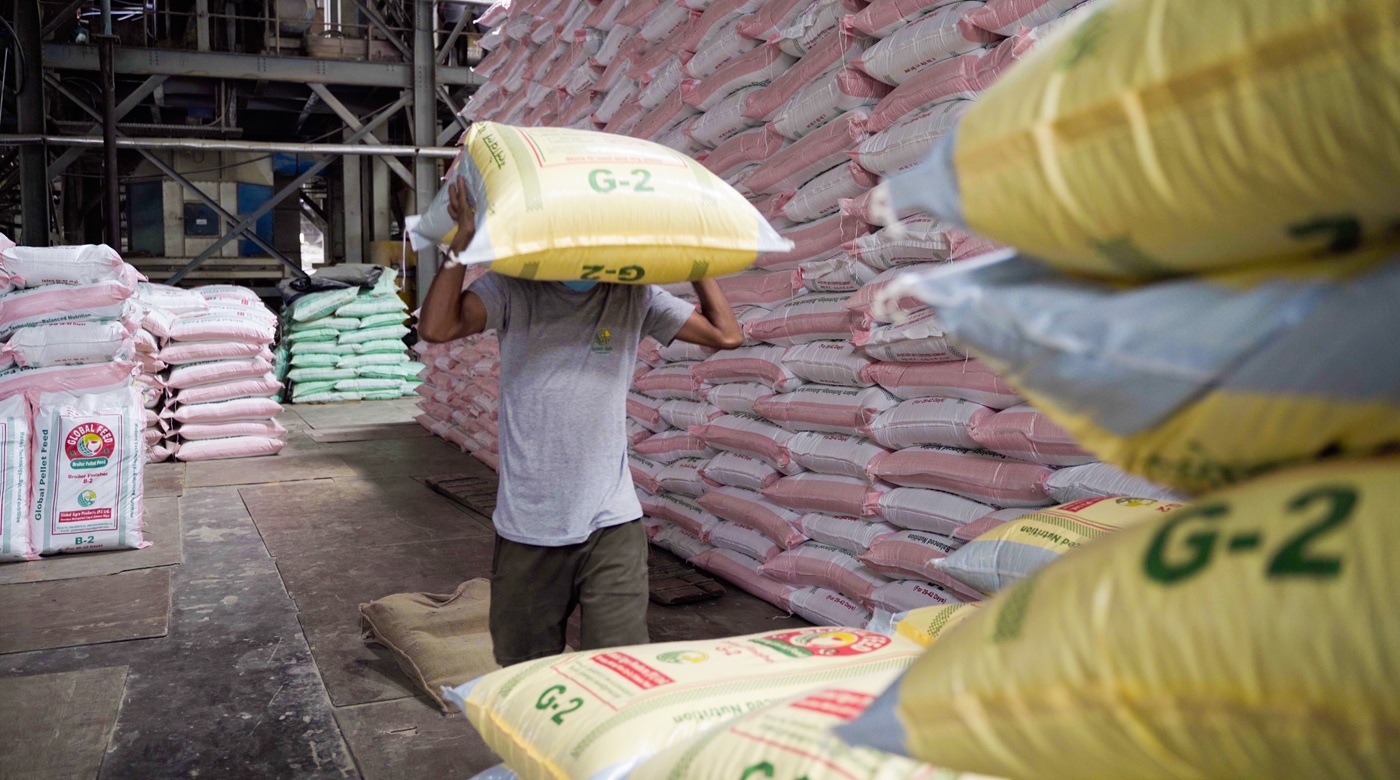
The increasing demand for foods of animal origin has driven the intensification of livestock production, which is increasingly reliant on manufactured compound feeds produced by the feed industry. These feeds are formulated from multiple ingredients to meet the nutritional requirements of specific animal species and production stages.
This intensification has been accompanied by an expanded and more complex feed supply chain, including increased cultivation of specific feed grains and fodder crops, the use of agricultural inputs such as pesticides and fertilizers, and the incorporation of new and unconventional feed materials, such as biofuel co‑products and other agro‑industrial by‑products.
Experience from past feed contamination incidents has highlighted the importance of effective feed safety systems and the need to prevent and control a broad range of hazards in feed, including established contaminants such as dioxins and mycotoxins (e.g. aflatoxins), as well as emerging and re‑emerging hazards.
The Codex Alimentarius and animal feed
The link between safe feed and safe food is well recognized within the Codex Alimentarius framework. In particular, the Codex Alimentarius Commission (CAC) promotes a risk‑based approach to food safety that emphasizes the prevention and reduction of food safety hazards at the earliest stages of the food chain, including the primary production of feed grains and fodder crops. This approach has increased awareness among primary producers, including farmers and operators in the feed sector, of their essential role and shared responsibility in the production of safe, good‑quality food of animal origin.
Recognizing the importance of safe animal feed to the production of safe food of animal origin, between 2000 and 2013 CAC established a dedicated ad hoc Intergovernmental Task Force on Animal Feeding (TFAF), which developed a trilogy of texts aimed at providing guidance to governments on risk management practices for good animal feeding across the feed-food chain, and on the conduct of prioritization and risk assessment of hazards in feed. Used together, they operationalize a Codex integrated risk-based approach for feed-related food safety across the feed-food chain. They support coherent national feed safety policies to ensure the safety of the food supply chain, effective regulatory oversight, and safe international trade in foods under the Codex and World Trade Organization (WTO) sanitary and phytosanitary (SPS) frameworks.
Following completion of work of the task force, work relevant to animal feed continues to be carried out in other Codex committees in relation to contaminants, residues of pesticides and veterinary drugs in food, and food hygiene. Importantly, CAC work on animal feeding only addresses feed safety as it impacts on food safety and does not cover issues such as animal welfare. Mainstreaming animal feeding aspects in the work of CAC is an explicit recognition of the role and responsibility of the feed sector to the production of safe, good quality food.
Key facts
Safe feed is a prerequisite for safe food: hazards in animal feed can transfer along the food chain to consumers, affecting food safety and quality.
Codex promotes risk-based approach to feed-related food safety: The Codex Alimentarius Commission emphasizes preventing and reducing feed hazards at the earliest stages of the feed-food chain.
Codex work on animal feeding addresses feed safety as it affects food safety. The topic is now addressed in relevant Codex committees, further to completion of the work of the task force.