


History
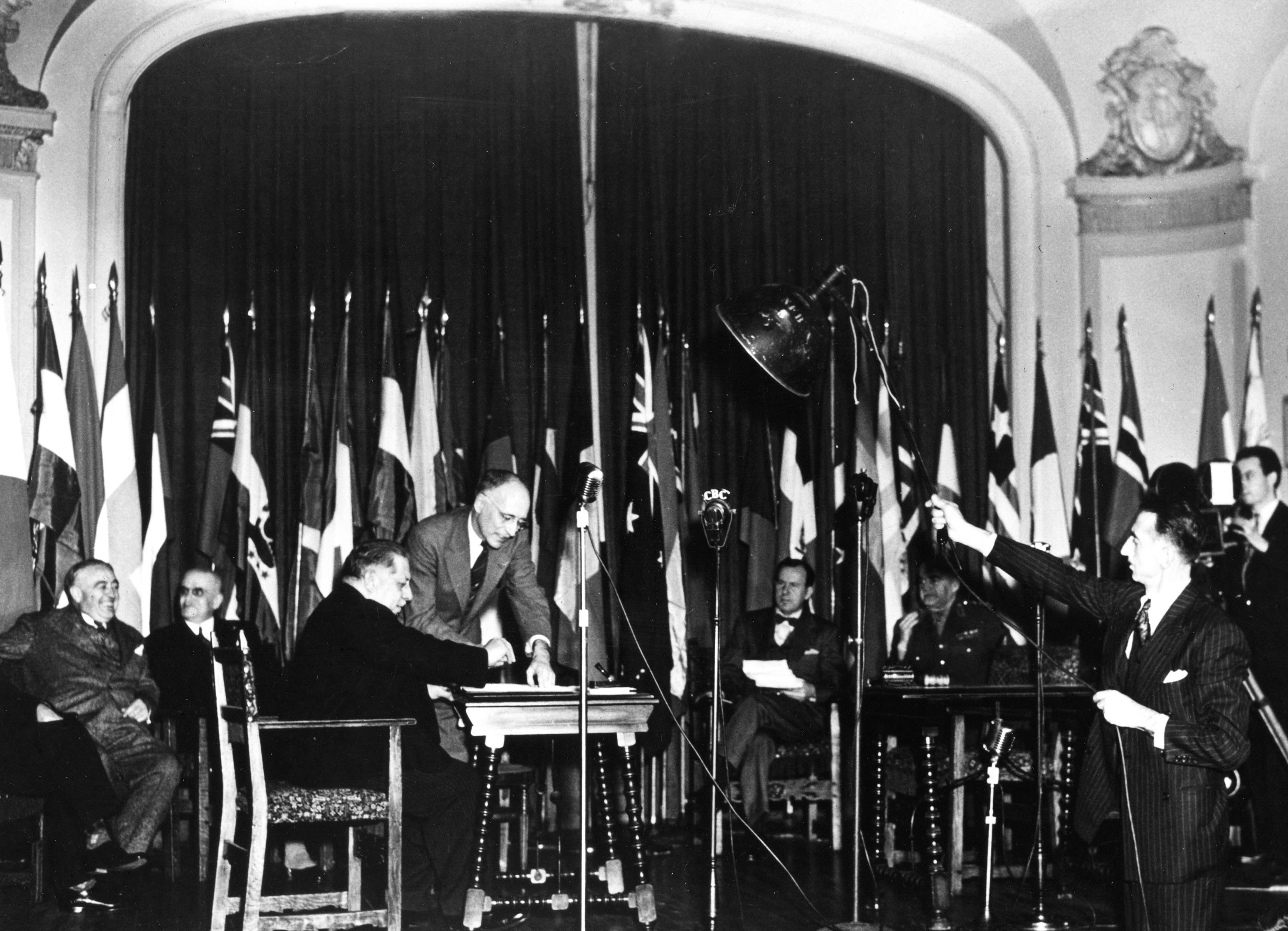
Foundation of the Food and Agriculture Organization of the United Nations (FAO)
In 1943, 44 governments, meeting in Hot Springs, Virginia, the United States of America, committed themselves to founding a permanent organization for food and agriculture.
In 1945 the first session of the FAO Conference in Quebec City, Canada, established FAO as a specialized United Nations agency.
United Nations Economic Commission for Europe (UNECE)
UNECE, established in 1947, sets out norms, standards and conventions to facilitate international cooperation within and outside Europe.
International Organization for Standardization (ISO)
ISO, established in 1947, is an independent, non-governmental international organization with a membership of 161 national standards bodies.
Through its members, ISO brings together experts to share knowledge and develop voluntary, consensus-based, market relevant international standards that support innovation and provide solutions to global challenges.
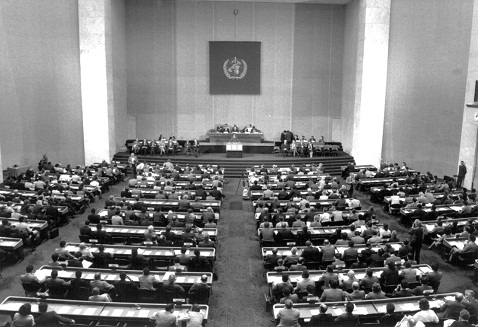
Foundation of the World Health Organization (WHO)
WHO began when its constitution came into force on 7 April 1948 – a date now celebrated every year as World Health Day.
The constitution was adopted by the International Health Conference held in New York from 19 June to 22 July 1946, signed on 22 July 1946 by the representatives of 61 states and entered into force on 7 April 1948. Later amendments are incorporated into this text.
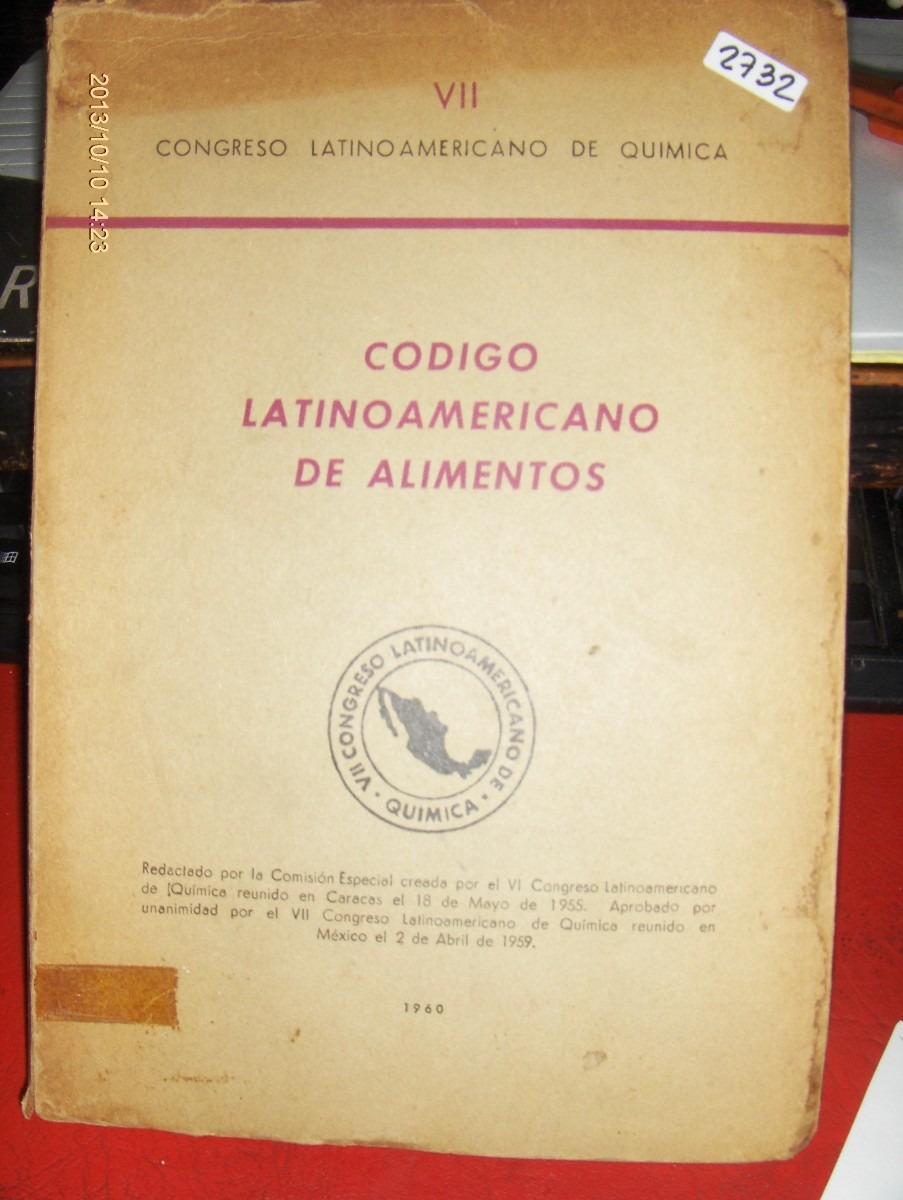
Código Latino americano de Alimentos
Argentina proposes a regional Latin American food code, the Código Latino americano de Alimentos.

Joint FAO/WHO expert meetings
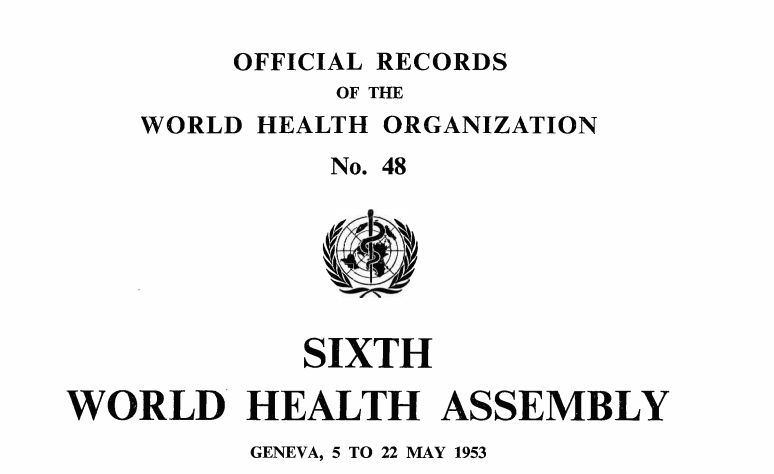
World Health Assembly
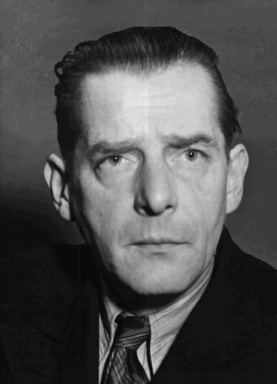
Codex Alimentarius Europaeus
Hans Frenzel, who was Minster of Public Alimentation in Austria after the 2nd World War, developed the idea of creating a European Codex Alimentarius Commission, and Austria actively pursued the creation of this regional food code.
With the consent of European states, the European Council of the Codex Alimentarius Europaeus was established in 1958.
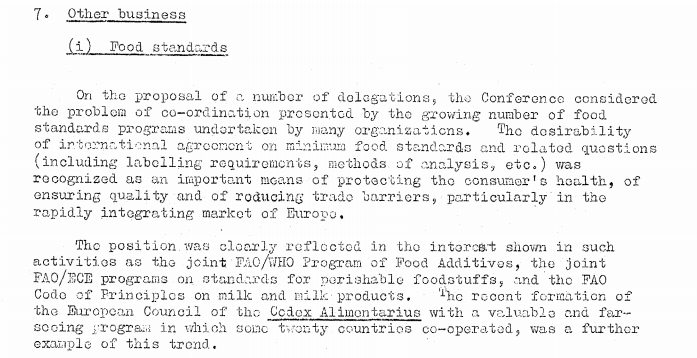
FAO Regional Conference for Europe
The first FAO Regional Conference for Europe endorsed the desirability of international – as distinct from regional –agreement on minimum food standards and invited FAO’s director-general to submit proposals for a joint FAO/WHO programme on food standards to the FAO Conference.
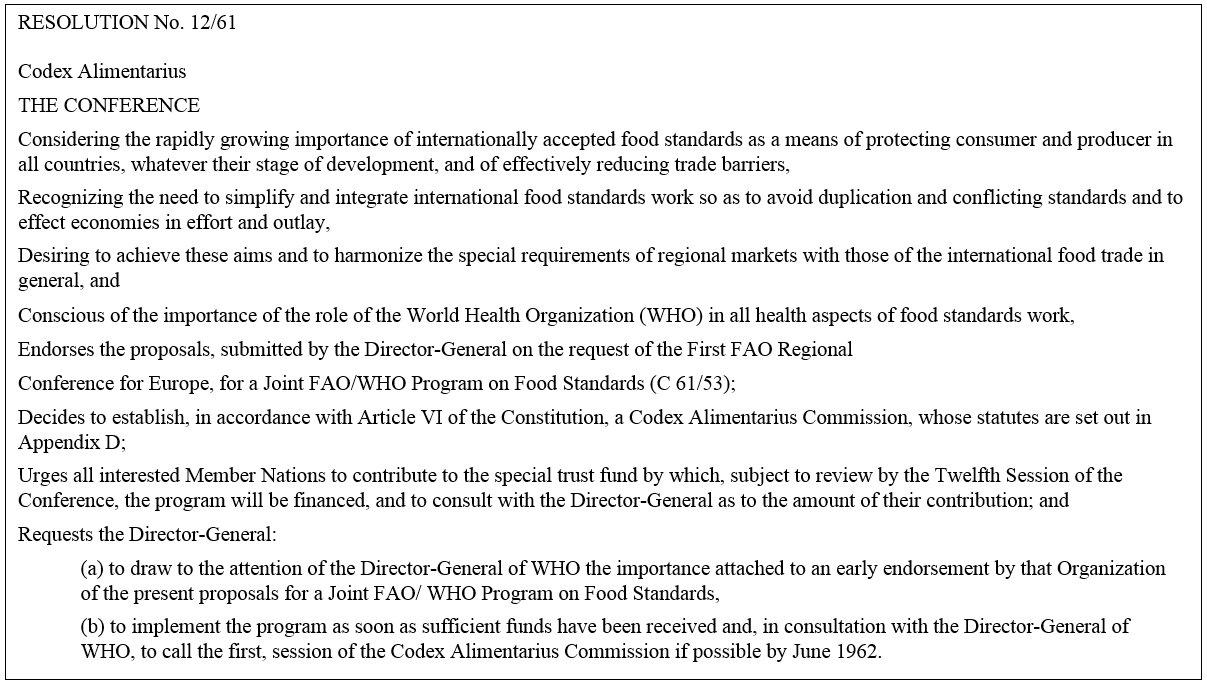
Eleventh FAO Conference decides to establish a Codex Alimentarius Commission
The Council of Codex Alimentarius Europaeus adopted a resolution proposing that its work on food standards be taken over by FAO and WHO.
The 11th FAO Conference established the Codex Alimentarius Commission and requested early endorsement by WHO of a joint FAO/WHO Food Standards Programme.
Read Resolution No. 12/61
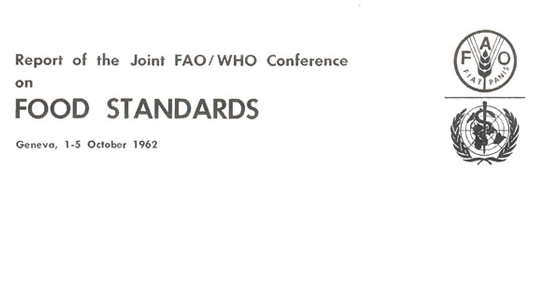
The joint FAO/WHO Food Standards Conference requests the creation of the Codex Alimentarius
The joint FAO/WHO Food Standards Conference requested that the Codex Alimentarius Commission implement a joint FAO/WHO food standards programme and create the Codex Alimentarius, which would be a collection of international standards, guidelines and codes of practice to ensure the safety and quality of food, protecting consumer health and facilitating fair practices in the food trade.
See the report here.
The World Health Assembly approves establishment of the Codex Alimentarius Commission
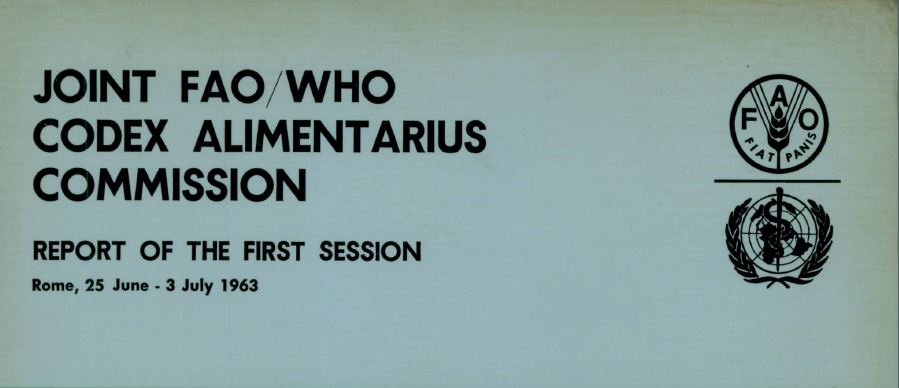
Inaugural meeting of the Codex Alimentarius Commission held in Rome, Italy
Recognizing the importance of WHO's role in all health aspects of food and considering its mandate to establish food standards the World Health Assembly approved establishment of the joint FAO/WHO Food Standards Programme and adopted the Status of the Codex Alimentarius Commission.
See the report here.

United Nations General Assembly (UNGA) promotes adoption of the Codex Alimentarius
UNGA stated that where possible, governments should adopt Codex Alimentarius texts.
FAO/WHO Conference on Food Standards, Chemicals in Food, and Food Trade
The FAO/WHO Conference on Food Standards, Chemicals in Food, and Food Trade recognized the importance of providing evaluations based on sound science and risk assessment principles.
FAO/WHO International Conference on Nutrition
The FAO/WHO International Conference on Nutrition recognized that food regulations should take into account the recommended international standards of the Codex Alimentarius Commission.
World Trade Organization (WTO) agreements
The WTO's Agreement on the Application of Sanitary and Phytosanitary Measures (SPS Agreement) and the Agreement on Technical Barriers to Trade (TBT Agreement) formally recognized international standards, guidelines and recommendations, including those of the Codex Alimentarius, as reference points for facilitating international trade and resolving trade disputes in international law.
FAO World Food Summit
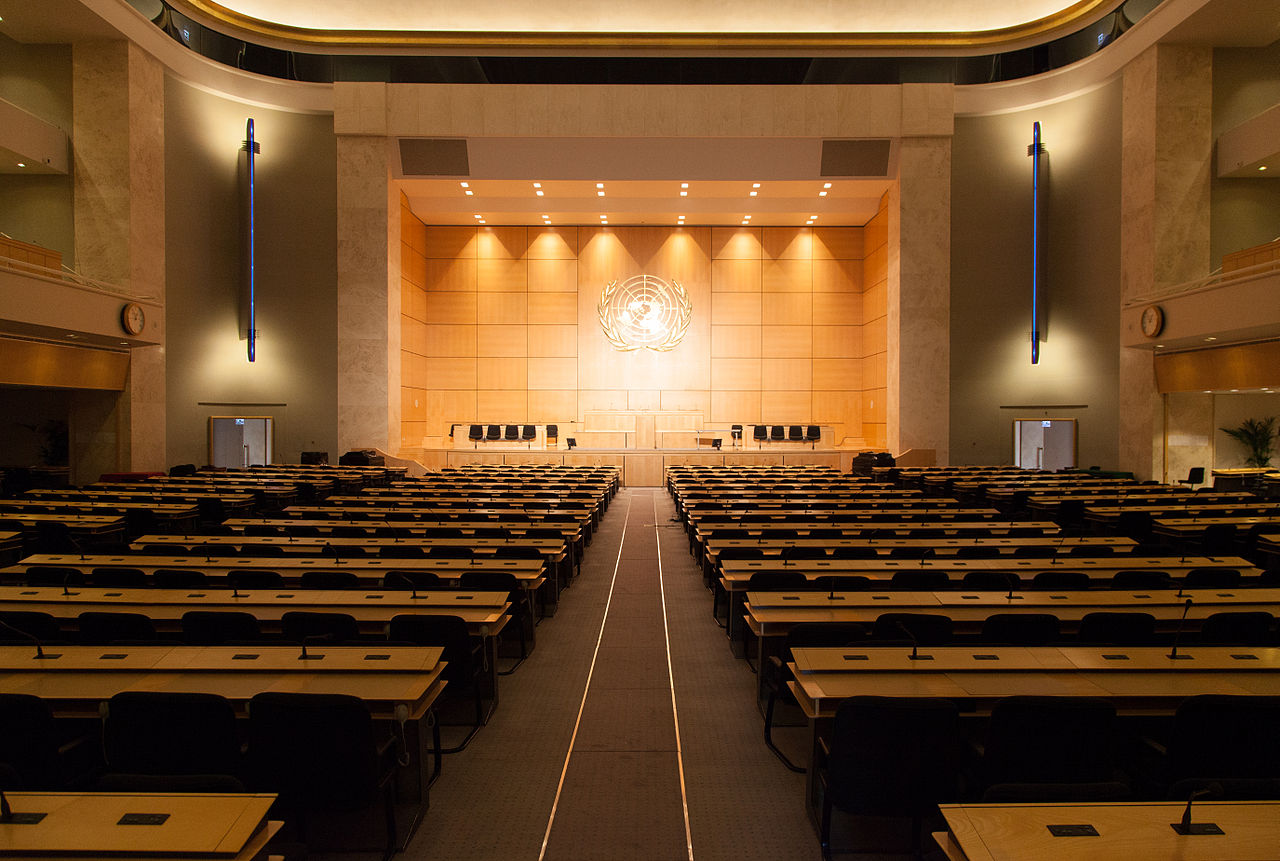
Fifty-third World Health Assembly
World Food Summit five years later
The World Food Summit: five years later was held at FAO headquarters in Rome, Italy, from 10 to 13 June 2002 and reaffirmed the important role of effective, science-based, internationally accepted standards of food safety.
Second FAO/WHO Global Forum of Food Safety Regulators
The Second FAO/WHO Global Forum of Food Safety Regulators affirmed that developing countries would benefit from greater use of basic texts when building their food control systems.
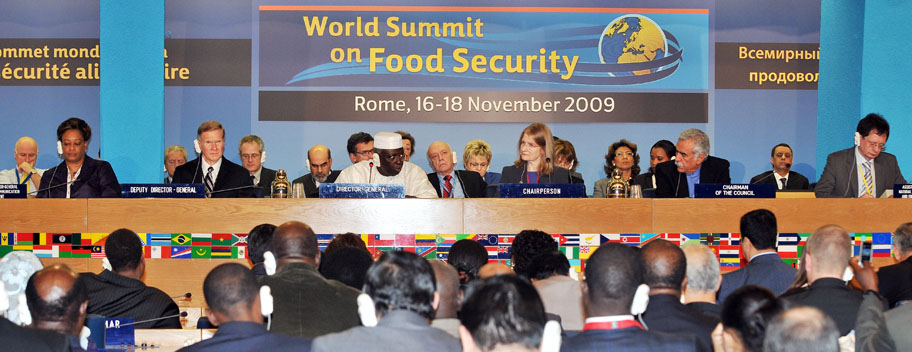
World Summit on Food Security
Second International Conference on Nutrition
The Second International Conference on Nutrition, Framework for Action states in Recommendation 54 that Members should actively take part in the work of the Codex Alimentarius Commission on nutrition and food safety, and implement, as appropriate, internationally adopted standards at the national level.
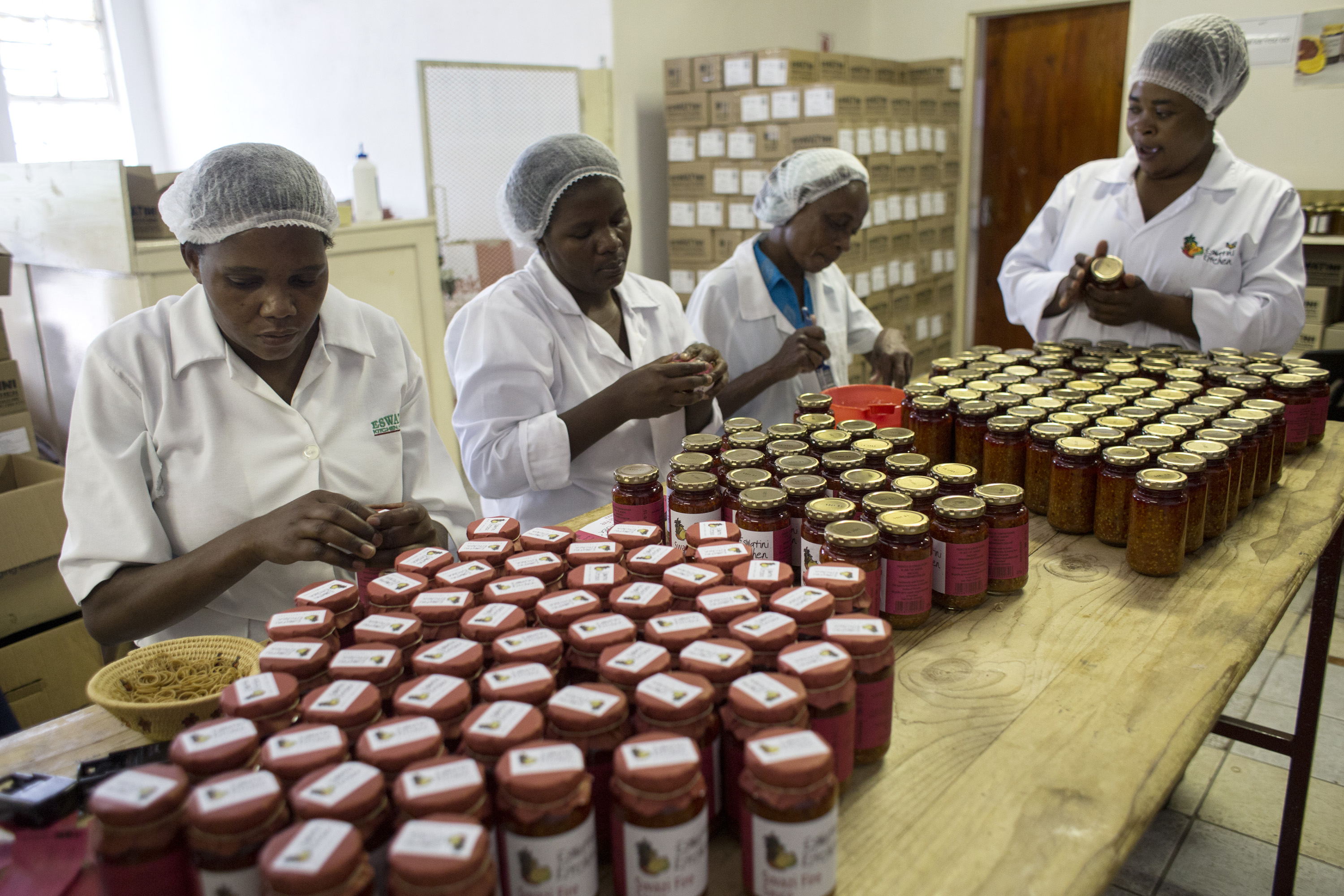
The 2030 Agenda for Sustainable Development
The 2030 Agenda for Sustainable Development was adopted, with 17 goals outlining “a shared blueprint for peace and prosperity for people and the planet, now and into the future.” The work of the Codex Alimentarius Commission is fundamental to achieving the Sustainable Development Goals (SDGs), in particular
SDG 1 - End poverty in all its forms everywhere (End Poverty)
SDG 2 - End hunger, achieve food security and improved nutrition and promote sustainable agriculture (Zero Hunger)
SDG 3 - Ensure healthy lives and promote well-being for all at all ages
(Good Health and Well-being)
SDG 8 - Promote sustained, inclusive and sustainable economic growth, full and productive employment and decent work for all (Decent Work and Economic Growth)
SDG 12 - Ensure sustainable consumption and production patterns (Responsible Consumption and Production)
SDG 17 -Strengthen the means of implementation and revitalize the Global Partnership for Sustainable Development (Partnerships for the Goals)
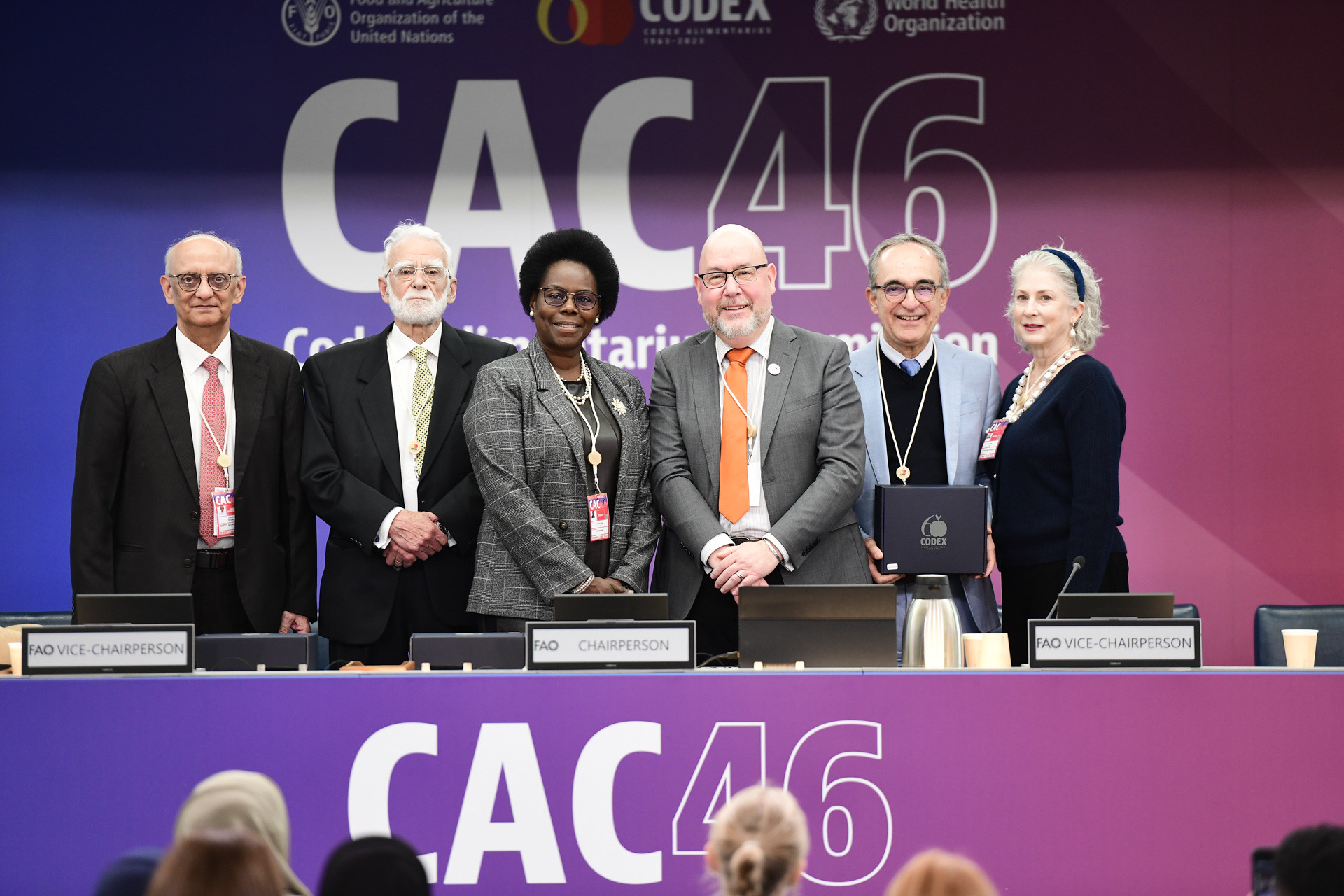
The Codex Alimentarius Commission at 60
Visit the Codex@60 page to find out more
UNGA recognizes Codex AMR texts
The UNGA adopted the political declaration of the high-level meeting on antimicrobial resistance (AMR), in which the world’s leaders made a commitment “to ensure that the use of antimicrobials in animals and agriculture is done in a prudent and responsible manner in line with the Codex Alimentarius antimicrobial resistance standards”.