


What do you know about food additives?
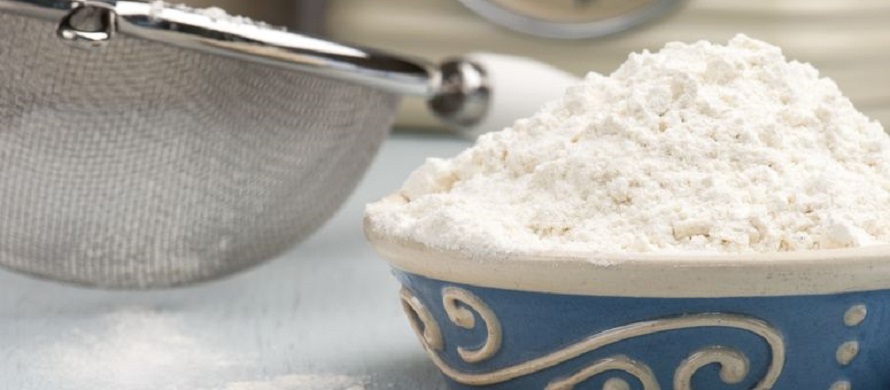
As the Codex food additives meeting continues in Jinan, China, we spoke to FAO Senior Food Safety Officer Markus Lipp about the need and use for additives in food and who decides if they are safe.
What do food additives do?
Food additives are substances that have a specific function. For example, they make the food safer by preventing microbiological spoilage, they can be used to colour food or make the flavour, smell, taste, even texture more appealing. Some additives are designed to facilitate food preparation, for those who desire it, e.g. self-rising flour, ready-to-use salad dressing. Food additives have been in use for centuries, such as plain salt to preserve fish or curing salt to make meat last longer. Similarly, the resins added to Greek or Roman wine acted as mild preservatives.
Why do we need food additives?
They can be part of a sustainable food system – to maintain the freshness and appeal or improve the shelf-life and nutritional values of foods.
Is it safe to use food additives?
With the increasing use of processed foods, food additives are more widely used. However, like for any other aspect of human society, scientific evolution brings new data to the discussion table. For example, boric acid was used as a food preservative until World War II, but it was later prohibited due to its toxicity. Today, in almost all countries the safety of food additives has to be determined prior to their use. National authorities, may use JECFA or their own assessments to demonstrate the scientific basis for the safe use of these additives.

JECFA meeting, Rome, Italy ©FAO/Giuseppe Carotenuto
You mentioned JECFA -what is that?
JECFA is an international body of experts run jointly by FAO and WHO that is responsible for determining whether food additives are safe for human consumption. JECFA is comprised of scientific experts from many scientific disciplines and many parts of the world. The experts are identified through a worldwide public call, which is followed be careful screening process.
How does it work?
JECFA experts review all available chemical, biochemical, toxicological, technological and any other relevant data on a given additive. The toxicological evaluations consider the possible short-term as well as long-term health effects to determine the maximum amount an individual food additive may be used in food. Once a food additive has been found to be safe by JECFA, its maximum permitted use level in food is recorded in the Codex General Standard for Food Additives.
What does that have to do with trade?
More and more food is traded internationally and transported over long distances regionally. Codex standards can facilitate the import and export of food by providing a common understanding and a dictionary of terms to all trading partners. The World Trade Organization (WTO) relies on the standards, guidelines and recommendations set by the Codex Alimentarius Commission to ensure food safety. In addition to food additives, the standards address all other aspects of modern food production, including veterinary drug and pesticide residues, contaminants, methods of analysis and sampling and hygiene.
Video
Watch how JECFA evaluates the safety of food additives.
Learn more about JECFA in FAO and WHO
Read the WHO fact sheet on food additives
Consult the Codex General Standard on Food Additives
Related content
Celebrating one-year anniversary of the JECFA Toolbox for Veterinary Drug Residues Risk Assessment
As the 28th session of the Codex Committee on Residues of Veterinary Drugs in Foods (CCRVDF28) approaches, the FAO JECFA Toolbox for Veterinary Drug Residues Risk Assessment marks its first anniversary. This...
-jpg.tmb-thb5x4.jpeg?Culture=en&sfvrsn=2a63cdc3_1)
High-level event explores standards as a catalyst for economic growth
Standards are "the hidden infrastructure of modern economies" according to the World Bank’s World Development Report 2025, which focuses on standards for development. In a corroboration of the Codex maxim...
Standards for Development: World Bank and Codex to host high-level webinar
On 2 March 2026, the World Bank Group Institute for Economic Development and the Codex Secretariat will host a high-level session to discuss the role of standards in global development. With the participation...
FAO launches toolbox to assess the risks of veterinary drug residues in food
On 27 February 2025, the Food and Agriculture Organization of the United Nations (FAO) officially launched the JECFA Toolbox for Veterinary Drug Residues Risk Assessment. FAO hosted a launch event on Zoom, attracting...
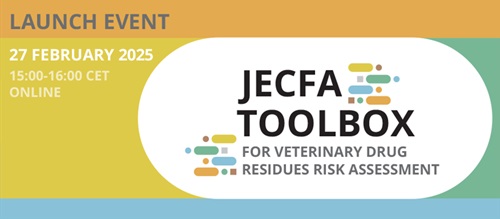
Launch event / JECFA Toolbox for Veterinary Drug Residues Risk Assessment
The Food and Agriculture Organization of the United Nations (FAO) has launched a comprehensive and practical toolbox designed to help those assessing the risks of veterinary drug residues in food. The...
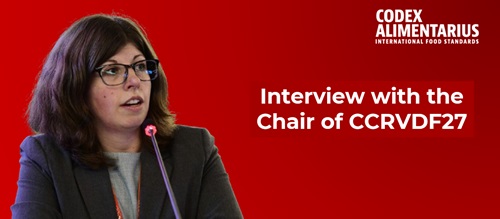
CCRVDF27 / "Well positioned to address new challenges on the safety of veterinary drug residues"
The Codex Committee on Residues of Veterinary Drugs in Foods (CCRVDF) takes place in Omaha, Nebraska, United States of America from 21 to 25 October 2025. The Committee will be chaired for the second time...
.tmb-thb5x4.jpeg?Culture=en&sfvrsn=130e936e_1)
CCFFP36 / Codex Committee meets for the second time by correspondence
The Codex Committee on Fish and Fishery Products begins its 36th session on Monday 7 Otober 2024. Meeting for the second time by correspondence via the Codex online platform, CCFFP36 is set to complete...
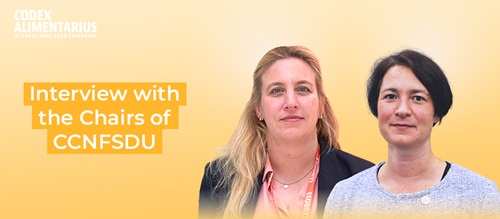
CCNFSDU / Building active, open exchange and achieving consensus
The forty-fourth meeting of the Codex Committee on Nutrition and Foods for Special Dietary Uses (CCNFSDU) will take place 2–6 October in Dresden, Germany. We spoke to Martine Püster and Carolin Bendadani,...
Codex and the SDGs – input to the High-Level Political Forum
The Ministerial segment of the High-Level Political Forum on Sustainable Development (HLPF) meets this week, to review progress on a cluster of Sustainable Development Goals (SDGs). The Codex Alimentarius...