


Incoming regional coordinators learn the key to Codex work

In the second of a series of online webinars organized by the Codex Secretariat for the incoming coordinators representing the six regions in the Codex Alimentarius Commission, the focus was on their role in the Executive Committee, the next session of which will take place, again virtually, from 13 to 21 January 2021.
Guilherme Da Costa, Chairperson of the Codex Alimentarius Commission said: “The successful achievement of Members in Codex is directly related to the commitment of the Regional Coordinators to each Member in the region”.
The Codex Executive Committee (CCEXEC) is made up of six Regional Coordinators who together with seven Members elected geographically and the Chairperson, plus three Vice Chairpersons, are charged with safeguarding standards development and acting both as a strategic branch and a conduit to the wider Commission for other special issues.

Preparation for effective participation in Codex.
Khalil Alswelem, Saudi Arabia, said that what he had learned in these workshop sessions was that “only preparation can lead to effective participation in Codex” and that they would be looking in the Near East to increase interaction and communication as well as exchanges on science between countries with different levels of experience.
The new Coordinator for North America and the South West Pacific, Fiji, represented at the session by Vio Ratu Veretawatini said he realized “communication with members” was another key to success at the CCEXEC. Strengthening participation in the region is a goal Fiji is setting with an emphasis on capacity at the national level.
Rommel Betancourt from Ecuador is the Coordinator for the Latin America and Caribbean region. “Coordinators are an important part of the core of the CCEXEC”, he said, looking forward to taking a proactive role. One of the goals of Ecuador’s leadership in the region will be implementing the FAO/WHO diagnostic tool to assess the status of national Codex programs.

Codex workshop for Regional Coordinators held online November 2020
“I think today I gained a lot from former Coordinators and I learnt how important it is to reflect the views of the whole region and not just one country” said Tian Jing from China, the new Coordinator for the Asian region. China will be seeking to identify barriers to participation in the region to improve engagement in Codex meetings, physically or virtually.
Hakim Mufumbiro from Uganda is the incoming Coordinator for Africa. “Our key deliverables in the coming months will include examining constraints to participation and discussing priority areas for the region”.
The Coordinator for the European region in Codex has not changed and Kazakhstan will continue to serve for a second term. “A Coordinator should be at the epicenter of all Codex events in your region”, said Nailya Karsybekova, encouraging close collaboration with the Codex parent organizations and other stakeholders in the region as well as taking the lead in the implementation of the Codex Strategic Plan.
Both Codex Secretary Tom Heilandt and Chairperson Da Costa underlined the exceptional contribution of the outgoing Coordinators, Chile, India, Iran, Kenya, Kazakhstan and Vanuatu who served over an extended term and through the initial period of the Covid-19 pandemic. “Your proactive attitude, cooperation and leadership have been paramount for the evolution of Codex standard setting both in and beyond your regions”, said Da Costa.
Read more
Next CCEXEC session- working papers
Main photo (top)
China, Ecuador, Uganda
Fiji, Kazakhstan, Saudi Arabia
Related content
Germany to host the International Training for Safer Food 2026
For the 7th time, the German Federal Office of Consumer Protection and Food Safety (BVL), will host the International Training for Safer Food (ITS Food). ITS Food is a training series on food safety risk...
-(cropped).tmb-thb5x4.jpeg?Culture=en&sfvrsn=21f367b3_1)
CCEXEC89 / Executive committee deliberations start ahead of the 48th Commission meeting
The 89th Session of the Codex Executive Committee (CCEXEC) has commenced at FAO headquarters in Rome, ahead of the 48th Session of the Codex Alimentarius Commission (CAC), which will be held in the week...
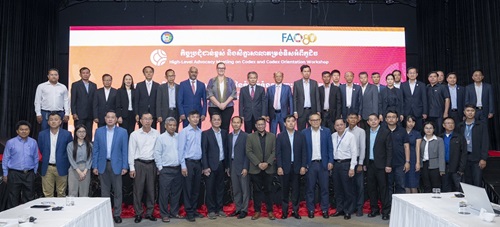
Cambodia ups its Codex game
As an initial and strategic step to reinforce the national Codex programme in Cambodia — especially following the restructuring of competent authorities responsible for Codex — a High-Level Advocacy Meeting...
Virtual Training for the Implementation of HACCP in Fisheries and Aquaculture in Spanish-2
A deep understanding of the hazards associated with fishery and aquaculture products is essential for the effective implementation of a HACCP system. This knowledge helps reduce reliance on traditional...
Virtual Training for the Implementation of HACCP in Fisheries and Aquaculture in Spanish
A deep understanding of the hazards associated with fishery and aquaculture products is essential for the effective implementation of a HACCP system. This knowledge helps reduce reliance on traditional...

FAO publishes Food Safety Foresight Framework Meeting summary report
The Food and Agriculture Organization of the United Nations (FAO) has published the summary report of the Food Safety Foresight Framework Meeting, which took place from 1–3 April 2025 at FAO headquarters...

Launch event / JECFA Toolbox for Veterinary Drug Residues Risk Assessment
The Food and Agriculture Organization of the United Nations (FAO) has launched a comprehensive and practical toolbox designed to help those assessing the risks of veterinary drug residues in food. The...
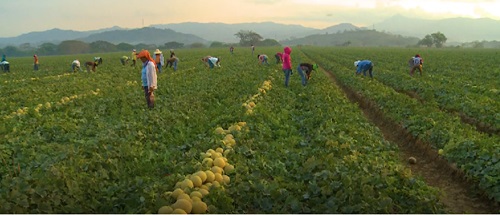
“Codex and a Honduran emergency” – New Codex video out now
With the growth in the international trade in food comes the need to be able to prevent, detect and manage foodborne diseases across borders. Foodborne diseases can occur even when there are robust food...
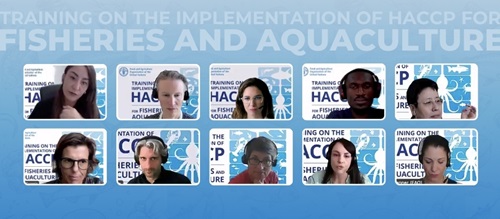
Importance of GHP and HACCP for fisheries and aquaculture showcased at FAO virtual training event
The importance of aquatic foods in global nutrition and food security cannot be overstated. Valued for their nutritional benefits and their contribution to livelihoods, the production and per capita consumption...