


Contaminants committee proposes new maximum levels for cadmium in chocolate
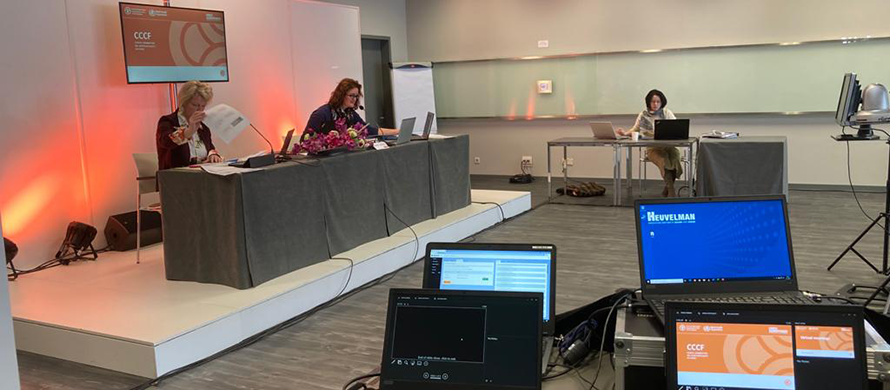
The 14th session of the Codex Committee on Contaminants in Food (CCCF14) has recommended for adoption to the Codex Alimentarius Commission new maximum levels (MLs) for cadmium in chocolate. Codex MLs ensure food does not contain contaminants at levels which could threaten human health. The levels set for cadmium are 0.3mg/kg for the category of chocolate containing up to 30 percent cocoa total solids and 0.7mg/kg for the 30 to 50 percent category.
Ecuador led the work on developing the new levels. “CCCF14 has recommended the adoption of the ML for cadmium in chocolates after several years of extensive discussions,” said Rommel Betancourt, acknowledging the work of the expert scientific advice group, coordinated by the Codex parent organizations FAO and WHO, that develop recommendations for Member Countries at Codex meetings. “The membership compromise is an example of how to get consensus to strengthen the Codex for protecting consumer health and establishing fair practices for the international food trade,” he said.

Simplicity for global compliance, enabling international trade.
“The Codex adoption of maximum levels for cadmium in chocolate products is a positive step forward for common global standards, based on expert scientific risk assessment and global data from producing regions. A single standard means simplicity for global compliance, enabling international trade. Moreover, basing standards on global data helps avoid unnecessary food waste,” said Martin Slayne, of The International Confectionery Association, a Codex observer.

Exposure could exceed the tolerable weekly intake.
However, the decision taken on the proposed levels was not unanimous. Veerle Vanheusden represented the European Union (EU) at the virtual meeting. The EU reserved its position on the MLs for cadmium in chocolate, “because these products are important contributors to the exposure of EU consumers and in particular of EU children, for which the mean dietary exposure could exceed the tolerable weekly intake established by the European Food Safety Authority by about twofold,” she said.
Vanheusden added that it was not possible to reach a compromise because MLs which the EU considers to be sufficiently protective for consumers, are much lower than the ones put forward in Codex. “At the Commission the EU intends to repeat its reservations,” she said.
Reduction of lead in foods
The committee will be sending a revised code of practice for the reduction of lead in foods for adoption at the next Commission, “an important accomplishment for a virtual meeting,” said Lauren Robin of The United States who worked closely with other Member Countries to ensure the text achieved consensus. “The code will help governments and industry follow best practices and supports work on lead MLs. It includes new information on topics like filtration aids for beverages and keeping farms safe from lead,” she said.

Protecting consumers from exposure to excess methylmercury.
Countries also agreed to start new work on MLs for two fish species, orange roughy and pink cusk-eel — aiming to complete by 2022. “Establishing Codex MLs for these species balances protecting consumers from exposure to excess methylmercury, making sure they get all the nutritional benefits of fish consumption, while supporting a harmonized international approach to the trade in these species,” said Andrew Pearson, New Zealand.
Chairperson Sally Hoffer, The Netherlands, thanked the 400 plus delegates who took part in the virtual sessions and was delighted the committee managed to complete a full agenda. “I am very happy with the results because we got these MLs and the code of practice to advance for adoption by the Commission,” she said.
Read more
CCCF14 meeting page including working documents and draft standards
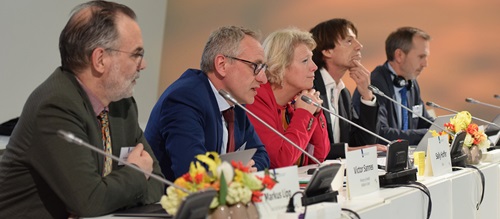
Main photo, Chairperson Sally Hoffer (left) with Astrid Bulder at the CCCF studio in Utrecht, The Netherlands.
Related content
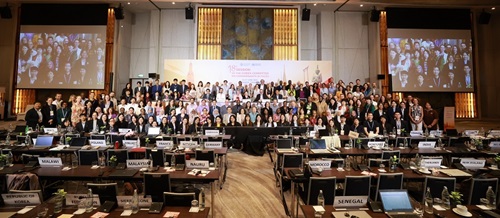
CCCF18 / Consumer health once again at the forefront
The 18th Session of the Codex Committee on Contaminants in Foods (CCCF) concluded in Bangkok, Thailand. The meeting, co-hosted by the Kingdom of the Netherlands and Thailand, saw significant progress on...
.tmb-thb5x4.jpeg?Culture=en&sfvrsn=b7d9d97f_1)
CCCF18 / Co-hosted session opens with commitment to collaboration
The 18th session of the Codex Committee on Contaminants in Food (CCCF) has opened in Bangkok, Thailand, where the Committee’s host, the Kingdom of the Netherlands will co-host proceedings with Thailand. Anongnat...
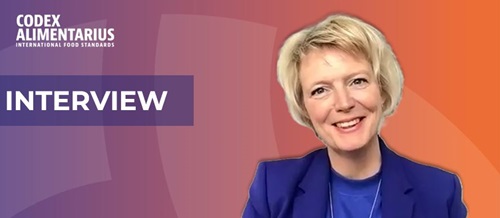
CCCF18 / "Complex issues with real-world impact"
The Eighteenth Session of the Codex Committee on Contaminants in Foods (CCCF18) will take place 23–27 June 2025 in Bangkok, Thailand. We spoke to Sally Hoffer, from the Dutch Ministry of Agriculture, Nature...
.tmb-thb5x4.jpeg?Culture=en&sfvrsn=ddbf8825_1)
CCCF17/ President of Panama gives opening speech for contaminants meeting
The 17th session of the Codex Committee on Contaminants in Food (CCCF) was declared officially open in Panama City, 15 April, following speeches from His Excellency the President of the Republic of Panama,...
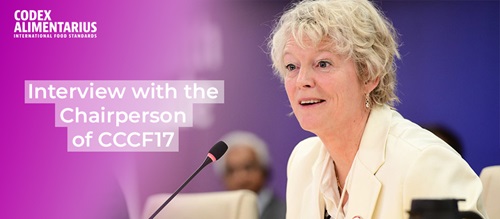
“Move things forward and get new Codes out there in the world” - Contaminants committee begins next week
The Seventeenth Session of the Codex Committee on Contaminants in Foods (CCCF17) will take place 15–19 April 2024 in Panama City, Panama. As the meeting approaches, we spoke to Sally Hoffer, from the Dutch...
CCCF / cooperation at international level key to safety and quality of food
“In light of today’s global political and environmental problems, the work of the Codex Alimentarius members on ensuring the safety of food is more relevant than ever,” said Ernst Kuipers, Minister of...
.tmb-thb5x4.jpeg?Culture=en&sfvrsn=a4fae773_1)
There are many challenges coming our way – the future of food is discussed at a CCCF side event
The challenges and opportunities posed by the emerging issues in agrifood systems identified by FAO’s foresight programme were outlined at a side event of the Codex Committee on Contaminants in Food in...
CCCF16 / technical working group sessions underway at Codex contaminants committee
Delegates gathered in Utrecht, Netherlands (Kingdom of the) on Monday 17 April 2023 to take part in working groups on a range of technical topics that will be on the agenda in the full plenary of the Codex...
The safety standards set by CCCF at the core of the Codex mandate
Over 400 delegates gathered online for the opening of the Codex Committee on Contaminants in Food (CCCF) which is taking place from 9 to 24 May 2022, hosted by The Netherlands from Utrecht. The committee...