


CCPR52 / "A sound, open and reliable international system" – Prof QIAO chairs CCPR
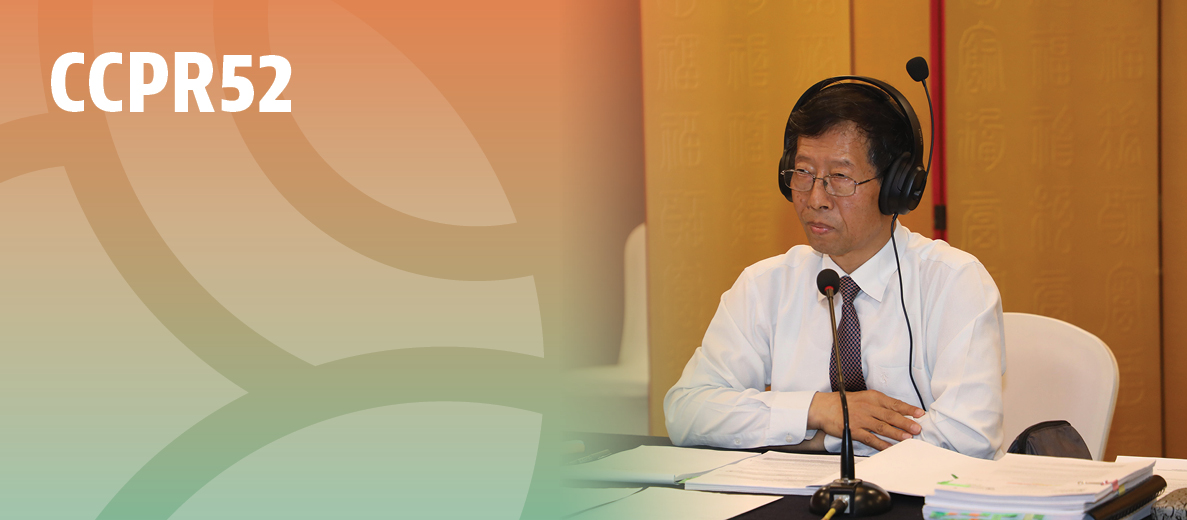
As the Codex Committee on Pesticide Residues (CCPR) continues virtually, we spoke to Xiongwu QIAO, Chairperson of CCPR. Professor QIAO is Counsellor of the Government of Province Shan, People’s Republic of China.
Chairperson QIAO, thanks for your time. Let’s start with the million-dollar question. What are pesticides and how are they used?
Pesticide means any substance intended for preventing, destroying, attracting, repelling or controlling any pest including unwanted species of plants or animals during the production, storage, transport, distribution and processing of food, agricultural commodities, or animal feeds or which may be administered to animals for the control of ectoparasites. Including substance intended for use as a plant growth regulator, defoliant, desiccant, fruit thinning agent, or sprouting inhibitor and substances applied to crops either before or after harvest to protect the commodity from deterioration during storage and transport.
So are products like cereals, fruits and vegetables safe to eat if they have been treated with pesticides?
Due to the global population growth, the limitation of arable land and water and soil resources, food security cannot be guaranteed without pesticides. In the world of today, we have to use pesticides to ensure enough and high-quality food. Yet we also acknowledged that the overuse of pesticides may pose a risk to public health and the environment. However, as long as the use of plant protection products according to approved label and pesticide residues conform to Codex standards, those cereals, fruits and vegetables are safe to consume. Not all food that has been treated with pesticides is likely to pose concerns for consumer health - which is a prejudice that should be eliminated by all of us together.
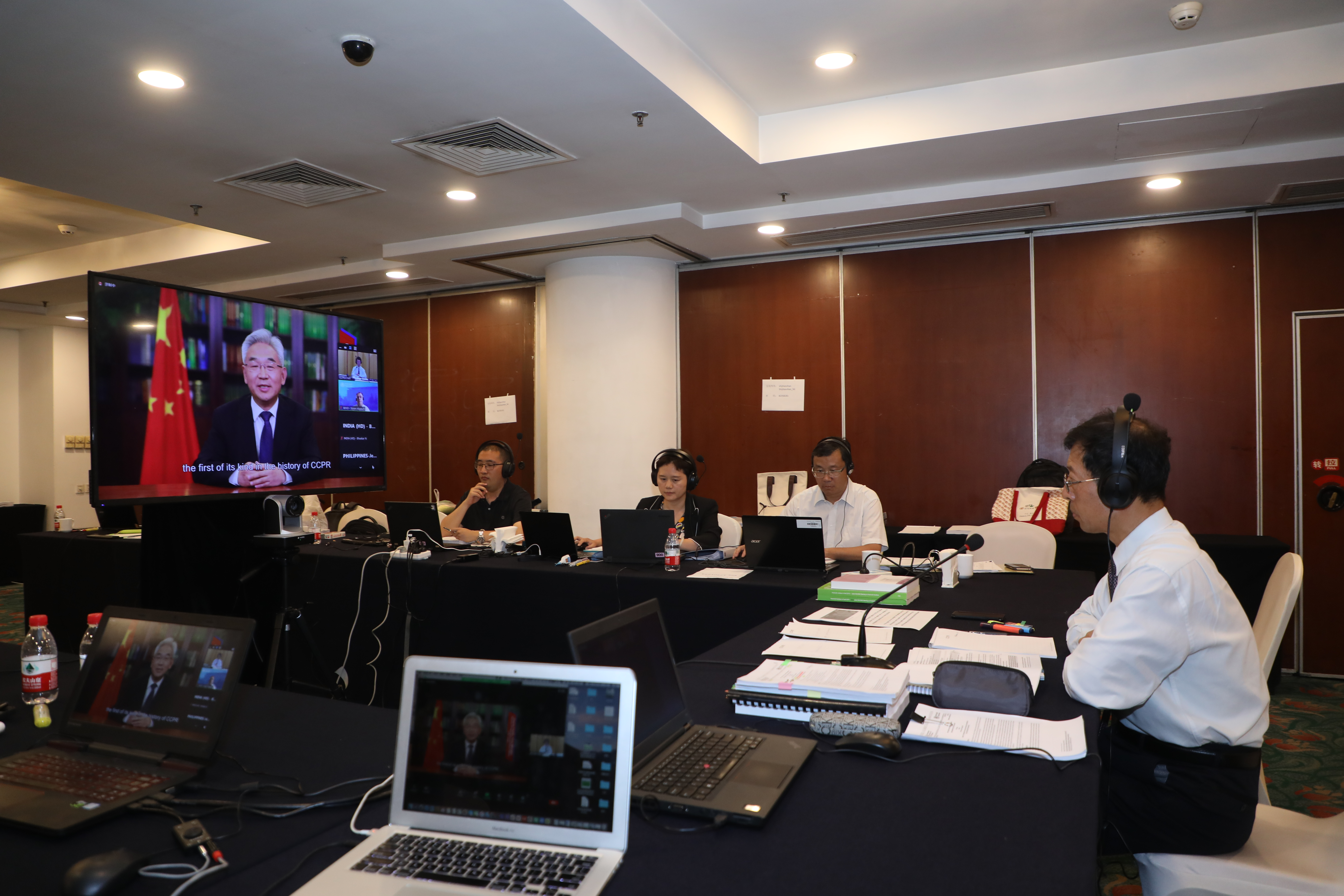
The CCPR Secretariat
How does the work of CCPR protect consumer health and facilitate fair practices in the food trade? Where is it most important?
What CCPR does is to review and advance the Codex standards on pesticide residues to protect consumer health and build a sound, open and reliable international system of pesticide residues standards to facilitate safe and fair trade in food commodities by eliminating technical trade barriers. JMPR recommends MRLs based on sound risk assessment for consideration by CCPR anddelegations have fully and extensively discussed these recommendations and reached a consensus on MRL proposals for adoption by the Codex Alimentarius Commission. The comprehensive framework of Codex Maximum Residue Limits (MRLs) and technical guidelines related to the development of MRLs are the most important. The risk assessment, the risk management and the risk communication are closely interrelated and indispensable.
What do you see as highlights or key issues on the agenda this year?
There are a lot of agenda items in CCPR52. Among the 18 items, the report on responses to specific concerns raised by CCPR arising from the 2019 JMPR regular meeting,theMRLs for pesticides in food and feed arising from the extraordinary and regular meetings of the 2019 JMPR and the Establishment of Schedules and Priority Lists of Pesticides for Evaluation / Re-Evaluation by JMPR are at the most importance. Other working documents are also important because they are the basic guidelines for developing pesticide residue limits. Comparing with the physical meeting, we have less time but much more work to do in the virtual meeting. Hence, we must prioritize key items while taking into account others to the extent possible, considering time limitation of virtual meetings.

Strengthen mutual understanding and cooperation
What is your hope for the outcome of this session? How do you see it making a difference in countries around the world?
First of all, I hope the Delegates can reach consensus on some key items, such as Codex MRLs and technical guidelines. Second, I hope the outcome of this session can not only have a significant influence on the development of national pesticide residues standards, but also play an increasingly important role in strengthening exchanges and cooperation in pesticide regulation among different countries. Last, I also hope all Member States can strengthen mutual understanding and cooperation through this platform. Today, we tide over difficulties together, including the difficulties arising from the Covid-19 pandemic, to facilitate the establishment of international standards on pesticide residues, and to achieve more fruitful outcomes.
Read more
Follow the meeting documents on the Codex web site.
Read about the role of Codex in Pesticides
Related content
-jpg.tmb-thb5x4.jpeg?Culture=en&sfvrsn=2a63cdc3_1)
High-level event explores standards as a catalyst for economic growth
Standards are "the hidden infrastructure of modern economies" according to the World Bank’s World Development Report 2025, which focuses on standards for development. In a corroboration of the Codex maxim...
Standards for Development: World Bank and Codex to host high-level webinar
On 2 March 2026, the World Bank Group Institute for Economic Development and the Codex Secretariat will host a high-level session to discuss the role of standards in global development. With the participation...
Pesticide residue committee concludes session, paving the way for new international standards
The Codex Committee on Pesticide Residues (CCPR) wrapped up its 56th session in Santiago, Chile. The Committee Chairperson, Dr. Weili Shan, extended his gratitude to the delegates as well as to Chile for...
CCRVDF27 / "Well positioned to address new challenges on the safety of veterinary drug residues"
The Codex Committee on Residues of Veterinary Drugs in Foods (CCRVDF) takes place in Omaha, Nebraska, United States of America from 21 to 25 October 2025. The Committee will be chaired for the second time...
.tmb-thb5x4.jpeg?Culture=en&sfvrsn=130e936e_1)
CCFFP36 / Codex Committee meets for the second time by correspondence
The Codex Committee on Fish and Fishery Products begins its 36th session on Monday 7 Otober 2024. Meeting for the second time by correspondence via the Codex online platform, CCFFP36 is set to complete...
CCNFSDU / Building active, open exchange and achieving consensus
The forty-fourth meeting of the Codex Committee on Nutrition and Foods for Special Dietary Uses (CCNFSDU) will take place 2–6 October in Dresden, Germany. We spoke to Martine Püster and Carolin Bendadani,...
Codex and the SDGs – input to the High-Level Political Forum
The Ministerial segment of the High-Level Political Forum on Sustainable Development (HLPF) meets this week, to review progress on a cluster of Sustainable Development Goals (SDGs). The Codex Alimentarius...
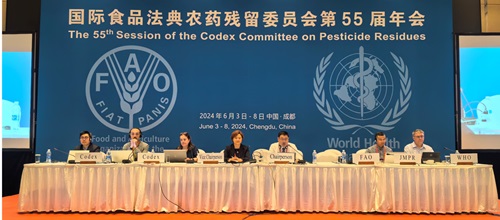
CCPR / Meeting concludes “Another successful gathering of the experts on pesticides”
The Codex Committee on Pesticide Residues (CCPR) has concluded its 55th session in Chnegdu, P.R. China, with the Committee Chairperson, Dr Weili SHAN, expressing his “sincere thanks” to all the Chairs...
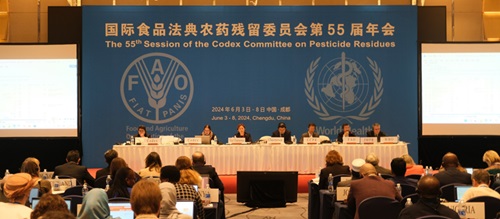
CCPR55 / A productive and efficient committee with sense of warm collaboration and mutual respect
The 55th session of the Codex Committee on Pesticide Residues (CCPR55) is meeting this week, with more than 250 delegates attending the session physically in Chengdu, People's Republic of China. Mr Xingwang...