


Codex survey / Results show 80 percent satisfaction in use and impact of Codex texts
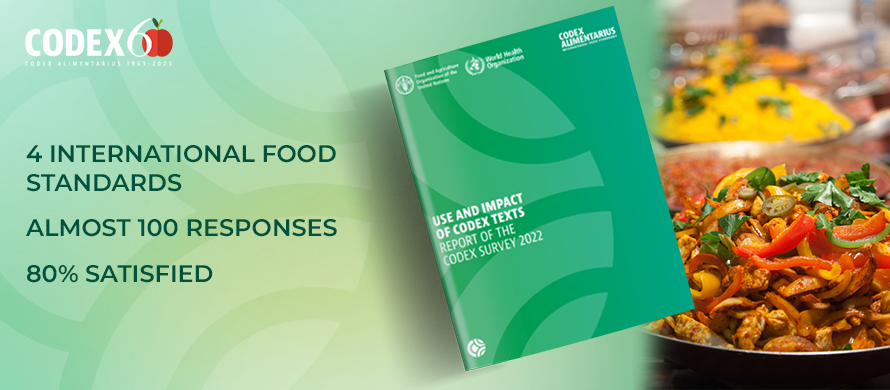
The first survey on the use and impact of Codex texts, launched on 20 September 2022, reports that the large majority of Codex Members, more than 80 percent, are satisfied with these international food texts.
Steve Wearne, Chairperson of the Codex Alimentarius Commission, welcomed the publication and commented that “Monitoring the use and impact of Codex texts provides key information on how Codex is assisting Members in protecting consumer health and facilitating fair trade practices”. He also underlined that “by adhering to Codex standards, Members can prevent foodborne illnesses, uphold the credibility of their products in the global marketplace, and build trust among consumers”.
Ninety-eight out of the 189 Codex Members responded to the survey, with a positive 52 percent turnout. The first survey focused on the following Codex texts: General Standard for Contaminants and Toxins in Food and Feed, General Principles of Food Hygiene, General Standard for the Labelling of Pre-packaged Foods, and General Principles for the Addition of Essential Nutrients to Foods.

References for elaborating national standards
“This was the first time that information has been collected in a systematic and consolidated manner on a global basis, providing solid evidence on the use and impact of Codex texts. Based on the analysis, it is evident that Codex texts play a significant role in ensuring food safety and quality worldwide”, said Farid El Haffar, Codex Secretariat Officer.
Survey analysis showed Codex texts to be fairly well used as a baseline to inform food legislation, policies, regulations, programmes, and practices at the national level. Fifty two low- and middle-income countries reported a greater impact by Codex texts in supporting legislation, policies, national food control systems, university curricula, training, and awareness raising. Forty six high-income countries reported that they generally have more established food control systems, more resources, and advanced technical expertise.
Yupa Laojindapun, Director of the Office of Standard Development at the National Bureau of Agricultural Commodity and Food Standards, Codex Contact Point of Thailand commenting the results of the survey said that “Over the years, Codex texts have been widely used in Thailand. We have adopted numerous Codex texts as national standards, and we use them as references for elaborating national standards and for trade negotiations”.
The findings also highlighted the need for continued efforts to monitor and address the challenges Codex Members face in the implementation and utilization of Codex texts. Recommendations include increasing awareness of Codex texts among national stakeholders, prioritizing capacity building and training, and improving dissemination of Codex texts.
The Codex Secretariat will continue facilitating communication and collaboration among Codex Members and other stakeholders to ensure that Codex texts are utilized effectively and efficiently. In this context, The Codex Secretariat recently launched the 2023 Survey on the use and impact of Codex texts, which will further contribute to the efforts to improve Codex work and the needs of its Members.
Learn more
Read the full 2022 report here
Participate to the 2023 Codex Survey
2022 Survey Launch - Use and impact of Codex texts - YouTube
Related content
Use and impact of Codex standards: survey report out now!
The Use and impact of Codex texts - Report of the Codex Survey 2023 has been published, with insights into use by Codex Members of four key Codex texts: General Standard for Food Additives (CXS 192-1995) Guidelines...
How Codex supports countries to manage the unexpected
In celebration of this year’s World Food Safety Day, Codex has published a “success story” showing how one country used Codex texts to resolve a food safety outbreak. In line with this year’s World Food...
.tmb-thb5x4.jpeg?Culture=en&sfvrsn=a41068b9_1)
Survey on the use and impact of Codex texts 2023 / Deadline extended
The Codex Secretariat has extended the deadline for countries to participate in the second survey to measure the use and impact of Codex texts. The new date to complete the survey is 15 November 2023. “It...
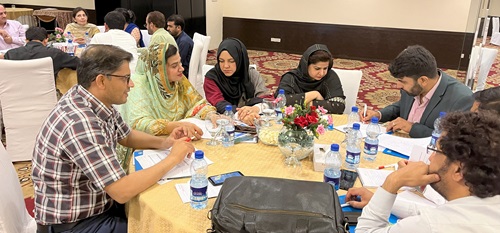
Pakistan shares its experience in addressing foodborne AMR with Cambodia and Nepal
FAO Pakistan hosted a roadmap workshop to discuss priorities in addressing foodborne antimicrobial resistance (AMR) in Islamabad, Pakistan, on 11 September 2023. The event took place under the “Action...
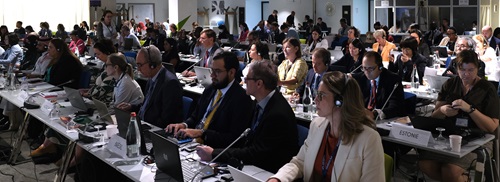
CCGP33 / Looking at the future of Codex Procedural Manual
The 33rd session of the Codex Committee on General Principles (CCGP) took important steps towards improving the Procedural Manual, which has been made available in its new format on the Codex Alimentarius...
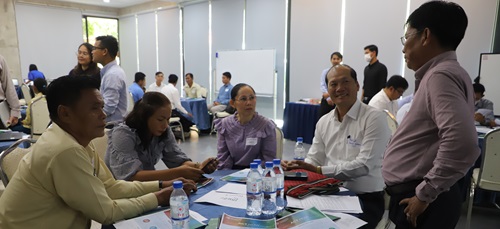
ACT project in Cambodia / Seeking solutions to reduce the use of antimicrobials for growth promotion in poultry farms
Cambodia brought farmers, veterinarians, abattoir workers, agro-chemical and fertilizer vendors, government officials, and other experts together to discuss how to reduce antimicrobial growth promotion...
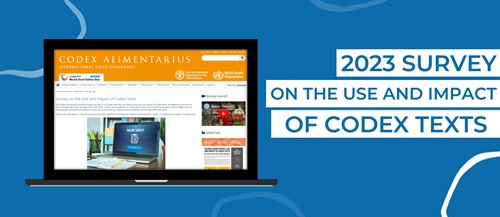
2023 survey for Members on the use and impact of Codex texts launched
The Codex Secretariat launched today the second survey to measure the use and impact of Codex texts. Building on the lessons learned and the success of the 2022 survey, this year the survey focuses on...