


ACT project in Cambodia / Seeking solutions to reduce the use of antimicrobials for growth promotion in poultry farms
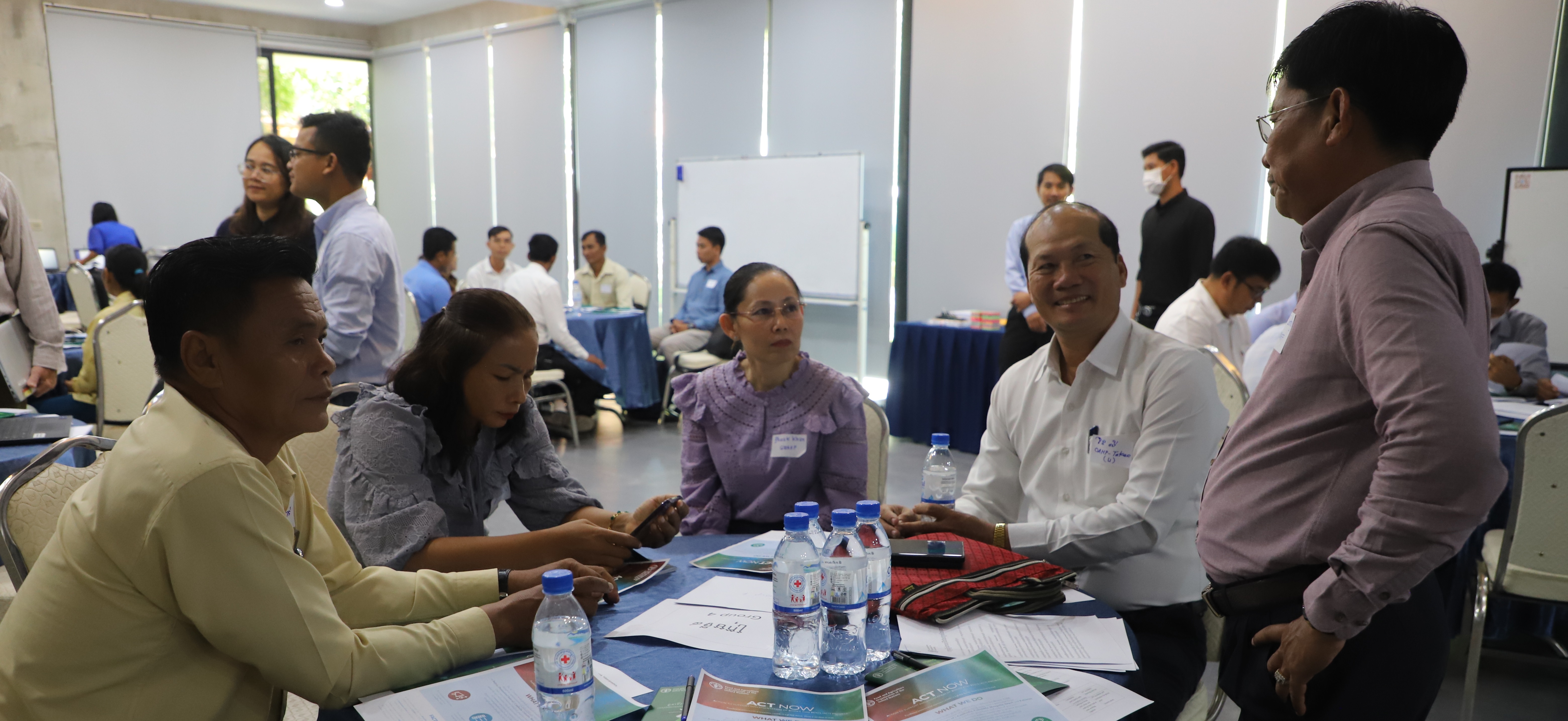
Cambodia brought farmers, veterinarians, abattoir workers, agro-chemical and fertilizer vendors, government officials, and other experts together to discuss how to reduce antimicrobial growth promotion use in poultry farms. Convened as a co-creation workshop, the event took place in Tramkak, Takeo province, on 7-8 September 2023.
“We used this innovative co-creation approach, where public and private sector stakeholders met face-to-face to determine the next steps, we could take together to solve the use of antimicrobials in poultry farms. This workshop helped to bridge the gap between what is written in the legislation and how it is understood by those responsible for its practical implementation,” said Pisey Oum, ACT project coordinator in Cambodia. He also added that involving farmers and other stakeholders in defining a road map on how to implement the existing legislation helps to raise awareness and build consensus. “These important elements will directly improve compliance and enforcement of current laws”, Oum noted.
Dr Sorn San, Deputy Director General for the General Directorate of Animal Health and Production at the Ministry of Agriculture, Forestry and Fisheries and Vice Chair of the National Committee for One Health, highlighted that using antimicrobials for growth promotion causes negative consequences to human health and the environment. He added that Cambodia puts much effort into providing capacity building to farmers to address this issue and regularly organizes various workshops, but it is challenging to reach all animal farmers.
Participants also discussed alternatives to antimicrobial growth promotion use, for example, a vaccination strategy or a certification scheme to incentivize farmers to comply with good practices related to biosecurity and hygiene on farms. They also emphasized the reinforcement of regulations on selling veterinary drugs, surveillance and monitoring strategies, coupled with training.
"This workshop helped me identify the root cause of poultry diseases on our farms and find other ways, not only to use antimicrobials, to raise healthy birds: For example, to seek new vaccinations and establish new husbandry practices. It was rewarding to express my ideas broadly and to engage in all intended activities”, said Korn Phearom, a local poultry farmer.
Sem Chankreasna, a Cambodian poultry trader, added that this was a beneficial workshop. “I will share the content I learned with my local community and other traders. It is very important to work together in reducing the use of antimicrobials to avoid negative impacts on our health and the planet”, Chankreasna said.
The co-creation workshop was organized by FAO Cambodia, under the “Action to support implementation of Codex AMR Texts (ACT)” project, in collaboration with the Emergency Centre for Transboundary Animal Diseases (ECTAD) and the UK Fleming Fund.
Photo ® FAO
Learn more:
Related content
.tmb-thb5x4.jpeg?Culture=en&sfvrsn=98219446_1)
ACT Project closure meeting successfully held in the Republic of Korea
The Action to support implementation of Codex AMR texts (ACT) project successfully held its closure meeting on 14 May 2026 in Seoul, Republic of Korea, bringing together donor representatives, colleagues...
.tmb-thb5x4.jpeg?Culture=en&sfvrsn=33d295f8_1)
The 6th Global Conference on Foodborne AMR successfully held in Seoul, highlighting the achievements of the ACT Project
The 6th Global Conference on Foodborne Antimicrobial Resistance (GCFA) was successfully held on 13 May 2026 in Seoul, Republic of Korea. The conference has become an important international platform for...
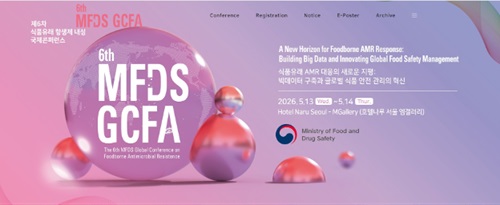
ACT project to share experiences at the 6th Global Conference on Foodborne AMR
The FAO-implemented Action to support implementation of Codex AMR texts (ACT) project will share its experiences and challenges at the 6th Global Conference on Foodborne Antimicrobial Resistance (GCFA),...
.tmb-thb5x4.jpeg?Culture=en&sfvrsn=de5f6081_1)
ACT / Pakistan strengthens One Health response to foodborne antimicrobial resistance at national conference
Pakistan is stepping up efforts to address foodborne antimicrobial resistance (AMR), one of the most pressing threats to public health, food safety and sustainable agriculture, through a strengthened One...
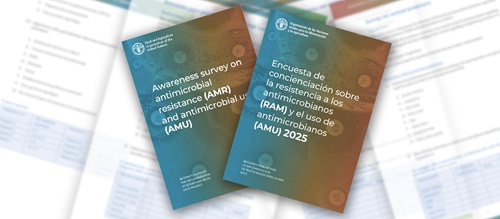
ACT / Survey published to support information gathering on AMR awareness
Two survey templates have been published under the Action to support implementation of Codex AMR texts (ACT) project. The templates, one in English and one in Spanish, include appropriate questions aimed...
.tmb-thb5x4.jpeg?Culture=en&sfvrsn=4561bf2b_1)
ACT / Colombia and the Plurinational State of Bolivia strengthen antimicrobial resistance surveillance
Colombia and the Plurinational State of Bolivia are stepping up efforts to tackle antimicrobial resistance (AMR), one of the world’s most pressing health threats, by strengthening laboratory surveillance...
-jpg.tmb-thb5x4.jpeg?Culture=en&sfvrsn=73645107_1)
ACT / Cambodia Strengthens Capacity on Costing and Budgeting for its Multi Sectoral Action Plan on AMR
Siem Reap, Cambodia – 25 February 2025 The Food and Agriculture Organization of the United Nations (FAO), through the Action to support implementation of Codex AMR texts (ACT) project funded by the Ministry...
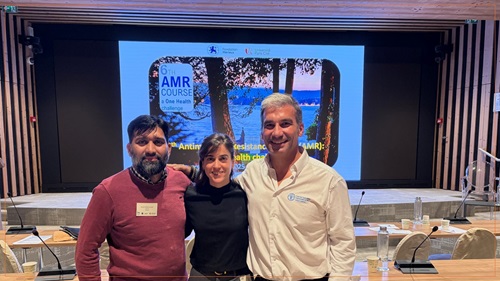
ACT/ ACT project contributes to capacity building on AMR
The FAO project “Action to support implementation of Codex AMR Texts (ACT)” contributed to the 6th edition of the AMR international course “A One Health Challenge”, held 10-14 November, 2025 in Veyrier-du-Lac,...
-(cropped).tmb-thb5x4.jpeg?Culture=en&sfvrsn=7dba5d40_1)
ACT / Cambodia strengthens feed inspection capacity to combat antimicrobial resistance
Cambodia is stepping up efforts to curb antimicrobial resistance (AMR) in livestock production by improving the skills of its feed inspectors. From 3–5 December 2025, the Food and Agriculture Organization...