


World Food Day / "Food safety: a necessity to guarantee the basic human right to food"
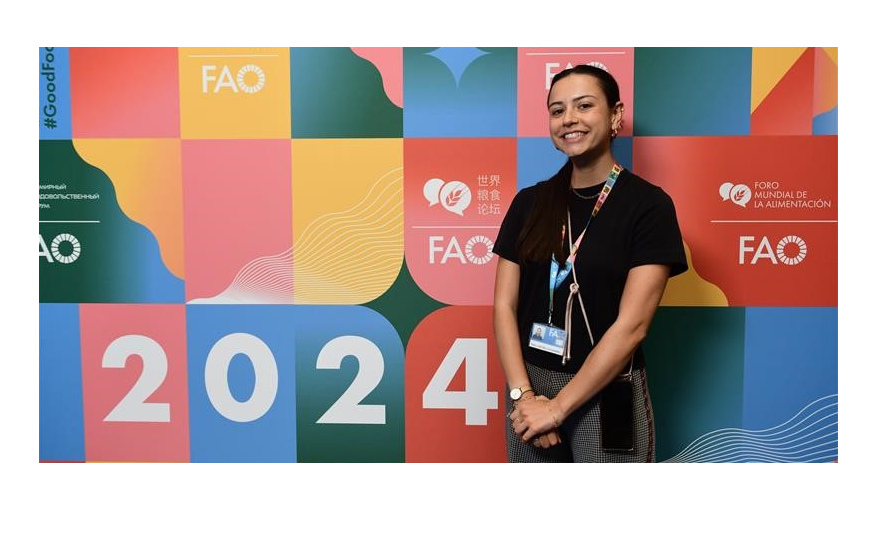
On the occasion of World Food Day, and in conjunction with the World Food Forum, a youth-led movement and network to transform agrifood systems, we had a chat with Raffaella Tavelli, a Food Safety and Biotechnology expert, currently working as intern with FAO. Between her studies and her experience in research, Raffaella had the opportunity to delve into topics ranging from food microbiology and microplastics, to RNA-based insect pest controls, as well as genetic biofortification of crops to fight hidden hunger. As part of her current work at FAO, she is mainly assisting in the maintenance of the FAO GM Foods Platform as well as helping with the organization of the WGS Global Meeting for food safety and water safety.
Raffaella, thanks for your time. Why and when did you become interested in food safety?
I’ve always been sensitive and dedicated to causes related to food security, and my desire to take action was actually a motivator for me to undertake a bioscience path in the first place. During my studies, curiosity for the biotech applications in the food sector first brought me closer to the food safety sector. I then strengthened both my knowledge and my interest in the topic thanks to the opportunity to perform research in the field of microbial food safety. Joining FAO as a Foods Safety and Biotechnology Intern has been a great opportunity for me to collaborate with and learn from food safety professionals and see how projects and initiatives of FAO are managed from the inside.
This year’s theme for World Food Day Right to foods for a better life and a better future also makes a direct reference to the safety of food. Can you tell us more about it from your point of view?
The word ‘Foods’ in this year's Word Food Day theme stands for diversity, nutrition, affordability, and safety. In fact, food safety is one of the essential pillars of food security. As the quote “if it is not safe, it is not food” shows, food safety is a necessity rather than a condition, to guarantee the basic human right to have access to adequate food. However, today 2.8 billion people cannot afford a healthy diet, estimated 600 million fall ill every year and 420,000 die as a result of eating food contaminated with some major pathogenic bacteria and viruses, and the numbers easily go up if we include chemical hazards. This is why (the theme of) WFD is so strongly related to food safety, and a range of initiatives and projects at FAO are set in place to tackle food safety issues. The work of FAO oversees all aspects of food systems and strives to ensure food safety along the entire production chain.
Looking to the future, what would food safety professionals like yourself be dealing with researching in years to come?
In the modern world, the evolution of food systems comes with new food safety challengesfor food safety professionals to deal with. To me, the main ones would be the following:
- Climate change can affect the geographic occurrence of food safety hazards as well as their prevalence. This leads to alterations in contamination patterns of microbial pathogens, toxins and even metal contaminants.
- New foods, such as foods derived from gene editing, precision fermentation and cell-based food production, do not have a history of safe use. Scientific Advice is needed to set regulatory frameworks to guarantee proper food safety assurance for these food categories. The Codex Alimentarius has set guidelines for conducting food safety assessment of both foods derived from recombinant-DNA plants and animals (relevant national or jurisdictional risk assessments are collected and shared on the FAO GM Foods Platform), and of foods produced using recombinant-DNA microorganisms.
- New contaminants such as microplastics have become ubiquitous in the environment due to improper waste disposal, with largely unknown consequences for human health. It is important to assess the effect of their ingestion on human health and set maximum permissible levels in foods to protect consumers.
On the other hand, new powerful techniques are nowadays available and can be a great ally when employed in food safety research, such as for monitoring purposes. It is exciting to see FAO to be involved in raising awareness about the potential of new technologies, especially in low-income countries. The Global Meeting on WGS for food safety and water safety taking place next year in May, as well as the Seminar on AI for food safety to be hosted this November are great examples of this. Moreover, both the above-mentioned challenges and the new technologies need to be respectively addressed and implemented in a sustainable way, ensuring equity in the access to all resources and knowledge sharing in order not to leave low-income countries behind. Achieving all of this at FAO can be made possible by taking a systems approach, where collaboration of each division, team, individual member is critical to create a synergistic progress towards the common goal of zero hunger.
Read more
FAO Food Safety and Quality website
Find out about the FAO Internship Programme
Photo © FAO/Codex Roberto Sciotti
Related content
Germany to host the International Training for Safer Food 2026
For the 7th time, the German Federal Office of Consumer Protection and Food Safety (BVL), will host the International Training for Safer Food (ITS Food). ITS Food is a training series on food safety risk...
Cambodia ups its Codex game
As an initial and strategic step to reinforce the national Codex programme in Cambodia — especially following the restructuring of competent authorities responsible for Codex — a High-Level Advocacy Meeting...
Experts meeting assess progress in evaluating chemical contaminants in animal feed
The International Workshop on Feed Risk Assessment – Chemical Safety took place on 10–11 March 2025 in Utrecht, the Netherlands. It was co-organized by the National Institute for Public Health and...
Virtual Training for the Implementation of HACCP in Fisheries and Aquaculture in Spanish-2
A deep understanding of the hazards associated with fishery and aquaculture products is essential for the effective implementation of a HACCP system. This knowledge helps reduce reliance on traditional...
Virtual Training for the Implementation of HACCP in Fisheries and Aquaculture in Spanish
A deep understanding of the hazards associated with fishery and aquaculture products is essential for the effective implementation of a HACCP system. This knowledge helps reduce reliance on traditional...
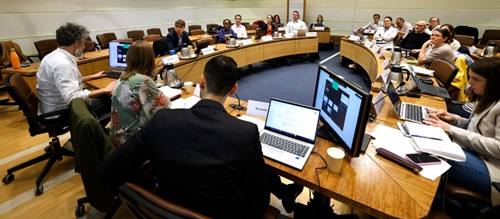
FAO publishes Food Safety Foresight Framework Meeting summary report
The Food and Agriculture Organization of the United Nations (FAO) has published the summary report of the Food Safety Foresight Framework Meeting, which took place from 1–3 April 2025 at FAO headquarters...
FAO publishes report on emerging food innovations
New food sources and production systems (NFPS) are emerging worldwide, in response to changing agrifood systems, potentially altering the food landscape in the next 5 to 25 years. The Food and Agriculture...
Launch event / JECFA Toolbox for Veterinary Drug Residues Risk Assessment
The Food and Agriculture Organization of the United Nations (FAO) has launched a comprehensive and practical toolbox designed to help those assessing the risks of veterinary drug residues in food. The...
“Codex and a Honduran emergency” – New Codex video out now
With the growth in the international trade in food comes the need to be able to prevent, detect and manage foodborne diseases across borders. Foodborne diseases can occur even when there are robust food...