


CTF / Continental webinar showcases best practices in Africa and impact of Codex Trust Fund support
.png?sfvrsn=4a2a053f_0)
By Lusubilo Mwamakamba (WHO AFRO), Hakim Mufumbiro (CCAFRICA), Sansan Kambire (FAO RAF)
On 10 September 2025, the regional offices for Africa of the Food and Agriculture Organization of the United Nations (FAO RAF), the World Health Organization (WHO AFRO), the African Union–InterAfrican Bureau for Animal Resources (AU-IBAR), the FAO/WHO Codex Coordinating Committee for Africa (CCAFRICA), and the Codex Trust Fund (CTF) Secretariat jointly hosted a continent-wide webinar. The event aimed at sharing best practices and lessons learned in strengthening national Codex structures and enhancing effective participation in Codex activities at both regional and global levels through Codex Trust Fund (CTF) projects implemented by different Countries in Africa.
The highly interactive and informative online forum served as a dynamic platform to showcase successful models for building and sustaining robust national Codex structures, while promoting meaningful engagement in Codex standards-setting processes.
The webinar featured remarks from several distinguished speakers including Allan Azegele, Chairperson of the Codex Alimentarius Commission, who emphasized the critical role of Codex in developing international food safety standards, guidelines, and codes of practice. Azegele noted that the more countries engage and provide data from the region, the more representative and applicable the standards will become.
Laetitia Ouedraogo, Team Lead for Nutrition and Food Safety at the WHO AFRO, highlighted the critical role that regional engagements play in ensuring that local realities and priorities are reflected, and that science drives the rules protecting public health.
Mphumuzi Sukati, Senior Food and Nutrition Officer at FAO RAF, stressed that delivering safe, equitable, and sustainable food systems across Africa is not merely an aspiration but a shared responsibility. John Oppong-Otoo, Coordinator of the Economics, Trade and Marketing Unit at AU-IBAR, underscored Codex’s contribution to the broader African Union Commission targets, such as the Kampala Comprehensive Africa Agriculture Development Programme (CAADP) commitments, including tripling intra-African agri-food trade and expanding access to healthy diets. Oppong-Otoo stated that Codex standards are the currency not only for trade but also for public health and improving livelihoods.
Hakim Mufumbiro, CCAFRICA Coordinator, underlined the importance of functional national Codex structures as the foundation for effective participation in Codex. Mufumbiro acknowledged the transformative role of the CTF, noting that several countries previously inactive in Codex are now visibly engaged, thanks to CTF support. Simone Moraes Raszl, Scientist in Multisectoral Action in Food Systems at WHO Headquarters in Geneva, affirmed this impact, stating that CTF support has helped countries institutionalize Codex structures, improve stakeholder coordination, and build technical capacity for effective engagement.
A panel discussion brought together eleven countries that have implemented CTF projects: Benin, Burkina Faso, Côte d’Ivoire, Ghana, Madagascar, Malawi, Mali, Mauritius, Nigeria, Rwanda, and Senegal. Additionally, a regional group project is being implemented by five countries in the East African Community (EAC) region (Burundi, Kenya, South Sudan, Tanzania and Uganda). These countries shared practical experiences and best practices in establishing functional national Codex structures and enhancing participation in Codex activities at both regional and global levels. Discussions included improvements in Codex management procedures, harmonization and use of Codex texts at the national level, mechanisms for data generation to inform Codex standards setting, and national food safety initiatives. The EAC Group project also shared its approach to ensuring sustainability through partnerships with other regional programmes, such as the Market Access Upgrade Programme being implemented by the International Trade Centre.
To further demonstrate how countries can leverage complementary initiatives, Nydiane Razafindrahaingo, representing the Standards and Trade Development Facility (STDF) of the WTO, presented an overview of available grant opportunities and demonstrated how Countries in the region could leverage the available funding openings.
With over 220 participants in attendance drawn from the majority of the countries in Africa, the webinar was widely appreciated for creating a continental platform to exchange knowledge and experiences. It highlighted key priorities for strengthening Codex engagement, including domestication of standards, raising visibility, securing sustainable funding, and aligning Codex efforts with broader national food safety initiatives and food control systems.
Read more
Photo © Lusubilo Mwamakamba and Sansan Kambire
Related content
High-level advocacy event strengthens Africa’s commitment to food safety and Codex participation
by the CCP of The Gambia On the margins of the 49th Session of the Codex Alimentarius Commission (CAC49), The Gambia, in its capacity as Coordinator of the FAO/WHO Coordinating Committee for Africa (CCAFRICA),...
CCFA56 / Strengthening Africa’s voice in international food additives regulation
by the Codex Contact point of Uganda Twelve CCAFRICA Member Countries, including Cabo Verde, Cameroon, Côte d’Ivoire, Ghana, Kenya, Morocco, Nigeria, Senegal, South Africa, Sudan, Uganda, and the United...
The East African Community is leading the way on gum arabic standard setting
With the support of the European Union-funded Market Access Upgrade Programme Phase II (MARKUP II), which is implemented through the International Trade Centre (ITC), the East African Community (EAC) partner...
CCAFRICA delegations lead collaborative efforts in Kuala Lumpur
by the Codex Contact Point of Uganda and the Coordinator for CCAFRICA The Codex Committee on Fats and Oils (CCFO) held its 29th Session in Kuala Lumpur, Malaysia, bringing together member countries and...
-jpeg.tmb-thb5x4.jpeg?Culture=en&sfvrsn=6e98bd36_1)
CCAFRICA Coordination officially handed over in Banjul, The Gambia
The FAO/WHO Coordinating Committee for Africa (CCAFRICA) celebrated a significant milestone on 26 January 2026, with the official handover ceremony of the CCAFRICA Coordinator from Uganda to The Gambia....
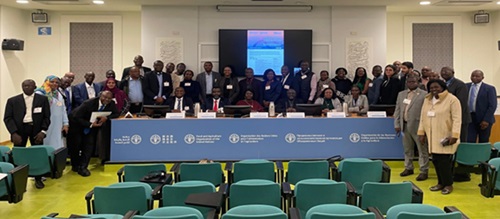
CAC48 / African missions in Rome commit to stronger Codex engagement
By Hakim B. Mufumbiro, Codex Office, UGANDA On the margins of the recently concluded 48th Session of the Codex Alimentarius Commission (CAC48), a high-level advocacy event for African Missions in Rome...
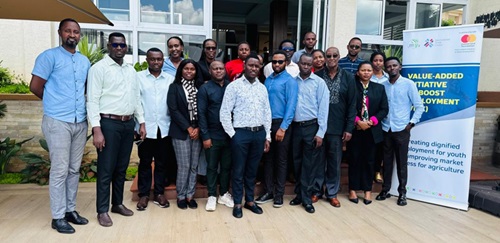
National training drives effective participation of Rwanda in Codex
by Rosine Niyonshuti, CCP Rwanda From 10 to 13 November 2025, the Rwanda Standards Board (RSB), in the capacities of Rwanda’s Codex Contact Point, held a training workshop for members of the National Codex...
.tmb-thb5x4.jpeg?Culture=en&sfvrsn=7c2b0df8_1)
CAC48 / African parliamentarians are urged to advocate for Codex in a Commission side event
An event titled “Bridging the gap between the parliamentary community and Codex” was held in the margins of the 48th Codex Alimentarius Commission meeting Tuesday and brought together key Codex and FAO...
.tmb-thb5x4.jpeg?Culture=en&sfvrsn=688012e9_1)
African delegates boost skills in Codex engagement and negotiations at BTSF training in Nairobi
Nairobi, Kenya, 3 October 2025 – Delegates from across Africa gathered in Nairobi for an intensive three-day workshop to sharpen their skills in participating in all aspects of Codex work. Organized under...