


Safety, science, and standardization: CCFH to address food hygiene priorities in Nashville
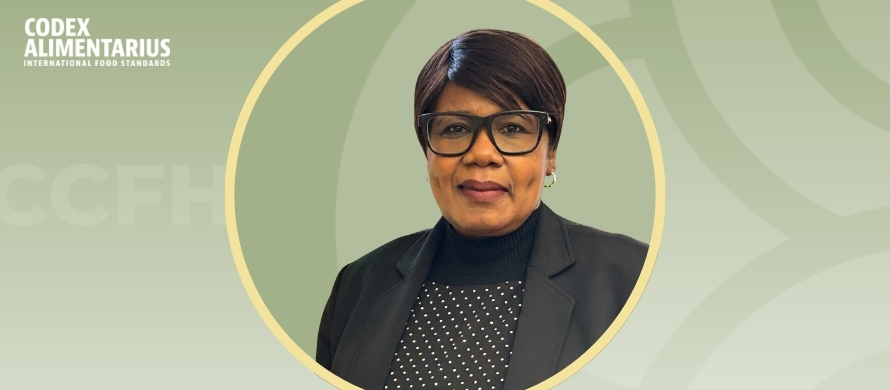
The 55th session of the Codex Committee on Food Hygiene (CCFH) will close the cycle of Codex meetings for 2025. As delegates prepare to meet in Nashville, Tennessee, United States of America, we sat down with Chairperson Evelyne Mbandi to discuss the Committee's achievements, the texts under revision, and how CCFH contributes to the aims of the Commission.
Evelyne, thanks for your time. CCFH is responsible for developing texts that have a direct impact on consumer health and food trade. As Chairperson, what do you see as the most significant paradigm shift or emerging priority that is currently driving CCFH's work, and how does this focus guide the revisions of key texts like those to be discussed at the 55th Session?
As Chairperson, there are two factors I see driving our work: 1. the persistence of certain pathogens in the food supply that have resulted in recent outbreaks of illnesses from consuming some of these foods and 2. the evolution of scientific techniques. These drivers have required CCFH to review and update some of the existing guidelines. Updating these guidelines has a direct impact on food safety and public health and also ensures fair trade, since Codex texts, when implemented as recommended, ensure the safety of foods traded globally. With the evolution of scientific techniques and methods of analysis since the guidelines were last updated, new data are available for JEMRA to conduct the necessary risk assessments and provide the scientific guidance needed to update our guidelines.
Talking about the agenda of the meeting, CCFH is aligning many existing texts with the General principles of food hygiene (CXC 1-1969). What is the main goal of this alignment work, and how will it benefit Member countries' implementation efforts?
Extensive revisions were made to the General principles of food hygiene (CXC 1-1969) and adopted by CAC45. The CXC 1-1969 text is foundational to many Codex food hygiene texts and extensively cross-referenced in other Codex texts. Therefore, it is imperative that CCFH texts are fully aligned with the latest version of CXC 1-1969. The alignment effort is beneficial to Member countries, since the aligned version of updated guideline documents will have the latest recommendations supported by the current state of the science and will be consistent with foundational Codex texts. This way, Members will not need to review multiple documents when searching for fundamental information.
The Committee is also revising the guidelines for the control of viruses in foods, Campylobacter and Salmonella in chicken meat and Listeria monocytogenes in ready-to-eat foods. How will these revised guidelines contribute to reducing the public health risk from these pathogens across the food chain, and what makes this revision so important right now?
The revision of the above guidelines is very timely due to recent foodborne illness outbreaks from these pathogens and associated fatality rates. Of note, there have been multiple foodborne outbreaks of listeriosis recently with a high fatality rate. With Listeria monocytogenes being an environmental contaminant, it is important to control this pathogen in the food processing environment and in products that support growth of the pathogen during their shelf-life. Salmonella and Campylobacter are also present in raw poultry meat, and it is especially important to control their presence during the processing of raw poultry and ensure that validated cooking instructions are made available to consumers. Consumption of certain fruits and vegetables have also been implicated in hepatitis A, hepatitis B, and norovirus outbreaks. The availability of data on new and emerging food types implicated in these outbreaks, and updated risk assessment models by JEMRA makes it timely and necessary to revise these documents.
Looking ahead, new work proposals and the forward work plan are also on the agenda of CCFH55. As Chairperson, which food hygiene issues do you foresee as the highest priority for CCFH over the next few years, and what message do you have for Codex Members and Observers about how they can best contribute to the development of these international standards?
Although new work proposals and the forward work plan are on the agenda, for CCFH to consider new work, the highest priority for the committee is first to come to a consensus on some of the guidelines that are in the process of being finalized or updated. This includes the remaining annexes to the Guidelines for the safe use and reuse of water in food production and processing (CXG 100-2023), the updates to the Guidelines on the control of Campylobacter and Salmonella in chicken meat (CXG 78-2011) and the Guidelines on the application of general principles of food hygiene to the control of Listeria monocytogenes in foods (CXG 61-2007).
Regarding potential future food hygiene issues, production of cell-cultured foods is an emerging area that may be considered for the development of food hygiene principles in the manufacturing of such foods. Following the expert consultations on risk assessment of food allergens and CCFL updating its allergen labelling guidance, CCFH is expected to update its Code of practice on food allergen management for food business operators (CXC 80-2020). FAO also hosted an expert meeting on Clostridium species in foods this year, which could be an area for future exploration by CCFH.
Let me conclude by thanking Codex Members and Observers for their commitment to food safety and food hygiene. Development of these international standards relies on their full participation and commitment to Codex. I encourage all Members and Observers to utilize technical expertise within their organizations when reviewing and revising the current standards so that we can ensure the outcomes of CCFH are based on the current science and best available data.
Read more
Related content
CCMAS45 / "A guarantee that the best regulations can be developed"
Attila Nagy has been Chairperson the Codex Committee on Methods of Analysis and Sampling (CCMAS) for almost a decade, and has previously served as Vice-chairperson of the committee. He is a passionate...
“The beating heart of Codex” – Interview with Codex Secretary, Sarah Cahill
As the Codex Alimentarius Commission (CAC) returns to its traditional July meeting cycle, Codex Secretary Sarah Cahill outlines the roadmap for 2026 and beyond. In this recent interview, she details how...
"Built on science, consensus and cooperation"
At the conclusion of 2025, the Chairperson of the Codex Alimentarius Commission, Allan Azegele (Kenya), sat down with the Codex Secretariat to review the outcomes of the 48th Session of the Commission,...
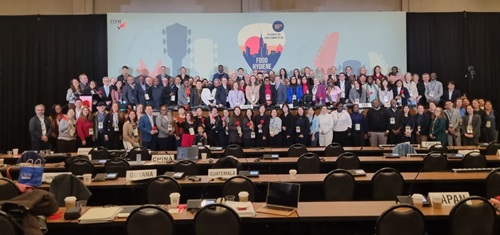
Codex committee wraps up Nashville meeting concluding work on water
The 55th session of the Codex Committee on Food Hygiene (CCFH55) concluded in Nashville, Tennessee, United States of America, marking another important milestone in the development of international food...
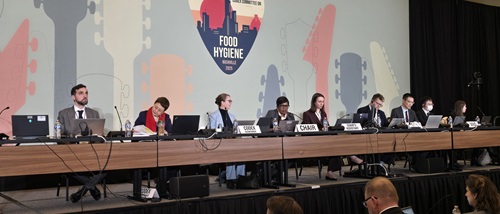
“Bridges that connect people” – Codex food hygiene committee opens in Nashville
Codex delegates have gathered in Nashville, Tennessee, United States of America, to discuss and further develop global food hygiene standards. Opening the 55th session of the Codex Committee on Food Hygiene...
“A shared responsibility” - Allan Azegele to chair his first Codex meeting
The 88th Session of the Executive Committee of the Codex Alimentarius Commission (CCEXEC88) will take place at FAO Headquarters in Rome 14–18 July 2025. As Allan Azegele, Chairperson of the Codex Alimentarius...
CCCF18 / "Complex issues with real-world impact"
The Eighteenth Session of the Codex Committee on Contaminants in Foods (CCCF18) will take place 23–27 June 2025 in Bangkok, Thailand. We spoke to Sally Hoffer, from the Dutch Ministry of Agriculture, Nature...
CCGP34 / “The world needs Codex, Codex needs CCGP”
As the Codex Committee on General Principles (CCGP) celebrates its 60th anniversary, we spoke with its Chairperson, Jean-Luc Angot, who has led the Committee since his appointment in 2018. With the 34th...
CCMAS44 / A virtual opportunity to strengthen international food standards
The 44th session of the Codex Committee on Methods of Analysis and Sampling (CCMAS44) will be held in a virtual format from 5 to 8 May, with report adoption on 14 May. While time zone differences remain...