


New Chair for CCMAS Dr Marót Hibbey

On Monday 8th May the Codex Committee on Methods of Analysis and Sampling holds its 38th session in Budapest Hungary.
Dr Marót Hibbey will chair the meeting for the first time and ahead of the meeting he took part in a Question and Answer session.
Dr Marót Hibbey
Q1 This meeting will be your first as Chair, can you tell us a little about your professional and personal background?

I graduated as a vet in the Szent István University of Veterinary Sciences in Budapest, and soon joined the administration. After a year of practice in local and county-level units of administration I joined the Ministry of Agriculture where the administrative burden quickly increased as the accession of Hungary to the EU approached. My employment included very nice challenges as for example a twinning with colleagues from Germany on TSE’s, as Hungary was still a candidate country. Or more recently a twinning in Serbia where Hungary was the member state partner. From more epidemiological fields I moved to the safety of the food chain, where in the last decade feed legislation has become my main responsibility.
Q2 CCMAS is often seen in Codex as a very different and highly technical committee. How would you describe its work?
The most important task of CCMAS is the endorsement of methods for the determination of provisions prescribed by the Commodity Committees. In this regard, CCMAS follows strict rules which are contained in the Procedural Manual. Yes, I agree that it is a highly technical committee, which can also be seen on the recurring participation of the same people year after year.
Q3 What opportunities do you see for CCMAS now and in the future?
CCMAS, like other codex committees, too, is working with standards and documents produced over a considerable period of time. There are always possibilities to check those documents with a view of adaptating them to more recent developments. This is particularly true for a committee working with analytics, given that the instrumental analytical methods have undergone a huge and ever-swifter development over the last decades. We also look for harmonisation across documents and their standardisation. This would enable us to update documents with better readability.
Q4 What are the main challenges for the committee?
In my opinion, it is the translation of our language to the language of other committees. I mean the clear description of our decisions to be more easily understood, for example why a method is typed to Type 4, or why it is important to choose appropriate sampling plans.
Q5 Why is CCMAS important to the work of international standard setting?
Codex standards are used worldwide in international food trade, and national legislations are based on them. CCMAS endorses methods which are to be used worldwide as standard methods in food trade. This is a responsible task.
Q6 What are the critical issues before the committee at this meeting?
I think the revision of the guidance of sampling is a major project for the coming years. This became really necessary, seeing the reflections of other Codex Committees to the guidance. The other great project is the revision of STAN234. Both these works are really important and much of our efforts need to be directed to these works.
Q7 What are your aspirations for CCMAS under your stewardship?
Given that the subjects are really technical, and this technical content is in very good hands, so the docs from this aspect are on their way, however, as far as readability is concerned, I think that special attention could be paid to create very clearly structured documents and to have more technical parts clearly separated, in an annex, so a layperson could also quickly check what the document is about.
Q8 What advice would you give first time delegates?
Feel free to be involved in the discussions, build contacts and seek consensus.
Q9 If delegates have time what should they not miss in Budapest?
Budapest is a beautifully located city, especially rich in monuments or thermal baths, and history is everywhere, sometimes reaching back in time over one thousand years. It is hard to digest in a so short period of time.

Budapest - St. Stephen's Basilica, Hungary.
However, if you can visit the castle or the tower of St. Stephen's Basilica, then you will have a wonderful panorama. Or take a guided evening cruise on the Danube exploring all the depths of historical conflicts and the splendour of more peaceful times. These are all possible ways of breathing in the city as a whole.
Click here to follow the meeting.
Related content
.tmb-thb5x4.jpeg?Culture=en&sfvrsn=98219446_1)
ACT Project closure meeting successfully held in the Republic of Korea
The Action to support implementation of Codex AMR texts (ACT) project successfully held its closure meeting on 14 May 2026 in Seoul, Republic of Korea, bringing together donor representatives, colleagues...
.tmb-thb5x4.jpeg?Culture=en&sfvrsn=33d295f8_1)
The 6th Global Conference on Foodborne AMR successfully held in Seoul, highlighting the achievements of the ACT Project
The 6th Global Conference on Foodborne Antimicrobial Resistance (GCFA) was successfully held on 13 May 2026 in Seoul, Republic of Korea. The conference has become an important international platform for...
.tmb-thb5x4.jpeg?Culture=en&sfvrsn=b11362b7_1)
Republic of Korea hosts APFRAS 2026 to strengthen regional cooperation on food safety
Seoul, Republic of Korea The Ministry of Food and Drug Safety (MFDS) of the Republic of Korea hosted the fourth Asia-Pacific Food Regulatory Authority Summit (APFRAS 2026) in Seoul, Republic of Korea,...
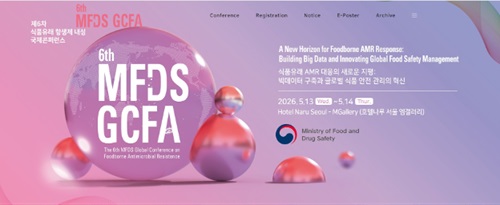
ACT project to share experiences at the 6th Global Conference on Foodborne AMR
The FAO-implemented Action to support implementation of Codex AMR texts (ACT) project will share its experiences and challenges at the 6th Global Conference on Foodborne Antimicrobial Resistance (GCFA),...
.tmb-thb5x4.jpeg?Culture=en&sfvrsn=de5f6081_1)
ACT / Pakistan strengthens One Health response to foodborne antimicrobial resistance at national conference
Pakistan is stepping up efforts to address foodborne antimicrobial resistance (AMR), one of the most pressing threats to public health, food safety and sustainable agriculture, through a strengthened One...
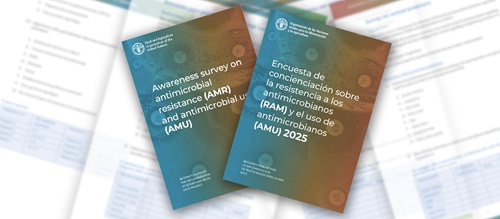
ACT / Survey published to support information gathering on AMR awareness
Two survey templates have been published under the Action to support implementation of Codex AMR texts (ACT) project. The templates, one in English and one in Spanish, include appropriate questions aimed...
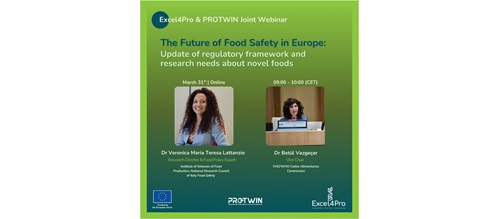
Exploring the future of food safety: novel foods and emerging production systems in focus
A recent webinar titled “The Future of Food Safety in Europe: Update of the Regulatory Framework and Research Needs on Novel Foods” brought together international experts to discuss the rapidly evolving...
.tmb-thb5x4.jpeg?Culture=en&sfvrsn=4561bf2b_1)
ACT / Colombia and the Plurinational State of Bolivia strengthen antimicrobial resistance surveillance
Colombia and the Plurinational State of Bolivia are stepping up efforts to tackle antimicrobial resistance (AMR), one of the world’s most pressing health threats, by strengthening laboratory surveillance...
-jpg.tmb-thb5x4.jpeg?Culture=en&sfvrsn=73645107_1)
ACT / Cambodia Strengthens Capacity on Costing and Budgeting for its Multi Sectoral Action Plan on AMR
Siem Reap, Cambodia – 25 February 2025 The Food and Agriculture Organization of the United Nations (FAO), through the Action to support implementation of Codex AMR texts (ACT) project funded by the Ministry...