


New International FAO Antimicrobial Resistance System (InFARM) launched and call for data announced

FAO has launched its ambitious and wide-ranging global information system aimed at developing and strengthening operational national surveillance systems so they can efficiently contribute to generating reliable and timely antimicrobial resistance (AMR) evidence in animals and food at national, regional, and global levels. As part of the launch, FAO is calling on its Members to participate in the first InFARM annual open call for data in 2024.
The InFARM system consists of an IT platform and related FAO activities and builds on prior collective experience and knowledge gained by FAO and Quadripartite organizations (FAO, the United Nations Environment Programme, UNEP, the World Health Organization, WHO and the World Organisation for Animal Health, WOAH) and implementation of activities on surveillance capacity building. These include the deployment of the FAO Assessment Tool for Laboratories and AMR Surveillance Systems (ATLASS) and extensive support on the development of national surveillance activities and programmes through the provision of guidelines and materials.
FAO has reached out to key personnel in national authorities responsible for AMR surveillance in agrifood systems, requesting the designation of InFARM focal points. These authorities typically include Ministries of Agriculture and Food Safety Authorities or Agencies. With the aim to facilitate the participation of countries in the InFARM system FAO will be providing training to national InFARM focal points and extending support from FAO personnel in decentralized offices. The training and FAO activities assist countries in generating, collecting, collating, analysing, and effectively utilizing their AMR surveillance and monitoring data.
Training for the Latin America and the Caribbean region will start next week (2–5 July) in Colombia as part of the global rollout of the newly launched International FAO Antimicrobial Resistance Monitoring System (InFARM).
In Colombia and the Plurinational State of Bolivia, the training is supported by the FAO-implemented and Republic of Korea-funded Action to support implementation of Codex AMR Texts (ACT) project. Under ACT, Colombia and the Plurinational State of Bolivia are also working to increase awareness among livestock carers regarding responsible and prudent antimicrobial use (AMU), as well as developing improved governance structures that will guide users on the practices that will help to slow the spread of foodborne AMR. The ACT project includes a component on improving data driven surveillance of AMR in project countries, which will allow ranking of priority weaknesses within legislative structures as well as the capacity to monitor patterns of AMR and improve management of AMU.
“This training in Colombia will provide a valuable opportunity to demonstrate how InFARM contributes to the practical implementation of the Codex Guidelines for Integrated Monitoring and Surveillance of Foodborne AMR,” says Alejandro Dorado García, Animal Health Officer and coordinator of AMR surveillance global activities for the One Health and Disease Control Group at FAO. “This will be a key step in advancing our efforts against AMR.”
Key outputs of the training will include awareness of international standards, including Codex standards, related to the management of AMU and AMR, and an understanding of the objectives and roadmap of the InFARM system. Participants will become acquainted with general recommendations for collating AMR data in animals and food under the InFARM framework, acquire knowledge about different options for organizing, storing and handling AMR data, and gain hands-on experience in using relevant data management software.
“Currently, there is a significant gap in evidence on AMR in agrifood systems at the global level,” continues Dorado. “We expect participants to come away from the training with a clear understanding of the submission process into the InFARM IT platform and an enhanced knowledge of the utility of their data beyond routine national-level reporting. We hope participants will leave the sessions motivated to participate in the InFARM system and contribute to global efforts for minimizing and containing AMR in food and agriculture.”
This regional training is a first step to support nominated InFARM focal points in improving their capacities and capabilities for AMR data management, sharing, analysis and dissemination to contribute to their national objectives and to global AMR surveillance through the participation in the first annual call for data.
Training will also take place in the African region 15–18 July and the Asian and Pacific region 23–27 July.
The InFARM IT platform will accept submissions from Monday, 27 May 2024 to Thursday, 31 October 2024.
Read more
InFARM System Website
InFARM Call For Data
The International FAO Antimicrobial Resistance Monitoring (InFARM) system - Manual for implementation 2024
Related content
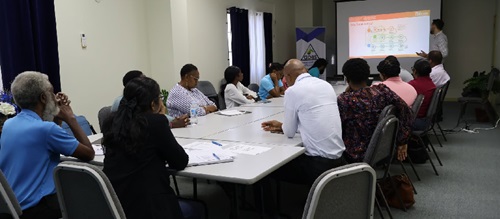
Strengthening Grenada's voice in global food standards
by the Codex Contact Point of Grenada On 5 June 2026, the Grenada Bureau of Standards hosted a training session for members of the National Codex Committee and the GDBS team, facilitated by Giuseppe...
.tmb-thb5x4.jpeg?Culture=en&sfvrsn=98219446_1)
ACT Project closure meeting successfully held in the Republic of Korea
The Action to support implementation of Codex AMR texts (ACT) project successfully held its closure meeting on 14 May 2026 in Seoul, Republic of Korea, bringing together donor representatives, colleagues...
.tmb-thb5x4.jpeg?Culture=en&sfvrsn=33d295f8_1)
The 6th Global Conference on Foodborne AMR successfully held in Seoul, highlighting the achievements of the ACT Project
The 6th Global Conference on Foodborne Antimicrobial Resistance (GCFA) was successfully held on 13 May 2026 in Seoul, Republic of Korea. The conference has become an important international platform for...
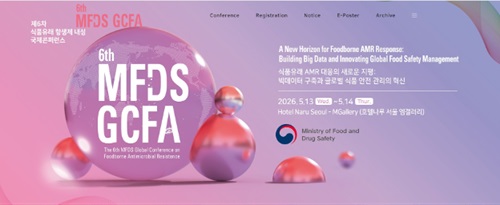
ACT project to share experiences at the 6th Global Conference on Foodborne AMR
The FAO-implemented Action to support implementation of Codex AMR texts (ACT) project will share its experiences and challenges at the 6th Global Conference on Foodborne Antimicrobial Resistance (GCFA),...
.tmb-thb5x4.jpeg?Culture=en&sfvrsn=de5f6081_1)
ACT / Pakistan strengthens One Health response to foodborne antimicrobial resistance at national conference
Pakistan is stepping up efforts to address foodborne antimicrobial resistance (AMR), one of the most pressing threats to public health, food safety and sustainable agriculture, through a strengthened One...
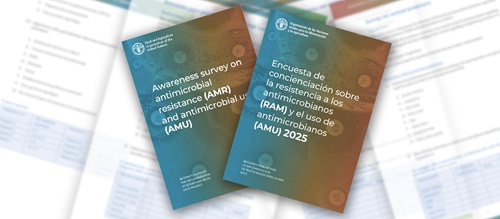
ACT / Survey published to support information gathering on AMR awareness
Two survey templates have been published under the Action to support implementation of Codex AMR texts (ACT) project. The templates, one in English and one in Spanish, include appropriate questions aimed...
.tmb-thb5x4.jpeg?Culture=en&sfvrsn=4561bf2b_1)
ACT / Colombia and the Plurinational State of Bolivia strengthen antimicrobial resistance surveillance
Colombia and the Plurinational State of Bolivia are stepping up efforts to tackle antimicrobial resistance (AMR), one of the world’s most pressing health threats, by strengthening laboratory surveillance...
-jpg.tmb-thb5x4.jpeg?Culture=en&sfvrsn=73645107_1)
ACT / Cambodia Strengthens Capacity on Costing and Budgeting for its Multi Sectoral Action Plan on AMR
Siem Reap, Cambodia – 25 February 2025 The Food and Agriculture Organization of the United Nations (FAO), through the Action to support implementation of Codex AMR texts (ACT) project funded by the Ministry...
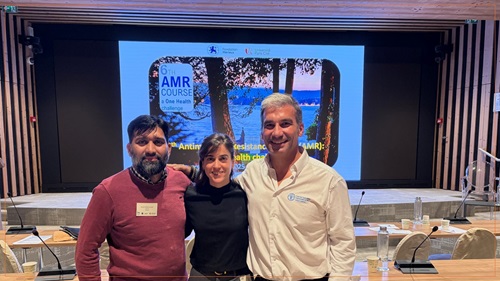
ACT/ ACT project contributes to capacity building on AMR
The FAO project “Action to support implementation of Codex AMR Texts (ACT)” contributed to the 6th edition of the AMR international course “A One Health Challenge”, held 10-14 November, 2025 in Veyrier-du-Lac,...