


ACT/ Regional meeting in Latin America reviews successes and agrees on future plans
.jpg?sfvrsn=b1f0859e_0)
The key actors in the FAO-implemented and Republic of Korea-funded Action to support implementation of Codex AMR Texts (ACT) project met for state-of-the-project discussions in the Plurinational State of Bolivia on 24–28 June.
The meeting, which started in La Paz, aimed to evaluate the progress of the ACT project, which is being implemented in six countries, and deliberate on the strategic direction for the upcoming years, including a thorough review of work plans. On the first day of meetings, representatives of the Plurinational State of Bolivia’s Ministry of Health, National Agricultural Health and Food Safety Service (SENASAG) and other agencies joined the meeting to learn more about the progress of the ACT project and share experiences. The FAO country representative, Rodrigo Roubach and the technical and management lead officers for the project from FAO headquarters in Rome also contributed, as well as the national and regional ACT coordinators
"This ACT regional meeting, covering Bolivia and Colombia, holds significant importance as we are midway through the project,” said Myoengsin Choi, ACT project coordinator. “It provides a valuable opportunity to review our achievements, challenges, and ways to overcome them.”
Roubach also saw the meeting in a very positive light, saying: “I congratulate the initiative to put into perspective the challenges, the achievements and the strategy to continue advancing in the project's objectives for the coming years. There is much work to be done on this path at the regional and global level; in Bolivia, a key task for FAO is to support the Bolivian authorities by implementing the project initiatives and, ultimately, to support those authorities to manage foodborne antimicrobial resistance in the country.”
Maria de los Ángeles Gatica and Peter Flanagan, ACT regional coordinators for the Latin America and Asia regions respectively, addressed the meeting on the second day to update colleagues on ACT project implementation in the different countries. The meeting discussed how the national projects might better focus their work and orient ambitions for progress towards the project goals of improving governance, surveillance and awareness of foodborne antimicrobial resistance (AMR). The meeting also heard an update from Jorge Berrios, national ACT coordinator for the Plurinational State of Bolivia, who provided information about the progress of the ACT project in the country.
“The regional meeting made it possible to observe in situ the great progress of the project in the Plurinational State of Bolivia, as well as to understand the challenges the country faces in addressing AMR under the One Health approach,” said Gatica.“The visit also demonstrated Bolivia's commitment to AMR management and specifically to the aims of the ACT project.”
"Although the project regional and global project coordinators meet regularly online, these meetings cannot replace the nuance and depth of in-person discussions. This meeting afforded an opportunity to share ideas on how to improve the implementation of activities in both regions and where to adjust plans according to the realities facing the project,” Flanagan said.
Attendees of the meeting then moved to Santa Cruz de la Sierra for field trips where they learned more about the challenges and successes of the ACT project in the Plurinational State of Bolivia. A visit to a large-scale poultry farm where antimicrobials are used responsibly and prudently gave insights into the feasibility of achieving good practices across the sector in the country. In addition, the ACT team visited the national food safety laboratories where training in data collection, analysis and input will enable the Plurinational State of Bolivia to make good progress on monitoring and surveillance of foodborne AMR. Furthermore, the visitors were privileged to attend as observers the second meeting of the Committee for the Containment of Antimicrobial Resistance in Agricultural Health and Food Safety (CC-RAM) where a group of multisectoral decisionmakers assessed the legislative challenges and priorities regarding foodborne AMR in the country.
“Attending the meeting of the Committee for the Containment of Antimicrobial Resistance in Agricultural Health and Food Safety (CC-RAM) was quite rewarding – it is an excellent example of a multistakeholders’ AMR discussion forum. We look forward to strengthening our collaboration and to supporting the implementation of the work plan in the upcoming years,” commented Jorge Pinto Ferriera, Lead Technical Officer of the project.
On the final day, the meeting reconvened to discuss the ideal way forward for the project in each country. “Despite obstacles such as a lack of awareness about foodborne AMR and political complexities, countries are making progress. I hope the ACT project will continue its work in containing foodborne AMR by building national and regional capacities," concluded Choi.
Read more
Related content
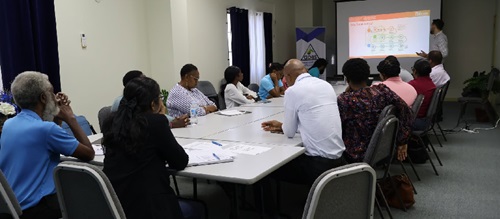
Strengthening Grenada's voice in global food standards
by the Codex Contact Point of Grenada On 5 June 2026, the Grenada Bureau of Standards hosted a training session for members of the National Codex Committee and the GDBS team, facilitated by Giuseppe...
.tmb-thb5x4.jpeg?Culture=en&sfvrsn=98219446_1)
ACT Project closure meeting successfully held in the Republic of Korea
The Action to support implementation of Codex AMR texts (ACT) project successfully held its closure meeting on 14 May 2026 in Seoul, Republic of Korea, bringing together donor representatives, colleagues...
.tmb-thb5x4.jpeg?Culture=en&sfvrsn=33d295f8_1)
The 6th Global Conference on Foodborne AMR successfully held in Seoul, highlighting the achievements of the ACT Project
The 6th Global Conference on Foodborne Antimicrobial Resistance (GCFA) was successfully held on 13 May 2026 in Seoul, Republic of Korea. The conference has become an important international platform for...
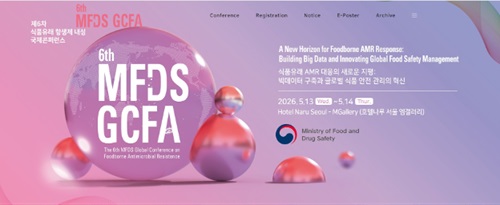
ACT project to share experiences at the 6th Global Conference on Foodborne AMR
The FAO-implemented Action to support implementation of Codex AMR texts (ACT) project will share its experiences and challenges at the 6th Global Conference on Foodborne Antimicrobial Resistance (GCFA),...
.tmb-thb5x4.jpeg?Culture=en&sfvrsn=de5f6081_1)
ACT / Pakistan strengthens One Health response to foodborne antimicrobial resistance at national conference
Pakistan is stepping up efforts to address foodborne antimicrobial resistance (AMR), one of the most pressing threats to public health, food safety and sustainable agriculture, through a strengthened One...
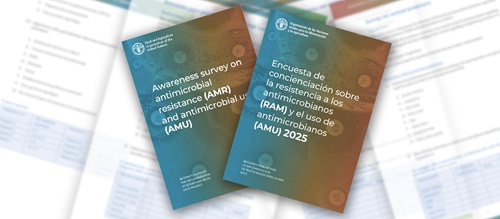
ACT / Survey published to support information gathering on AMR awareness
Two survey templates have been published under the Action to support implementation of Codex AMR texts (ACT) project. The templates, one in English and one in Spanish, include appropriate questions aimed...
.tmb-thb5x4.jpeg?Culture=en&sfvrsn=4561bf2b_1)
ACT / Colombia and the Plurinational State of Bolivia strengthen antimicrobial resistance surveillance
Colombia and the Plurinational State of Bolivia are stepping up efforts to tackle antimicrobial resistance (AMR), one of the world’s most pressing health threats, by strengthening laboratory surveillance...
-jpg.tmb-thb5x4.jpeg?Culture=en&sfvrsn=73645107_1)
ACT / Cambodia Strengthens Capacity on Costing and Budgeting for its Multi Sectoral Action Plan on AMR
Siem Reap, Cambodia – 25 February 2025 The Food and Agriculture Organization of the United Nations (FAO), through the Action to support implementation of Codex AMR texts (ACT) project funded by the Ministry...
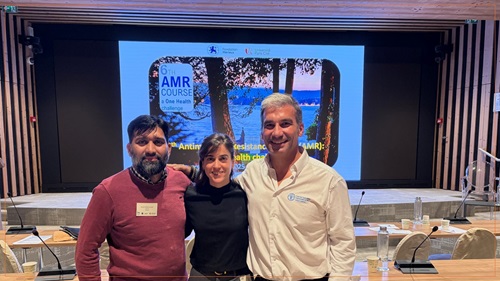
ACT/ ACT project contributes to capacity building on AMR
The FAO project “Action to support implementation of Codex AMR Texts (ACT)” contributed to the 6th edition of the AMR international course “A One Health Challenge”, held 10-14 November, 2025 in Veyrier-du-Lac,...