


ACT / Bolivian authorities forge ahead with the introduction of e-prescriptions for veterinary antimicrobials
.jpg?sfvrsn=8634eb_0)
Great progress was made in the fight against antimicrobial resistance (AMR) in the Plurinational State of Bolivia at the end of January, when officials and professionals met to agree on next steps for introducing e-prescriptions for veterinary antimicrobial drugs. The move is a bid to combat the threat of foodborne AMR in the country by restricting access to and overuse of some drugs, which are becoming ineffective against some bacterial, viral, fungal and parasitic organisms, causing a threat to life.
The first ever extraordinary meeting of the national Committee for the Containment of Antimicrobial Resistance in Agricultural Health and Food Safety (CC-RAM) on 27 and 28 January 2025 included officials from the national competent authority for agro-health and food safety (SENASAG), representatives from the private food production sector, including members of the Confederation of Cattlemen of Bolivia (CONGABOL) and the National Association of Poultry Farmers (ANA), academics and external experts. The CC-RAM committee provides a platform for dialogue between the productive sectors and the relevant authorities on specific topics, including e-prescriptions. Over the course of the two-day meeting, CC-RAM defined key aspects of the process for implementing the electronic veterinary prescriptions and outlined possible actions to promote the responsible and prudent use of antimicrobials in animal feed, which is another area where antimicrobials – especially growth promoters – are overused. A working group has also been formed within CC-RAM, specifically dedicated to evaluating the implementation of the electronic veterinary prescription. Its main goal is to identify the technical and legal requirements for effective implementation.
The Executive Director of SENASAG, Ing. Juan Miguel Quiroz Ugarte, when opening the meeting, emphasized that, thanks to the Republic of Korea-funded and FAO-implemented Action to support implementation of Codex AMR texts (ACT) project, the Plurinational State of Bolivia has made significant progress in implementing strategies to combat AMR in the agricultural sector. He also urged all stakeholders involved to remain committed to good practices in primary production and manufacturing, ensuring food safety for the protection of public health.
The ACT project helps beneficiary countries to raise awareness and improve monitoring and surveillance of foodborne AMR and supports good practices and regulatory frameworks, by promoting the implementation of the three key AMR texts elaborated by the Codex Alimentarius Commission (CAC). Electronic prescriptions will serve the dual purpose of helping to reduce antimicrobial use and providing a record of use for the government to act upon. “The first thing is that if an electronic veterinary prescription is implemented, we will be able to improve the health of the animals because it will allow us to have better health intelligence,” said Pablo Willson, a regional legal consultant for FAO in the Latin America and Caribbean region at a CC-RAM meeting in 2024. “Health decisions must be based on evidence, they must be based on data, and it will be especially useful for us to have information on antimicrobial inventories and information on the use of antimicrobials in animals in the country.”
FAO’s legal officer, Carmen Bullon, makes clear that, in collaboration with the ACT project, the Bolivian government is very engaged with the project and the process to implement Codex recommendations: “the project team and the national counterparts have been working a lot in identifying regulatory entry points to enhance the implementation of Codex recommendations on prescription, on labelling, on different aspects of the regulatory framework for veterinary medicine and products,” she said.
Read more
The ACT project
ACT in the Plurinational State of Bolivia (video)
ACT in the Plurinational State of Bolivia(Success story)
Related content

Strengthening Grenada's voice in global food standards
by the Codex Contact Point of Grenada On 5 June 2026, the Grenada Bureau of Standards hosted a training session for members of the National Codex Committee and the GDBS team, facilitated by Giuseppe...
.tmb-thb5x4.jpeg?Culture=en&sfvrsn=98219446_1)
ACT Project closure meeting successfully held in the Republic of Korea
The Action to support implementation of Codex AMR texts (ACT) project successfully held its closure meeting on 14 May 2026 in Seoul, Republic of Korea, bringing together donor representatives, colleagues...
.tmb-thb5x4.jpeg?Culture=en&sfvrsn=33d295f8_1)
The 6th Global Conference on Foodborne AMR successfully held in Seoul, highlighting the achievements of the ACT Project
The 6th Global Conference on Foodborne Antimicrobial Resistance (GCFA) was successfully held on 13 May 2026 in Seoul, Republic of Korea. The conference has become an important international platform for...
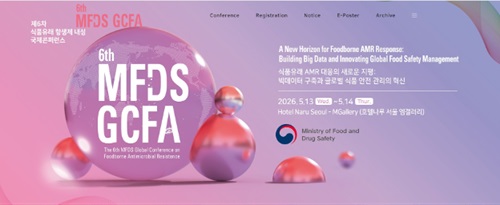
ACT project to share experiences at the 6th Global Conference on Foodborne AMR
The FAO-implemented Action to support implementation of Codex AMR texts (ACT) project will share its experiences and challenges at the 6th Global Conference on Foodborne Antimicrobial Resistance (GCFA),...
.tmb-thb5x4.jpeg?Culture=en&sfvrsn=de5f6081_1)
ACT / Pakistan strengthens One Health response to foodborne antimicrobial resistance at national conference
Pakistan is stepping up efforts to address foodborne antimicrobial resistance (AMR), one of the most pressing threats to public health, food safety and sustainable agriculture, through a strengthened One...
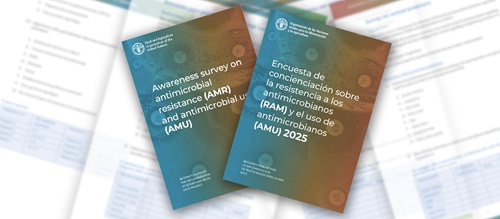
ACT / Survey published to support information gathering on AMR awareness
Two survey templates have been published under the Action to support implementation of Codex AMR texts (ACT) project. The templates, one in English and one in Spanish, include appropriate questions aimed...
.tmb-thb5x4.jpeg?Culture=en&sfvrsn=4561bf2b_1)
ACT / Colombia and the Plurinational State of Bolivia strengthen antimicrobial resistance surveillance
Colombia and the Plurinational State of Bolivia are stepping up efforts to tackle antimicrobial resistance (AMR), one of the world’s most pressing health threats, by strengthening laboratory surveillance...
-jpg.tmb-thb5x4.jpeg?Culture=en&sfvrsn=73645107_1)
ACT / Cambodia Strengthens Capacity on Costing and Budgeting for its Multi Sectoral Action Plan on AMR
Siem Reap, Cambodia – 25 February 2025 The Food and Agriculture Organization of the United Nations (FAO), through the Action to support implementation of Codex AMR texts (ACT) project funded by the Ministry...

ACT/ ACT project contributes to capacity building on AMR
The FAO project “Action to support implementation of Codex AMR Texts (ACT)” contributed to the 6th edition of the AMR international course “A One Health Challenge”, held 10-14 November, 2025 in Veyrier-du-Lac,...