


ACT / Surveys in Latin America provide key recommendations for increased awareness about foodborne AMR
.jpg?sfvrsn=d6cd33d9_0)
One of the aims of the Action to support implementation of Codex AMR texts (ACT) project is to raise awareness among stakeholders along the food production chain, about the need for responsible and prudent use of antimicrobials. When these drugs are overused or misused, they can become ineffective against bacterial, viral, fungal or parasitic infections, leading to what is known as antimicrobial resistance, or AMR.
The ACT project is being implemented in six countries. Two of these are Bolivia (Plurinational State of) and Colombia. Here, awareness-raising efforts have been supported by the implementation of awareness surveys to establish the state of baseline knowledge on the subject of AMR and antimicrobial use (AMU) among producers, professionals, and animal health technicians in the food and agriculture sectors.
In Colombia, two surveys were conducted and reviewed and validated by professionals from the Colombian Agricultural Institute (ICA) between November 2023 and February 2024: one for the plant production sector, and one for the animal production sector. In Bolivia, one survey explored awareness within the animal production sector and was reviewed and validated by the National Agricultural Health and Food Safety Service (SENASAG) between October 2023 and January 2024. Two distinct stakeholder groups were surveyed in each case: professionals and technicians, and producers.
Those surveyed were asked a series of questions, among other things, about their knowledge of what AMR means, when antimicrobials should be recommended for use, how to use them, and what they understood about the need to take precautionary measures toward the environment when disposing of expired or unused antimicrobials. Other questions explored respondents’ understanding of the impact and potential control mechanisms for AMR, and sources of information regarding AMR.
In both countries and across the stakeholder groups, the results were broadly similar. Among professionals and technicians in the plant and animal production sector, there appeared to be a general knowledge of what AMR is and most have a basic understanding of the characteristics of antimicrobials, but it was clear that this needs to be reinforced across all groups.
In the animal production sectors, regarding when to use or recommend antimicrobials, more than half of the respondents recognize the importance of a veterinarian’s instructions, but an important number of respondents nonetheless indicated their preventive use for diseases or use without veterinary guidance. There is wide recognition that antimicrobials should be acquired from authorized establishments. Regarding the disposal of leftover or expired antimicrobials, a large majority identifies the importance of their final disposal, taking precautions towards the environment. Most of the professionals and technicians recognized the negative impacts of AMR on health, food safety, and treatment effectiveness, with the need to reinforce the impacts of AMR on the productivity of agrifood systems and trade.
Regarding the control of AMR, the advice of a veterinary professional is considered important, as well as the responsible and prudent use of antimicrobials. However, it is necessary to reinforce preventive measures such as biosecurity and the use of vaccinations, and the use of alternatives to antimicrobials. In both countries, the official institutions and professional associations play a fundamental role in providing information on AMR. This highlights the importance of awareness and training of these groups on this issue.
“It was meaningful to find that they have some level of understanding of AMR—even if not always clearly articulated. This provides valuable insight to the countries, highlighting the need for deeper awareness-raising activities at farm level, and for ensuring that the knowledge is being applied in their daily practices,” said María de los Ángeles Gatica, ACT Regional Project Coordinator at FAO RLC.
The survey reports conclude with a series of recommendations to raise awareness about all related issues, and to reinforce these awareness raising exercises, together with more in-depth information about the causes and consequences of AMR in animal and plant/crop production, biosecurity and good production practices, along with good practices in the use of antimicrobials.
“It is recommended to conduct another round of surveys at the end of the project cycle to assess the impact of awareness-raising initiatives—even if indirectly,” concluded Myoengsin Choi, ACT Project Coordinator.
Plans for the publication of these surveys will be released separately.
Read more
Related content
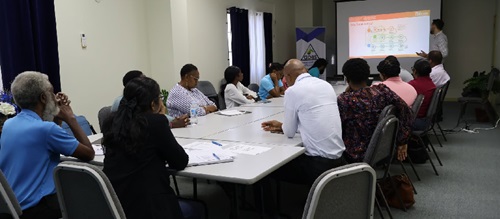
Strengthening Grenada's voice in global food standards
by the Codex Contact Point of Grenada On 5 June 2026, the Grenada Bureau of Standards hosted a training session for members of the National Codex Committee and the GDBS team, facilitated by Giuseppe...
.tmb-thb5x4.jpeg?Culture=en&sfvrsn=98219446_1)
ACT Project closure meeting successfully held in the Republic of Korea
The Action to support implementation of Codex AMR texts (ACT) project successfully held its closure meeting on 14 May 2026 in Seoul, Republic of Korea, bringing together donor representatives, colleagues...
.tmb-thb5x4.jpeg?Culture=en&sfvrsn=33d295f8_1)
The 6th Global Conference on Foodborne AMR successfully held in Seoul, highlighting the achievements of the ACT Project
The 6th Global Conference on Foodborne Antimicrobial Resistance (GCFA) was successfully held on 13 May 2026 in Seoul, Republic of Korea. The conference has become an important international platform for...
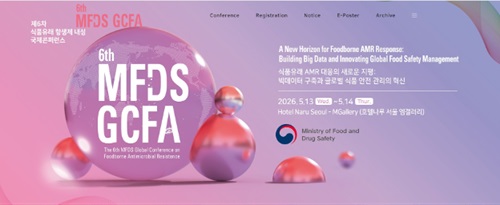
ACT project to share experiences at the 6th Global Conference on Foodborne AMR
The FAO-implemented Action to support implementation of Codex AMR texts (ACT) project will share its experiences and challenges at the 6th Global Conference on Foodborne Antimicrobial Resistance (GCFA),...
.tmb-thb5x4.jpeg?Culture=en&sfvrsn=de5f6081_1)
ACT / Pakistan strengthens One Health response to foodborne antimicrobial resistance at national conference
Pakistan is stepping up efforts to address foodborne antimicrobial resistance (AMR), one of the most pressing threats to public health, food safety and sustainable agriculture, through a strengthened One...
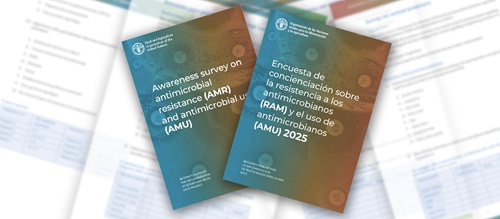
ACT / Survey published to support information gathering on AMR awareness
Two survey templates have been published under the Action to support implementation of Codex AMR texts (ACT) project. The templates, one in English and one in Spanish, include appropriate questions aimed...
.tmb-thb5x4.jpeg?Culture=en&sfvrsn=4561bf2b_1)
ACT / Colombia and the Plurinational State of Bolivia strengthen antimicrobial resistance surveillance
Colombia and the Plurinational State of Bolivia are stepping up efforts to tackle antimicrobial resistance (AMR), one of the world’s most pressing health threats, by strengthening laboratory surveillance...
-jpg.tmb-thb5x4.jpeg?Culture=en&sfvrsn=73645107_1)
ACT / Cambodia Strengthens Capacity on Costing and Budgeting for its Multi Sectoral Action Plan on AMR
Siem Reap, Cambodia – 25 February 2025 The Food and Agriculture Organization of the United Nations (FAO), through the Action to support implementation of Codex AMR texts (ACT) project funded by the Ministry...
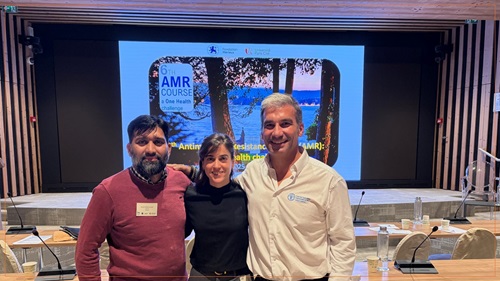
ACT/ ACT project contributes to capacity building on AMR
The FAO project “Action to support implementation of Codex AMR Texts (ACT)” contributed to the 6th edition of the AMR international course “A One Health Challenge”, held 10-14 November, 2025 in Veyrier-du-Lac,...