


ACT / Cambodia charts a path forward to reduce antimicrobial use through improved animal nutrition
.jpg?sfvrsn=6193a731_0)
Over 100 participants from across Cambodia’s animal production and feed sectors convened in Siem Reap 14–16 July for a national workshop focused on improving animal nutrition to reduce the need for antimicrobial use (AMU) in livestock farming. The event was jointly organized by the Food and Agriculture Organization of the United Nations (FAO) and Cambodia’s Ministry of Agriculture, Forestry and Fisheries (MAFF), with support from the Republic of Korea through the Action to support the implementation of Codex AMR texts (ACT) project.
The workshop brought together government officials, farmers, veterinarians, feed regulators, producers, academics and development partners to promote improved animal nutrition, feed quality and safety, and biosecurity as key strategies to reduce AMU and phase out the use of antimicrobials as growth promoters.
In his opening remarks, Pen Bunthoeun, Deputy Director of the Siem Reap Provincial Department of Agriculture, Forestry and Fisheries, emphasized the urgency of adopting “smarter” agricultural practices in light of Cambodia’s rapidly expanding livestock population, which includes over 4 million poultry and 181 000 pigs.
Alessandro Patriarchi, FAO’s Codex Regional Project Coordinator, reaffirmed the ACT project’s commitment to supporting Cambodia to contain foodborne antimicrobial resistance (AMR) through awareness raising, improved surveillance and implementation of Codex texts. “FAO looks forward to seeing Cambodia develop a concrete roadmap to reduce the need for antimicrobials at the farm level,” he said.
Che Savun, Deputy Secretary General of MAFF and Secretary of Cambodia’s One Health Committee, called for regulatory revisions in animal feed and nutrition and urged wider adoption of “smart” animal, crop and fisheries production practices to meet future development needs.
The workshop featured technical presentations, case studies and interactive sessions. Scientists and experts from academia, governmental institutions and the private sector shared practical animal nutrition and feed management approaches, with the introduction of new digital tools for improved nutrition planning in pig and poultry production.
During a breakout session, participants were divided into multi-stakeholder groups to propose concrete priority actions in three thematic areas:
- Phasing out antimicrobials as growth promoters
- Reducing the overall need for antimicrobial use
- Enhancing animal nutrition practices nationwide.
Key recommendations and the way forward
To advance antimicrobial stewardship and nutrition-based health, participants agreed on the following priorities:
- Eliminate antimicrobials as growth promoters through good animal nutrition and other husbandry practices
- Ensure adequate feed and veterinary drug regulation and their enforcement, Codex-aligned practices, and broader awareness
- Reduce antimicrobial dependence by improving feed safety and quality, biosecurity and vaccination
- Ensure access to veterinary services
- Mandate clear labelling of medicated feeds.
Improve animal nutrition by training farmers in cost-effective, species-specific feeding, enhancing inspection of feed ingredients, updating national veterinary strategies, and strengthening public–private partnerships. Participants praised the workshop’s inclusive format and practical insights.
Vathna Daroth, a feed producer, shared, “This training united farmers, manufacturers, and officials around a common purpose – sustainable animal health and public safety. I feel honoured to be part of this effort.”
Sou Seanglim, a poultry farmer from Takeo province, noted the high cost of antimicrobials and highlighted her reliance on biosecurity and hygiene. “When disease strikes, I call the provincial vet – I try to prevent rather than treat.”
Looking Ahead
With Cambodia preparing to graduate from the UN’s Least Developed Country category by 2029, the country’s agricultural transformation – especially in the livestock sector – will be central to sustained economic growth. Over 57 percent of rural households depend on livestock for a living, making responsible AMU and sound animal nutrition key to public health and development.
Daniela Battaglia, Animal Production Officer at FAO, concluded, “This event showcased the power of collaboration among government, the private sector, and academia in addressing AMR. Thanks to the continued support of the Republic of Korea, Cambodia is setting an example for the region.”
“This was the first animal nutrition-focused training under the ACT project,” said Myoengsin Choi, ACT Project Coordinator. “Given its success in Cambodia, we plan to replicate this model in other countries in the near future.”
Read more
Smarter Animal Nutrition Key to Reducing Antimicrobial Use in Cambodia
Cambodia in Action
Related content
.tmb-thb5x4.jpeg?Culture=en&sfvrsn=98219446_1)
ACT Project closure meeting successfully held in the Republic of Korea
The Action to support implementation of Codex AMR texts (ACT) project successfully held its closure meeting on 14 May 2026 in Seoul, Republic of Korea, bringing together donor representatives, colleagues...
.tmb-thb5x4.jpeg?Culture=en&sfvrsn=33d295f8_1)
The 6th Global Conference on Foodborne AMR successfully held in Seoul, highlighting the achievements of the ACT Project
The 6th Global Conference on Foodborne Antimicrobial Resistance (GCFA) was successfully held on 13 May 2026 in Seoul, Republic of Korea. The conference has become an important international platform for...
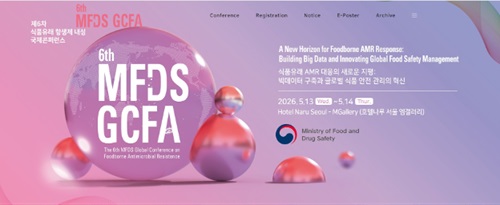
ACT project to share experiences at the 6th Global Conference on Foodborne AMR
The FAO-implemented Action to support implementation of Codex AMR texts (ACT) project will share its experiences and challenges at the 6th Global Conference on Foodborne Antimicrobial Resistance (GCFA),...
.tmb-thb5x4.jpeg?Culture=en&sfvrsn=de5f6081_1)
ACT / Pakistan strengthens One Health response to foodborne antimicrobial resistance at national conference
Pakistan is stepping up efforts to address foodborne antimicrobial resistance (AMR), one of the most pressing threats to public health, food safety and sustainable agriculture, through a strengthened One...
CTF / New success story from the Maldives shows a strengthened national food safety system
A new Success Story published by WHO and FAO demonstrates how support from the Codex Trust Fund (CTF) has helped the Maldives strengthen its national food safety system and improve its effective participation...
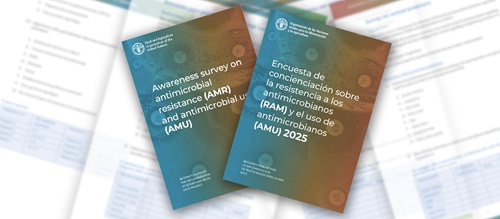
ACT / Survey published to support information gathering on AMR awareness
Two survey templates have been published under the Action to support implementation of Codex AMR texts (ACT) project. The templates, one in English and one in Spanish, include appropriate questions aimed...
.tmb-thb5x4.jpeg?Culture=en&sfvrsn=4561bf2b_1)
ACT / Colombia and the Plurinational State of Bolivia strengthen antimicrobial resistance surveillance
Colombia and the Plurinational State of Bolivia are stepping up efforts to tackle antimicrobial resistance (AMR), one of the world’s most pressing health threats, by strengthening laboratory surveillance...
-jpg.tmb-thb5x4.jpeg?Culture=en&sfvrsn=73645107_1)
ACT / Cambodia Strengthens Capacity on Costing and Budgeting for its Multi Sectoral Action Plan on AMR
Siem Reap, Cambodia – 25 February 2025 The Food and Agriculture Organization of the United Nations (FAO), through the Action to support implementation of Codex AMR texts (ACT) project funded by the Ministry...
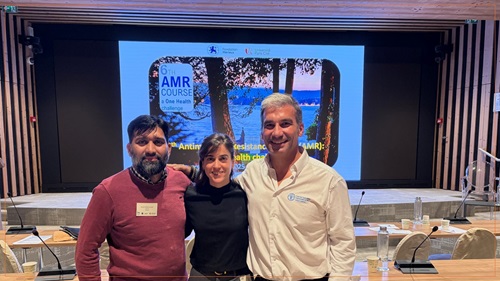
ACT/ ACT project contributes to capacity building on AMR
The FAO project “Action to support implementation of Codex AMR Texts (ACT)” contributed to the 6th edition of the AMR international course “A One Health Challenge”, held 10-14 November, 2025 in Veyrier-du-Lac,...