


Antimicrobial resistance (AMR)
AMR is a major global threat of increasing concern to human, animal, plant and environmental health. It also has implications for both food safety and food security and the economic well being of millions of farming households.
Food plays an important role in the development and spread of AMR. The presence of AMR microorganisms in agricultural production systems and food chains is a potential route of exposure for everyone. Good hygiene practices in agriculture, fundamental in achieving food safety, are also key to addressing antimicrobial resistance.
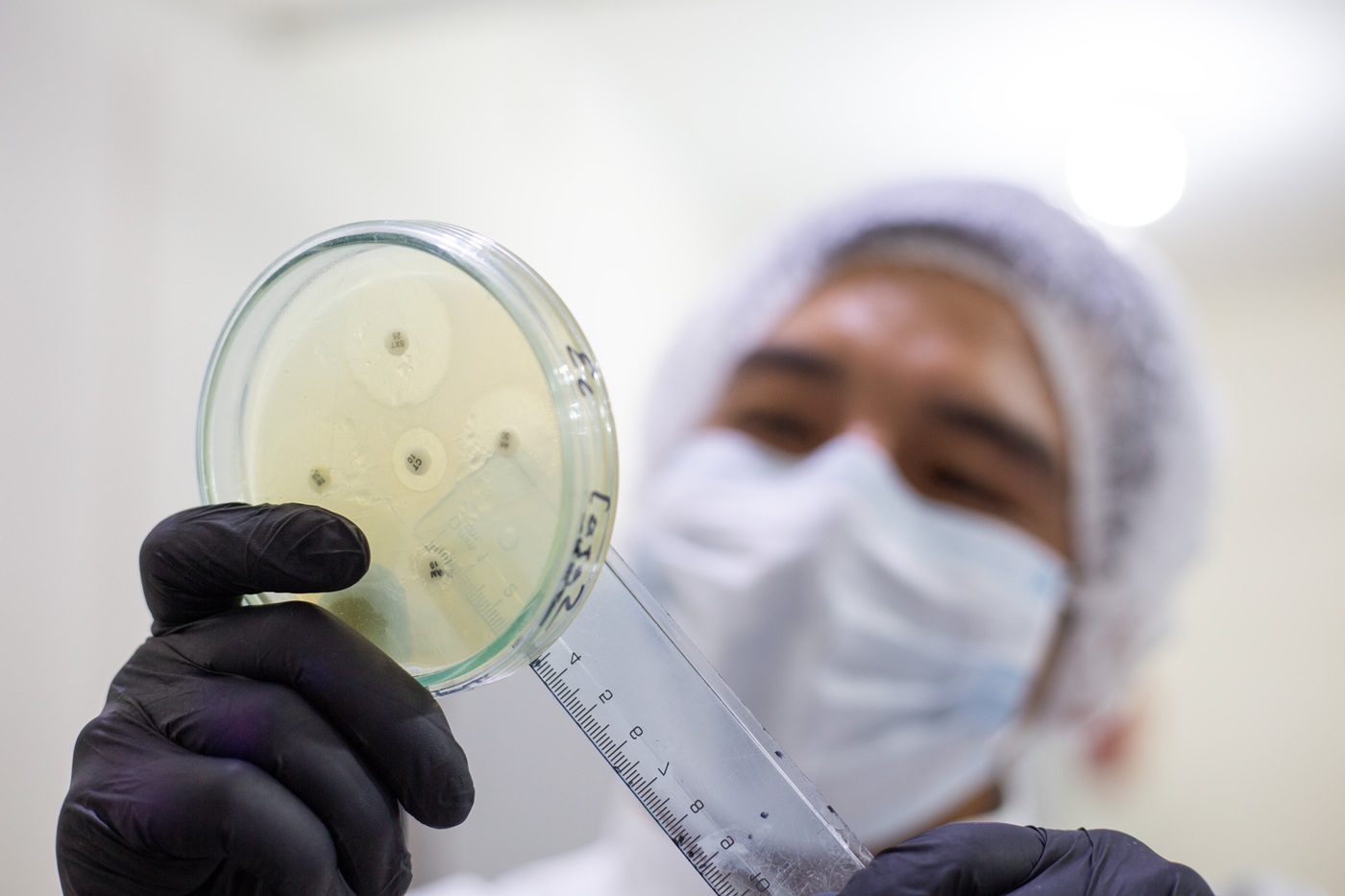
The Codex Alimentarius and AMR
Microorganisms (bacteria, parasites, viruses and fungi) in food are potential food safety hazards. The relationship between the use of antimicrobials (agents that can kill microorganisms or stop them from growing) in foods of animal and plant origin, and the emergence of resistant microorganisms in the food chain is a concern, and has been the subject of numerous national and international consultations.
The extent to which the use of antimicrobial agents in foods of animal and plant origin (including in aquaculture), or in human health, contributes to AMR in humans varies according to factors like geography and the microorganisms concerned.
When humans ingest food containing antimicrobial-resistant microorganisms, some species of microorganisms may cause illness. These and other species may also serve as a source of transferable resistance determinants for other microorganisms, including human pathogens.
In recognizing the need for a more general and multidisciplinary response to deal with AMR, in 2006 the Codex Alimentarius Commission (CAC) established an ad hoc Intergovernmental Task Force on Antimicrobial Resistance (TFAMR) to develop science-based guidance on how to assess and manage the risks to human health associated with the presence in food and feed (including aquaculture) and the transmission through food and feed of antimicrobial resistant microorganisms. TFAMR was re-established and, in 2021, finalized work on the Code of practice to minimize and contain foodborne antimicrobial resistance (CXC 61-2005), the Guidelines for risk analysis of foodborne antimicrobial resistance (CXG 77-2011) and the Guidelines on integrated monitoring and surveillance of foodborne antimicrobial resistance (CXG 94-2021). These are now known collectively as the Codex AMR texts.
Other Codex texts on residues of veterinary drugs in food, food hygiene and animal feed, also contribute to tackling AMR by preventing the development and minimizing the transmission of AMR through the food chain.
Key facts
Source FAO
Global antimicrobial use in livestock could increase by nearly 30 percent by 2040 under a business-as-usual scenario. However, improved animal health management, biosecurity, and productivity could reduce antimicrobial use by up to 57 percent.
27 different antimicrobial classes are used in animals.
Antibiotic resistance increased in over 40 percent of monitored pathogen-antibiotic combinations between 2018 and 2023, with annual increases ranging from 5 to 15 percent. Around 500 000 human deaths each year are related to AMR.
What is foodborne antimicrobial resistance?
Microbes can be present in the food we eat, and some of them can make people sick. These are called pathogens. These pathogens can also contain the genetic material that enables them to resist antimicrobials. So, if we eat food containing AMR pathogens and get sick, the illness can be more difficult to treat. The transmission of AMR microbes to people through food is called foodborne AMR.
Resources


Publications
ACT Tool to assess the implementation of Codex AMR texts - User manual
Codex texts provide a pathway for global action on foodborne AMR
Foodborne antimicrobial resistance - Compendium of Codex standards
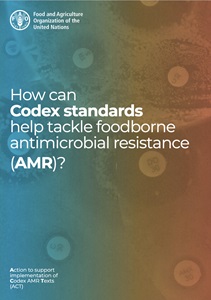
How can Codex standards help tackle foodborne antimicrobial resistance (AMR)? Action to support implementation of Codex AMR Texts (ACT)
Related news
.tmb-thb5x4.jpeg?Culture=en&sfvrsn=98219446_1)
ACT Project closure meeting successfully held in the Republic of Korea
The Action to support implementation of Codex AMR texts (ACT) project successfully held its closure meeting on 14 May 2026 in Seoul, Republic of Korea, bringing together donor representatives, colleagues...
.tmb-thb5x4.jpeg?Culture=en&sfvrsn=33d295f8_1)
The 6th Global Conference on Foodborne AMR successfully held in Seoul, highlighting the achievements of the ACT Project
The 6th Global Conference on Foodborne Antimicrobial Resistance (GCFA) was successfully held on 13 May 2026 in Seoul, Republic of Korea. The conference has become an important international platform for...
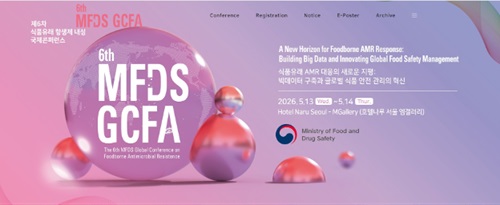
ACT project to share experiences at the 6th Global Conference on Foodborne AMR
The FAO-implemented Action to support implementation of Codex AMR texts (ACT) project will share its experiences and challenges at the 6th Global Conference on Foodborne Antimicrobial Resistance (GCFA),...
.tmb-thb5x4.jpeg?Culture=en&sfvrsn=de5f6081_1)
ACT / Pakistan strengthens One Health response to foodborne antimicrobial resistance at national conference
Pakistan is stepping up efforts to address foodborne antimicrobial resistance (AMR), one of the most pressing threats to public health, food safety and sustainable agriculture, through a strengthened One...
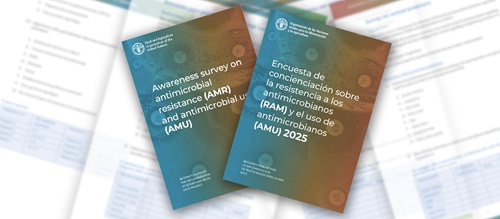
ACT / Survey published to support information gathering on AMR awareness
Two survey templates have been published under the Action to support implementation of Codex AMR texts (ACT) project. The templates, one in English and one in Spanish, include appropriate questions aimed...
.tmb-thb5x4.jpeg?Culture=en&sfvrsn=4561bf2b_1)
ACT / Colombia and the Plurinational State of Bolivia strengthen antimicrobial resistance surveillance
Colombia and the Plurinational State of Bolivia are stepping up efforts to tackle antimicrobial resistance (AMR), one of the world’s most pressing health threats, by strengthening laboratory surveillance...
-jpg.tmb-thb5x4.jpeg?Culture=en&sfvrsn=73645107_1)
ACT / Cambodia Strengthens Capacity on Costing and Budgeting for its Multi Sectoral Action Plan on AMR
Siem Reap, Cambodia – 25 February 2025 The Food and Agriculture Organization of the United Nations (FAO), through the Action to support implementation of Codex AMR texts (ACT) project funded by the Ministry...
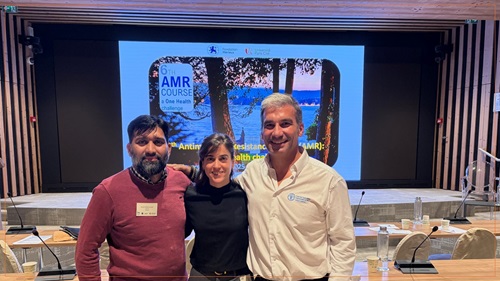
ACT/ ACT project contributes to capacity building on AMR
The FAO project “Action to support implementation of Codex AMR Texts (ACT)” contributed to the 6th edition of the AMR international course “A One Health Challenge”, held 10-14 November, 2025 in Veyrier-du-Lac,...
-(cropped).tmb-thb5x4.jpeg?Culture=en&sfvrsn=7dba5d40_1)
ACT / Cambodia strengthens feed inspection capacity to combat antimicrobial resistance
Cambodia is stepping up efforts to curb antimicrobial resistance (AMR) in livestock production by improving the skills of its feed inspectors. From 3–5 December 2025, the Food and Agriculture Organization...
-(cropped)-jpg.tmb-thb5x4.jpeg?Culture=en&sfvrsn=adfba591_1)
WAAW/ ACT countries acted now to protect our present and secure our future
World Antimicrobial Awareness Week (WAAW) was celebrated 18–24 November 2025, bringing renewed attention to the urgent global challenge posed by antimicrobial resistance (AMR). This year’s theme, “Act...
WAAW / Codex AMR texts are the global reference for tackling foodborne antimicrobial resistance
During World Antimicrobial Awareness Week (WAAW), taking place from 18 to 24 November under the theme “Act now: protect our present, secure our future”, it is worth remembering the value placed in Codex...
.tmb-thb5x4.jpeg?Culture=en&sfvrsn=bf38187b_1)
ACT / Cambodia workshop discusses medicated feed regulations
Siem Reap, Cambodia A workshop is being held 16–17 October to discuss the Draft Prakas on Medicated Feeds. Fifty-four government officials are attending, from the General Directorate of Animal Health and...