


Contaminants in food
Some contaminants are naturally present in the environment, for example in soil, water, and air, and may enter food as crops are grown or animals are raised. Others are formed unintentionally during food processing, particularly as a result of heat treatment, even when Good Agricultural Practices (GAPs), Good Manufacturing Practices (GMPs), and other appropriate practices are followed. In addition, some foods naturally contain substances that may pose food safety risks if present at high levels or if foods are not properly prepared.
Contaminants are therefore substances that are not intentionally added to food or feed, but that may be present as a result of production, processing, preparation, packing, transport, or storage, or due to environmental contamination or their natural presence in foods. They may originate from natural sources or human activities, and their presence in food is often unavoidable and unintended, even when measures to contain and minimize contamination are properly applied. Consequently, food safety management focuses on monitoring and mitigation measures to levels that do not pose a risk to human health, rather than complete elimination.
The Codex Alimentarius and contaminants in food
The Codex Committee on Contaminants in Foods (CCCF) is the primary body responsible for developing Codex Alimentarius standards in this area. The Committee recommends risk management measures, most notably maximum levels (MLs) for contaminants in foods, including feed commodities, for adoption by the Codex Alimentarius Commission (CAC). These measures are developed in accordance with the Risk Analysis Principles applied by CCCF, which also govern its interaction with the Joint FAO/WHO Expert Committee on Food Additives (JECFA), the body that provides the scientific advice underpinning the establishment of risk-based MLs. Biological agents such as bacteria and viruses have not been the subject of systematic risk management by CCCF, but by the Codex Committee on Food Hygiene (CCFH).
MLs and CoPs
CCCF establishes MLs for contaminants in foods and feed moving in international trade. To support the application of these MLs, the Committee also develops codes of practice (CoPs), which are compendia of risk management measures applied across the food chain (e.g., GAPs, GMPs) that help contain food contamination, thereby facilitating compliance with MLs when they exist.
MLs and GLs
There may be circumstances in which, due to an incomplete risk assessment or the nature of the contaminant, establishing a maximum level (ML) is not yet possible or appropriate. In such cases, CCCF may establish guideline levels (GLs) rather than MLs. GLs use scientific risk assessment to guide decisions when MLs are unavailable and can offer provisional risk management until more data allows for setting MLs.
Guideline levels are not enforcement limits and are therefore not intended to trigger automatic rejection of food consignments. Instead, they serve as intervention levels, assisting competent authorities in interpreting analytical results and determining whether contamination levels warrant concern. Where such concern is identified, GLs help trigger appropriate follow-up actions, such as investigating sources of contamination or applying targeted risk-reduction measures to facilitate continued safe trade.
MLs and sampling plans
Codex maximum levels (MLs) for contaminants are not applied in isolation. They are typically supported by codes of practice (CoPs) and, where relevant, sampling plans linked to the ML. Sampling plans are particularly important for contaminants that are unevenly distributed within a lot, such as mycotoxins. For these contaminants, sampling plans help ensure that MLs are applied in a scientifically robust and fair manner by reducing the likelihood that highly contaminated lots are accepted and by minimizing the rejection of lots that genuinely comply with MLs but exhibit natural variability.
Sampling plans, together with appropriate performance criteria and corresponding analytical methods, are therefore a core component of the Codex risk‑based management framework for contaminants, supporting consumer protection, risk‑proportionate enforcement, and fair practices in international trade.
Key facts
Contaminants are unavoidable food safety risks. They are not intentionally added to food or feed and may arise from environmental sources, processing, or natural occurrence; effective food safety policy therefore focuses on risk‑based monitoring and mitigation, rather than zero-tolerance approaches.
MLs, informed by FAO/WHO risk assessments and supported by CoPs and sampling plans, provide the international risk-based framework for managing contaminants, enabling competent authorities to take informed, risk-proportionate action that combines exposure-reduction objectives with practical measures across the food chain while balancing public health protection, food security, and trade impacts.
When establishing an ML is not yet possible, Codex may set Guideline Levels (GLs) as science-based, non-enforcement reference values to support proportionate risk management, helping authorities interpret results, identify potential concerns, and trigger follow-up actions without necessarily rejecting consignments or creating unnecessary trade barriers.
Why does CAC set maximum levels for contaminants?
Resources
Publications
Codex work provides solutions to the top food safety hazards
.tmb-tmbmd-rec.jpeg?Culture=en&sfvrsn=ad706707_9)
Related news
CCCF18 / Consumer health once again at the forefront
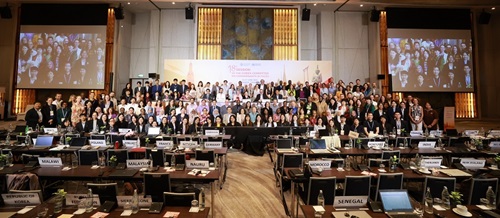
The 18th Session of the Codex Committee on Contaminants in Foods (CCCF) concluded in Bangkok, Thailand. The meeting, co-hosted by the Kingdom of the Netherlands and Thailand, saw significant progress on...
.tmb-thb5x4.jpeg?Culture=en&sfvrsn=b7d9d97f_1)
CCCF18 / Co-hosted session opens with commitment to collaboration
The 18th session of the Codex Committee on Contaminants in Food (CCCF) has opened in Bangkok, Thailand, where the Committee’s host, the Kingdom of the Netherlands will co-host proceedings with Thailand. Anongnat...
CCCF18 / "Complex issues with real-world impact"
The Eighteenth Session of the Codex Committee on Contaminants in Foods (CCCF18) will take place 23–27 June 2025 in Bangkok, Thailand. We spoke to Sally Hoffer, from the Dutch Ministry of Agriculture, Nature...
.tmb-thb5x4.jpeg?Culture=en&sfvrsn=ddbf8825_1)
CCCF17/ President of Panama gives opening speech for contaminants meeting
The 17th session of the Codex Committee on Contaminants in Food (CCCF) was declared officially open in Panama City, 15 April, following speeches from His Excellency the President of the Republic of Panama,...
“Move things forward and get new Codes out there in the world” - Contaminants committee begins next week
The Seventeenth Session of the Codex Committee on Contaminants in Foods (CCCF17) will take place 15–19 April 2024 in Panama City, Panama. As the meeting approaches, we spoke to Sally Hoffer, from the Dutch...
CCCF / cooperation at international level key to safety and quality of food
“In light of today’s global political and environmental problems, the work of the Codex Alimentarius members on ensuring the safety of food is more relevant than ever,” said Ernst Kuipers, Minister of...
.tmb-thb5x4.jpeg?Culture=en&sfvrsn=a4fae773_1)
There are many challenges coming our way – the future of food is discussed at a CCCF side event
The challenges and opportunities posed by the emerging issues in agrifood systems identified by FAO’s foresight programme were outlined at a side event of the Codex Committee on Contaminants in Food in...
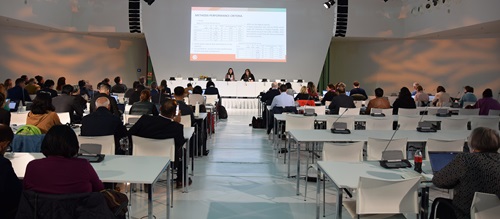
CCCF16 / technical working group sessions underway at Codex contaminants committee
Delegates gathered in Utrecht, Netherlands (Kingdom of the) on Monday 17 April 2023 to take part in working groups on a range of technical topics that will be on the agenda in the full plenary of the Codex...
The safety standards set by CCCF at the core of the Codex mandate
Over 400 delegates gathered online for the opening of the Codex Committee on Contaminants in Food (CCCF) which is taking place from 9 to 24 May 2022, hosted by The Netherlands from Utrecht. The committee...
Contaminants committee proposes new maximum levels for cadmium in chocolate
The 14th session of the Codex Committee on Contaminants in Food (CCCF14) has recommended for adoption to the Codex Alimentarius Commission new maximum levels (MLs) for cadmium in chocolate. Codex MLs ensure...

CCCF14 / Taking part virtually in Codex meetings
“No long-haul flights, no jet lag and a chance for team participation are some of the advantages of virtual meetings,” said Pisan Pongsapitch, Thailand one of over 350 delegates currently present at the...
CCCF14 underway / Contaminants a real and invisible threat to the safety of our food
The Director General for Agriculture and Food Quality of the Ministry of Agriculture, Nature and Food Quality in The Netherlands, Ms Marije Beens opened the 14th session of the Codex Committee on Contaminants...