


It’s time for fixed definitions for food fraud and food integrity
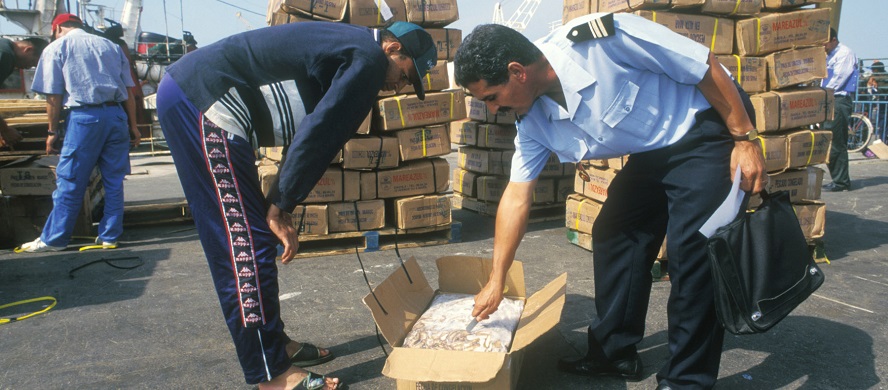

We need a food supply system that produces safe food, produces nutritious food, and also produces authentic food, which is free of fraudulent activity.
Dr Chris Elliot
Food fraud is the intentional adulteration of food for financial gain. This can include deliberate substitution, dilution, counterfeiting, or misrepresentation of food, ingredients or packaging; or even false or misleading statements made about a product. All these examples of fraud can have a negative impact on the quality and safety aspects of foods. They can also damage consumer confidence and harm food businesses.


At a recent session of the FAO/WHO Coordinating Committee for the Near East, Dr Chris Elliot, Vice-Chancellor in the Faculty of Medicine, Health and Life Sciences at Belfast University spoke about the current situation and gave his advice on how Codex can contribute to controlling and combating fraud in the food chain.
“In my experience, virtually every type of food is subject to some form of fraud”, said Dr Elliot. “The more complex the supply chains are, the more processed foods are, the more fraud opportunities there are”, he added.
Education
Dr Elliot spoke about the need for developing countries to begin a process of education: “Educating the food industries …, educating governments …, about what measures have to be taken to deter food fraud.”
Where does fraud take place?
“In terms of where the fraud happens, it can happen at various stages,” explained Elliot. “It can happen during the primary production, on the processing, but often it happens during the storage and transportation.” With foods travelling before processing there are “multiple points of vulnerability” he said.
The smaller the company, the more difficult it gets
Small businesses are advised to always think where they are sourcing materials and that appropriate checks and measures are in place. Large industry can support this process by ensuring their suppliers are regularly audited.
Dr Chris Elliot talks about responsibilities for a safe food supply system and calls for Codex to work on an international definition of fraud.
Technology will play an enormous role
In the battle to deter food fraud “technology will play an enormous role”, Elliot said. The use of things like block chain technology and the use of smartphone diagnostics will be “fantastic tools to give the food production industry” so auditors and people from regulatory authorities can “go out and test where food is being produced”.
Credits
©FAO/Giuseppe Bizzarri / FAO
©FAO/Vyacheslav Oseledko / FAO
© Roberto Sciotti
Video montage Bin Han
Related content
-jpeg.tmb-thb5x4.jpeg?Culture=en&sfvrsn=9b7f8bef_1)
CCNE strengthens regional coordination ahead of CAC49
As part of their continued commitment to strengthening regional coordination and enhancing participation in Codex activities, the FAO/WHO Coordinating Committee for the Near East (CCNE) and the Arab Industrial...
.tmb-thb5x4.jpeg?Culture=en&sfvrsn=98219446_1)
ACT Project closure meeting successfully held in the Republic of Korea
The Action to support implementation of Codex AMR texts (ACT) project successfully held its closure meeting on 14 May 2026 in Seoul, Republic of Korea, bringing together donor representatives, colleagues...
.tmb-thb5x4.jpeg?Culture=en&sfvrsn=33d295f8_1)
The 6th Global Conference on Foodborne AMR successfully held in Seoul, highlighting the achievements of the ACT Project
The 6th Global Conference on Foodborne Antimicrobial Resistance (GCFA) was successfully held on 13 May 2026 in Seoul, Republic of Korea. The conference has become an important international platform for...
-png.tmb-thb5x4.jpeg?Culture=en&sfvrsn=4201df15_1)
The Near East region is strengthening participation in Codex
From the CCNE Secretariat The FAO/WHO Coordinating Committee for the Near East (CCNE), in collaboration with the Arab Codex Initiative, continues to strengthen scientific coordination and regional engagement...
ACT project to share experiences at the 6th Global Conference on Foodborne AMR
The FAO-implemented Action to support implementation of Codex AMR texts (ACT) project will share its experiences and challenges at the 6th Global Conference on Foodborne Antimicrobial Resistance (GCFA),...
.tmb-thb5x4.jpeg?Culture=en&sfvrsn=de5f6081_1)
ACT / Pakistan strengthens One Health response to foodborne antimicrobial resistance at national conference
Pakistan is stepping up efforts to address foodborne antimicrobial resistance (AMR), one of the most pressing threats to public health, food safety and sustainable agriculture, through a strengthened One...
ACT / Survey published to support information gathering on AMR awareness
Two survey templates have been published under the Action to support implementation of Codex AMR texts (ACT) project. The templates, one in English and one in Spanish, include appropriate questions aimed...
.tmb-thb5x4.jpeg?Culture=en&sfvrsn=4561bf2b_1)
ACT / Colombia and the Plurinational State of Bolivia strengthen antimicrobial resistance surveillance
Colombia and the Plurinational State of Bolivia are stepping up efforts to tackle antimicrobial resistance (AMR), one of the world’s most pressing health threats, by strengthening laboratory surveillance...
.tmb-thb5x4.jpeg?Culture=en&sfvrsn=9d3294cd_1)
UAE is committed to its role as geographic representative for the Near East
Abu Dhabi, 26 February 2026 The United Arab Emirates (UAE) was been elected as the geographic representative for the Near East region to the Executive Committee of the Codex Alimentarius Commission for...