


Spices sector gears up for post-COVID challenges and revival
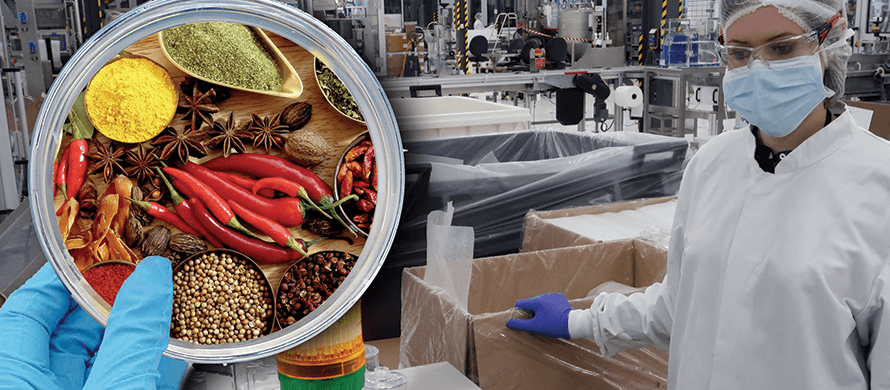
by Codex Committee on Spices and Culinary Herbs (CCSCH) Secretariat
Towards the end of 2019, a new strain of coronavirus named SARS-CoV-2, which showed unprecedented virulence and severity, was reported from Wuhan, China. Within about three months, the number of confirmed cases of infection, called COVID-19, had soared and the virus had spread to many countries across the world with exponentially rising infection and death rates. The outbreak was then declared a global health emergency, and on 11th March 2020, WHO made the assessment that COVID-19 can be characterized as a pandemic.
Now, even as we pass the half-year mark after the first reporting of the novel coronavirus, it is clear that the world is still in the middle of this crisis which, according to all indications, might last another year. The effects of the pandemic, including the economic, political and social consequences, are only becoming clear and might last well into the next decade. This means that the post-COVID era will pose severe challenges all over the world; all spheres of human activity will have to adapt and change to address them.
Challenges in the Spices Sector
The world's spices sector, with its value chain stretching from the main production hubs in developing countries to the international spice trade network spread across the world, has also been severely affected by the pandemic. Some of the main challenges that the sector faces are:
- Raw material shortages: Many of the locations in developing countries across the world which are major production hubs for spices have been severely affected, causing raw material shortages to the spice industry.
- Labour shortages: In the wake of the lockdown measures implemented by national governments to curb the spread of the virus, there have been labour shortages caused by the migration of the workforce.
- Infrastructure and support structure disruptions: The preventive measures implemented for COVID-19 have meant that many key government offices in the trade support structure are understaffed, resulting in government approvals getting delayed, and completion of physical documentation posing problems, etc.
- Continuing operation on the industry floor, in the midst of social distancing, and ensuring safety of the product, is also a major issue.
- Ensuring quality of products: The control measures have reduced the availability of third-party laboratories for testing product / raw material quality and safety, and small-scale production units without their own in-house testing facilities are finding this challenging.
- Marketing issues: Primary producers across the world have been hit by withdrawal of marketing facilities due to lockdown measures, like suspension of auctions, closing wholesale markets etc. For export business, COVID-19 has posed challenges with additional border controls and established export supply lines being disrupted.
- Economic situation: Although the entire sector has been hit by the economic disruptions, the small-scale spice producers and processors will be most severely affected.

Gearing up to meet the post-COVID challenges

leveraging technology and introducing procedural changes will be key.
The stakeholders in the spice sector spread across the world are waking up to fact that the post-COVID period will have new rules of operation that have emerged naturally out of the chaos caused by the pandemic. Like in all other sectors, leveraging technology and introducing procedural changes will be key to adjusting the operations to these new rules. Some opportunities for such changes are:
- COVID-19 has brought into focus the importance of food safety. The spice industry across the world, like other food industries, is taking renewed interest in the rigorous implementation of HACCP and Food Safety Management Systems, with additional checkpoints for microbiological contamination.
- Spice industries across the world are moving towards implementing more automation in their operations, both as a measure to enhance food safety and to address labour issues.
- Increased information technology solutions are being implemented across the world. Industries employing supervised farming for raw materials are deploying mobile apps for constant interactions with contract farmers without the need for physical intervention for guidance.
- Guidance documents for managing food industry operations in the times of COVID-19, including by World Health Organization, have been issued. These documents are being adopted by the spice industry to manage their operations and to keep employees, and the product, safe from health concerns.
- Rapid testing tools for quality testing raw materials for procurement are being increasingly leveraged by the industry. As an example, assessing moisture content using portable moisture meters, estimation of curcumin in turmeric and colour in chillies using near-IR portable spectrophotometers are finding increasing adoption in the Indian spice industry.
- The business disruptions due to governance bottlenecks that have come to light in recent months due to the preventive measures for COVID-19 have made the governments across the world aware of the need for more decentralized approval procedures. Paperless, online approvals for government support schemes and customs documentation are being actively considered by governments across the world.

The extent of support of governments to assist the affected stakeholders might vary in range and reach; and these measures will require time to attain full effectiveness. In the meantime, the above measures that the spice industry, trade and support structures are implementing globally bring new hope to future prospects.
The 5th Session of Codex Committee on Spices and Culinary Herbs
Standards bring clarity and purpose to counter confusion and chaos in times of crises making the work of the Codex Committee on Spices and Culinary Herbs (CCSCH) in setting Codex standards for these commodities even more relevant in the present scenario. Unfortunately, like many other Codex committee sessions, CCSCH5 was also affected by the pandemic, and the session which was to be held from 21-26 September 2020 is now postponed to 26-30 April 2021. The venue for the postponed meeting will be Kochi, Kerala, India.
The additional time gained by the postponement is being put to good use by this committee, even in the face of all the current challenges. The seven electronic working groups, working on five standards at step 6 in the Codex process (saffron, cloves, basil, ginger and oregano) and two standards at step 3 (chilli/paprika and nutmeg) are continuing their work to refine the draft documents as much as possible before the physical session in April 2020. Hopefully, this extra effort will be useful to address the outstanding issues in the draft standards, thus helping to bring about more rapid entry into the Codex Alimentarius.

Standards bring clarity and purpose to counter confusion and chaos in times of crises.
In conclusion, for the spices sector, the present crisis has brought into focus the need for sustainable production of spices, end-to-end traceability systems for the spice value chain, and the modernization of wholesale markets. More than ever, the world is now aware of the need to have optimized and robust crisis management protocols in place for better preparedness.

Codex Committee on Spices and Culinary Herbs - 4th session, 2019, Kerala, India.
This pandemic presents opportunities for growth as well as challenges; and by adapting to the changing times, the world's spice sector, and the Codex spices committee, will come out of this crisis with renewed strength.
Read more
Learn about the Codex Committee on Spices and Culinary Herbs.
Photo credit
© CCSCH Secretariat
Related content
.tmb-thb5x4.jpeg?Culture=en&sfvrsn=33d295f8_1)
The 6th Global Conference on Foodborne AMR successfully held in Seoul, highlighting the achievements of the ACT Project
The 6th Global Conference on Foodborne Antimicrobial Resistance (GCFA) was successfully held on 13 May 2026 in Seoul, Republic of Korea. The conference has become an important international platform for...
ACT project to share experiences at the 6th Global Conference on Foodborne AMR
The FAO-implemented Action to support implementation of Codex AMR texts (ACT) project will share its experiences and challenges at the 6th Global Conference on Foodborne Antimicrobial Resistance (GCFA),...
.tmb-thb5x4.jpeg?Culture=en&sfvrsn=de5f6081_1)
ACT / Pakistan strengthens One Health response to foodborne antimicrobial resistance at national conference
Pakistan is stepping up efforts to address foodborne antimicrobial resistance (AMR), one of the most pressing threats to public health, food safety and sustainable agriculture, through a strengthened One...

CTF / New success story from the Maldives shows a strengthened national food safety system
A new Success Story published by WHO and FAO demonstrates how support from the Codex Trust Fund (CTF) has helped the Maldives strengthen its national food safety system and improve its effective participation...
-jpg.tmb-thb5x4.jpeg?Culture=en&sfvrsn=73645107_1)
ACT / Cambodia Strengthens Capacity on Costing and Budgeting for its Multi Sectoral Action Plan on AMR
Siem Reap, Cambodia – 25 February 2025 The Food and Agriculture Organization of the United Nations (FAO), through the Action to support implementation of Codex AMR texts (ACT) project funded by the Ministry...
-(cropped).tmb-thb5x4.jpeg?Culture=en&sfvrsn=7dba5d40_1)
ACT / Cambodia strengthens feed inspection capacity to combat antimicrobial resistance
Cambodia is stepping up efforts to curb antimicrobial resistance (AMR) in livestock production by improving the skills of its feed inspectors. From 3–5 December 2025, the Food and Agriculture Organization...
Germany to host the International Training for Safer Food 2026
For the 7th time, the German Federal Office of Consumer Protection and Food Safety (BVL), will host the International Training for Safer Food (ITS Food). ITS Food is a training series on food safety risk...

CAC48 / Coming soon: a new standard for Codex, thanks in part to the Codex Trust Fund
The Codex Trust Fund (CTF) is facing challenges that may mean it will have to be restructured, changed, re-thought. But this should not detract from the incredible impacts that it has been and still is...

Regional workshop strengthens use of the Codex online commenting system in Asia
Building on the positive momentum following the 23rd Session of the FAO/WHO Coordinating Committee for Asia (CCASIA23), the FAO Regional Office for Asia and the Pacific (FAO RAP) under the regional project...