


CCFA55 / Setting standards for a changing food landscape
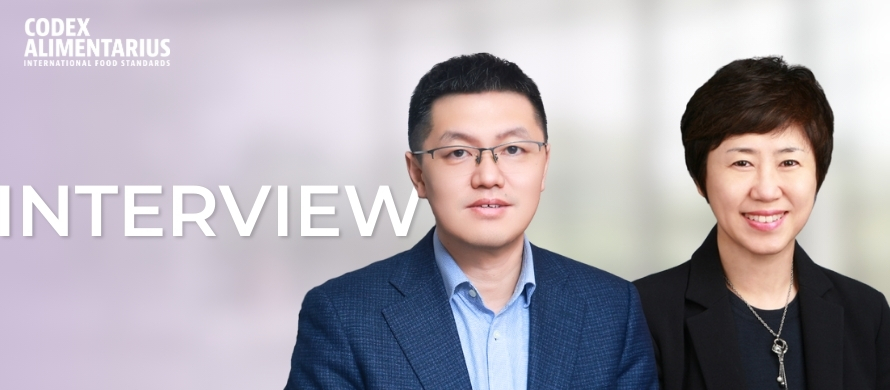
The 55th session of the Codex Committee on Food Additives (CCFA55), convening in Seoul on 24 March, with physical working groups meeting on 21–22 March, will bring together leading experts to address the evolving challenges of food safety and additive regulation.
We sat down with Dr Fan Yongxian, Professor of the China National Centre for Food Safety Risk Assessment (CFSA), and Committee Chairperson, and Prof. Hae Jung Yoon, a seasoned JECFA expert and co-Chairperson of CCFA55, to discuss the meeting’s priorities, the challenges of regulating emerging food technologies, and the collaborative spirit driving international food safety standards.
Q. Dr Fan, Prof Yoon, thank you for joining us. Dr Fan, the 55th session of the CCFA is just one week away. What key priorities or challenges do you anticipate the committee will focus on during this meeting in Seoul, especially regarding the safety and regulation of food additives?
DR FAN - I am more than excited to have CCFA55 in Seoul this year and am looking forward to meeting food additives people all over the world again at this annually international food additives events. We have a full week agenda in front of us, as always. The GSFA physical working group is going to meet on Friday morning, 21 March, followed by alignment physical working group on Saturday afternoon. The outcomes of these working group discussion will serve as a strong base for the plenary, supporting the core work of this Committee.
I can see a significant progress has been made on the discussion paper addressing divergence between GSFA and commodity standards. As CCFA54 decided to explore more options to avoid the divergences by strengthening the GSFA as the single reference for food additives and minimizing the incorporation of specific food additive provisions in commodity standards as much as possible. I hope a concrete and practical approach can be agreed by the Committee and be used to guide the development of food additive provisions in the Codex system. One more item I would like to highlight is the discussion on cell culture media components, which is going to be touched upon in this Committee. New Food Sources and Production Systems (NFPS) has been discussed in the Commission for sessions, we finally step forward at Committee level. This is iconic for CCFA. I personally anticipate the discussion on this topic considering it might be very constructive to the future work of CCFA.
Q: Prof. Yoon, you have been a JECFA member for many years, and this year, you will serve as a co-Chairperson of CCFA55. Given that the role of an independent expert in JECFA differs significantly from that of a co-Chairperson, how do you plan to approach this new responsibility?
PROF. YOON -
My extensive experience as a member of JECFA has reinforced my deep appreciation for unbiased scientific evaluation. JECFA's role has always been to provide clear, independent, and scientifically rigorous assessments on food safety. This is a key principle I will carry into my new position as co-Chairperson of CCFA55. While JECFA's work primarily revolves around technical assessments, the role of a co-Chairperson requires a shift toward facilitating consensus and fostering productive dialogue among diverse stakeholders. In my new responsibility, I plan to draw on my JECFA background to ensure that discussions are informed, fair, and transparent. My focus will be to guide the Committee in making decisions grounded in scientific evidence, while also taking into account the practical considerations of member states. I understand that balancing scientific rigor with the diverse needs and perspectives of countries is crucial for effective decision-making. My goal is to lead the Committee towards robust and beneficial outcomes that enhance food safety worldwide, ensuring that all decisions serve the broader public health objectives of Codex.
Q. Dr Fan, Prof. Yoon, we briefly mentioned it already: this year CCFA will be co-hosted in the Republic of Korea. What is the value of co-hosting a Codex meeting in your view?
DR FAN - Co-hosting a Codex committee meeting is not only a demonstration of commitment to international food standards but also a strategic opportunity to build stronger partnerships, enhance technical expertise, and increase global influence in food safety and trade. It fosters collaboration, inclusivity, and efficiency, ultimately benefiting both the Codex system and the advancement of international food standardization efforts. This session marks a historic moment in CCFA. Since China became the host country of CCFA, it is the first time for China co-hosting this committee with another member country, the Republic of Korea. This collaboration marks our shared commitment to advancing global food safety standards and promoting international cooperation. This meeting also presents a unique opportunity to strengthen the understanding and exchange between China and the Republic of Korea. By working together, we can enhance coordination and cooperation within the Asian region, setting a precedent for collaborative efforts that will benefit not only our countries but the global community as well.
PROF YOON -
Co-hosting CCFA in the Republic of Korea is an important step in affirming our nation’s commitment to global food safety and international collaboration. This opportunity not only allows Korea to contribute its extensive expertise in food safety, but it also provides a unique platform to showcase the infrastructure, technological advancements, and research capabilities we have developed in the field. By co-hosting, we can foster deeper international partnerships and strengthen our connections with other Codex Member Countries, facilitating a more unified approach to global food safety standards. This event is an excellent opportunity for Korea to engage directly in Codex processes and for our government and stakeholders to play an active role in shaping the future of food safety regulations. It allows us to share our experiences and learn from others, enriching the global discourse around food standardization. Co-hosting also promotes greater visibility and awareness of Codex standards within Korea, encouraging local industries and consumers to align more closely with internationally recognized food safety practices. By contributing to this collaborative environment, we aim to support the advancement of food safety not just for our region but for the entire global community. This session will, therefore, help set the stage for continued cooperation between Korea and other countries, building stronger, more resilient food safety systems worldwide.

CCFA55 is paramount for advancing Codex objectives
Q. As cell-based foods gain traction globally, how is CCFA preparing to evaluate and regulate food additives used in these innovative products?
DR FAN - As part of NFPS, the importance of cell-based foods has been generally recognized. Challenges posed by NFPS. including cell-based foods, have been identified globally as well. We believe that Codex could play a crucial role in establishing an internationally recognized risk assessment approach, and with that the relevant risk management action can be taken by technical committees. We may have a long way to go on the scope and functions of all possible cell-based components, followed by the risk assessment procedure on the components used as food additives as defined in GSFA. I hope this session marks the beginning of a productive and insightful discussion on this important topic.
Q. How does the Committee plan to address emerging trends in food technology, such as new additive formulations or consumer demands, during this session?
PROF YOON - The Committee recognizes the importance of addressing emerging food technology trends. During this session, we aim to facilitate discussions on new additive formulations and evolving consumer demands through a balanced approach. We will prioritize scientific evaluations, while also considering the practical implications and potential benefits for food production and consumer choice. We encourage Member Countries to provide comprehensive information and engage in constructive dialogue, ensuring that any recommendations reflect the latest scientific understanding and promote global food safety.
Q. Looking back at past CCFA sessions, how do you see the outcomes of this 55th session contributing to the broader goals of the Codex Alimentarius Commission in protecting consumer health and facilitating fair practices in the food trade?
DR FAN - I am fully confident that we are going to have another successful and fruitful session of CCFA. Hundreds of food additive provisions will be reviewed and adopted; while dozens of new food additive evaluated or re-evaluated by JECFA will have their specifications approved by the committee. As a result, these food additives may progress through the stepwise process of inclusion or modification in the GSFA. All the outcomes matter a lot to the core values of Codex: protecting consumer health and facilitating fair practices in global food trade.
PROF YOON - CCFA55 is paramount for advancing Codex objectives. We will prioritize technical discussions to ensure effective international standards that protect global consumer health. Through synergistic dialogue, we will address data gaps and promote fair food trade. This session will generate substantive, consequential outcomes, fortifying global food integrity. We are dedicated to evidence-based decisions, demanding comprehensive analysis of new and innovative technologies and formulating protective standards. We will confront challenges resolutely, forging collaborative resolutions to ensure comprehensive inclusivity. Our proactive stance will solidify CCFA55’s contribution to Codex as an authoritative force for science-based food safety.
Read more
Related content
.tmb-thb5x4.jpeg?Culture=en&sfvrsn=33d295f8_1)
The 6th Global Conference on Foodborne AMR successfully held in Seoul, highlighting the achievements of the ACT Project
The 6th Global Conference on Foodborne Antimicrobial Resistance (GCFA) was successfully held on 13 May 2026 in Seoul, Republic of Korea. The conference has become an important international platform for...
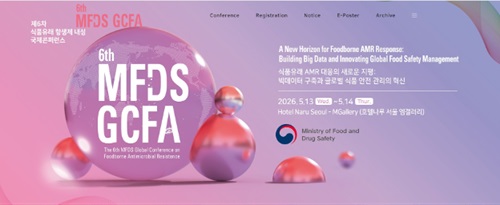
ACT project to share experiences at the 6th Global Conference on Foodborne AMR
The FAO-implemented Action to support implementation of Codex AMR texts (ACT) project will share its experiences and challenges at the 6th Global Conference on Foodborne Antimicrobial Resistance (GCFA),...
.tmb-thb5x4.jpeg?Culture=en&sfvrsn=de5f6081_1)
ACT / Pakistan strengthens One Health response to foodborne antimicrobial resistance at national conference
Pakistan is stepping up efforts to address foodborne antimicrobial resistance (AMR), one of the most pressing threats to public health, food safety and sustainable agriculture, through a strengthened One...
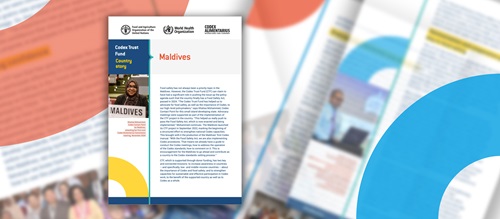
CTF / New success story from the Maldives shows a strengthened national food safety system
A new Success Story published by WHO and FAO demonstrates how support from the Codex Trust Fund (CTF) has helped the Maldives strengthen its national food safety system and improve its effective participation...
-jpg.tmb-thb5x4.jpeg?Culture=en&sfvrsn=73645107_1)
ACT / Cambodia Strengthens Capacity on Costing and Budgeting for its Multi Sectoral Action Plan on AMR
Siem Reap, Cambodia – 25 February 2025 The Food and Agriculture Organization of the United Nations (FAO), through the Action to support implementation of Codex AMR texts (ACT) project funded by the Ministry...
-(cropped).tmb-thb5x4.jpeg?Culture=en&sfvrsn=7dba5d40_1)
ACT / Cambodia strengthens feed inspection capacity to combat antimicrobial resistance
Cambodia is stepping up efforts to curb antimicrobial resistance (AMR) in livestock production by improving the skills of its feed inspectors. From 3–5 December 2025, the Food and Agriculture Organization...
CAC48 / Coming soon: a new standard for Codex, thanks in part to the Codex Trust Fund
The Codex Trust Fund (CTF) is facing challenges that may mean it will have to be restructured, changed, re-thought. But this should not detract from the incredible impacts that it has been and still is...
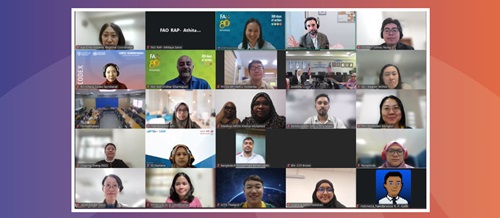
Regional workshop strengthens use of the Codex online commenting system in Asia
Building on the positive momentum following the 23rd Session of the FAO/WHO Coordinating Committee for Asia (CCASIA23), the FAO Regional Office for Asia and the Pacific (FAO RAP) under the regional project...
.tmb-thb5x4.jpeg?Culture=en&sfvrsn=9761ba6a_1)
Codex Trust Fund strengthens regional capacity in South Asia
Guwahati, Assam, 17 October 2025 The Codex Committee on Spices and Culinary Herbs (CCSCH) agreed at its 8th session, held 13–17 October, to forward the standard for large cardamom for adoption. The success...