


The Caribbean strengthens its commitment to Codex
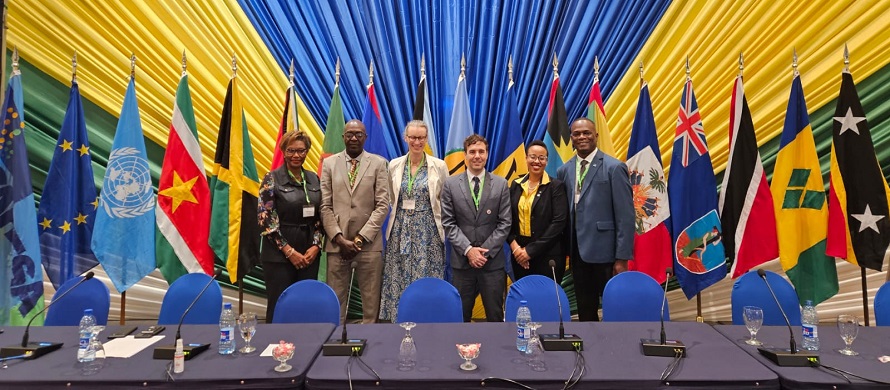
The Government of Suriname hosted the Conference of the Caribbean Food Safety Task Force 10–12 September 2024, where more than one hundred participants from across the food chain in the region, including policymakers, international technical experts, Codex Contact Points, members of the Caribbean Food Safety Task Force, and representatives from the food industry, gathered in the country’s capital, Paramaribo.
The focus of the meeting was "Food Safety in a Changing Climate: Safe Food, Healthy People, Stronger Communities". This event was jointly organized by the Caribbean Agricultural Health and Food Safety Agency (CAHFSA) and the Food and Agriculture Organization (FAO), through the European Union-funded Suriname Agriculture and Market Access Project (SAMAP).
One of the thematic areas of the meeting looked at how to increase engagement of Caribbean countries in Codex. These ‘Codex Engagement’ sessions highlighted why it is vital for the Caribbean nations to participate in Codex and offered practical advice on where to start and how to contribute effectively. The sessions walked the participants through the steps of how to prepare effectively for Codex meetings, the expectations of delegates at the Codex meetings, and the necessary follow-up activities needed once delegates are back in their respective countries.
Gavin Peters, the CEO of CAHFSA, emphasized CAHFSA's evolving role in the Codex framework. “CAHFSA became a Codex Observer in 2015. In this capacity, we are dedicated to adding value to Codex and facilitating events that advocate for Codex participation among our members,” he said.
Diego Varela, Vice-Chairperson of Codex, echoed the significance of observer participation in Codex. “Observers are crucial to Codex as they bring their expertise and local knowledge to the table. In the case of CAHFSA, their work in the Caribbean region is particularly valuable, linking food safety with plant health and animal health. This 'One Health' approach that CAHFSA embodies is exactly the kind of contribution that brings value to Codex.”
Cornelia Boesch, FAO Food Safety Officer, highlighted the importance of Codex to endeavours in the region: “It is great to see FAO prioritizing the Caribbean in building strong national food control systems with partners. Engaging in Codex processes is key to FAO's food safety efforts in the region,” she commented.
The conference also offered an opportunity to review the progress of the Codex Trust Fund (CTF), with Michael Hinsch, Coordinator of the Trust Fund, leading the discussion on how the CTF could assist Caribbean countries in enhancing their food safety systems. André Santos of the Pan American Health Organization (PAHO)/WHO also joined in to provide country specific CTF-funded results from the region. Additionally, the Codex sessions also featured insights from Sarah Cahill, Secretary of the Codex Alimentarius Commission, and Alfred Barrett from Jamaica, who shared Jamaica’s experiences and successes within Codex.
As the Caribbean Food Safety Task Force continues its work, the continued coordination between partners such as FAO, PAHO/WHO and other regional partners will undoubtedly strengthen the region's contribution to global food safety standards through the Codex Alimentarius.
Read more
The Codex Trust Fund website
News from the region
Photo © FAO
Related content
Strengthening Grenada's voice in global food standards
by the Codex Contact Point of Grenada On 5 June 2026, the Grenada Bureau of Standards hosted a training session for members of the National Codex Committee and the GDBS team, facilitated by Giuseppe...
.tmb-thb5x4.jpeg?Culture=en&sfvrsn=4561bf2b_1)
ACT / Colombia and the Plurinational State of Bolivia strengthen antimicrobial resistance surveillance
Colombia and the Plurinational State of Bolivia are stepping up efforts to tackle antimicrobial resistance (AMR), one of the world’s most pressing health threats, by strengthening laboratory surveillance...
.tmb-thb5x4.jpeg?Culture=en&sfvrsn=d6cd33d9_1)
ACT / Surveys in Latin America provide key recommendations for increased awareness about foodborne AMR
One of the aims of the Action to support implementation of Codex AMR texts (ACT) project is to raise awareness among stakeholders along the food production chain, about the need for responsible and prudent...
.tmb-thb5x4.jpeg?Culture=en&sfvrsn=8634eb_1)
ACT / Bolivian authorities forge ahead with the introduction of e-prescriptions for veterinary antimicrobials
Great progress was made in the fight against antimicrobial resistance (AMR) in the Plurinational State of Bolivia at the end of January, when officials and professionals met to agree on next steps for...
Fresh perspectives: an interview with the new Chairperson of CCFFV23
Members and Observers from over 30 countries will meet in Mexico City, Mexico, from 25 February to 1 March 2025 to develop standards at the 23rd session of the Codex Committee on Fresh Fruits and Vegetables...
Simulation of a Codex meeting: the value of practical experience
by the Codex Contact Point of Chile A simulation of a session of the Codex Committee on Cocoa Products and Chocolate (CCCPC) was held on 12 December 2024 at the FAO Regional Office for Latin America and...
“Codex and a Honduran emergency” – New Codex video out now
With the growth in the international trade in food comes the need to be able to prevent, detect and manage foodborne diseases across borders. Foodborne diseases can occur even when there are robust food...
Jamaica expert recounts the benefits of participating in Codex standards setting
When implemented, Codex standards facilitate fair practices in the food trade and protect consumer health. It is therefore expedient for countries to be able to participate in the standards setting processes....

WAAW/ Meet the coordinator of the ACT project in Latin America and the Caribbean region
María de los Angeles Gatica is the regional coordinator for the Action to support implementation of Codex AMR texts (ACT) project, which helps countries contain foodborne antimicrobial resistance (AMR)....