


FAO/WHO Coordinating Committee for Latin America & the Caribbean (CCLAC)
About CCLAC
In 1976 a Coordinating Committee for Latin America, established by the 10th Codex Alimentarius Commission (CAC) in 1974, held its first meeting in Rome with eight countries from the region in attendance. At its third session a proposal was made to change the name of the Committee to its current form, Coordinating Committee for Latin America and the Caribbean (CCLAC), as this better reflected the membership of the region. In 1984 at its 31st session, the Executive Committee of the Codex Alimentarius Commission, acting on behalf of the Commission, agreed to this change.
The CCLAC region is important to the production and trade of food at a global level. The region produces enough food to supply itself and to export, with both water and land resources to produce even more.
The region has enormous natural wealth, a flourishing agricultural industry and a family farming sector that is essential for its population. The promotion and strengthening of food safety must be continued at the level of all regions to guarantee the health of consumers and fair and equitable trade.
Coordinator: Uruguay
Uruguay, through the Ministry of Industry, Energy and Mining, is the current CCLAC coordinator. In this role, Uruguay promotes the inclusive and sustained participation of the countries of the region in the work of Codex, fostering technical dialogue, regional cooperation and consensus building.
In line with the objectives of the Codex Strategic Plans, including the periods 2020–2025 and 2026–2031, Uruguay actively collaborates to achieve regional goals. This is achieved through capacity building, promoting the use of Codex texts, providing technical support to Member Countries, and coordinating with international organizations. In addition, Uruguay promotes the need to address emerging challenges in food safety and quality, promoting integrative approaches such as ‘One Health’ and more effective participation by developing countries in CAC and its subsidiary bodies.
News from the region
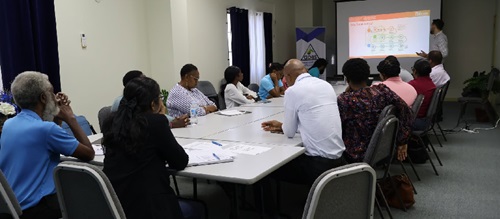
Strengthening Grenada's voice in global food standards
by the Codex Contact Point of Grenada On 5 June 2026, the Grenada Bureau of Standards hosted a training session for members of the National Codex Committee and the GDBS team, facilitated by Giuseppe...
.tmb-thb5x4.jpeg?Culture=en&sfvrsn=4561bf2b_1)
ACT / Colombia and the Plurinational State of Bolivia strengthen antimicrobial resistance surveillance
Colombia and the Plurinational State of Bolivia are stepping up efforts to tackle antimicrobial resistance (AMR), one of the world’s most pressing health threats, by strengthening laboratory surveillance...
.tmb-thb5x4.jpeg?Culture=en&sfvrsn=d6cd33d9_1)
ACT / Surveys in Latin America provide key recommendations for increased awareness about foodborne AMR
One of the aims of the Action to support implementation of Codex AMR texts (ACT) project is to raise awareness among stakeholders along the food production chain, about the need for responsible and prudent...
.tmb-thb5x4.jpeg?Culture=en&sfvrsn=8634eb_1)
ACT / Bolivian authorities forge ahead with the introduction of e-prescriptions for veterinary antimicrobials
Great progress was made in the fight against antimicrobial resistance (AMR) in the Plurinational State of Bolivia at the end of January, when officials and professionals met to agree on next steps for...
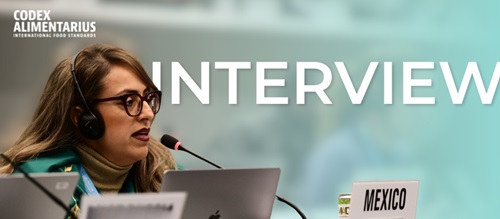
Fresh perspectives: an interview with the new Chairperson of CCFFV23
Members and Observers from over 30 countries will meet in Mexico City, Mexico, from 25 February to 1 March 2025 to develop standards at the 23rd session of the Codex Committee on Fresh Fruits and Vegetables...
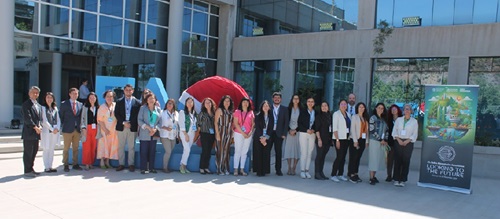
Simulation of a Codex meeting: the value of practical experience
by the Codex Contact Point of Chile A simulation of a session of the Codex Committee on Cocoa Products and Chocolate (CCCPC) was held on 12 December 2024 at the FAO Regional Office for Latin America and...
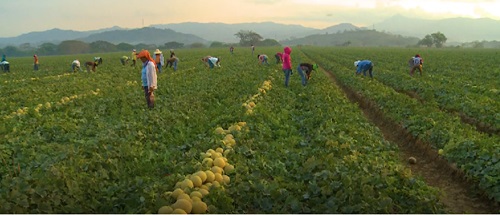
“Codex and a Honduran emergency” – New Codex video out now
With the growth in the international trade in food comes the need to be able to prevent, detect and manage foodborne diseases across borders. Foodborne diseases can occur even when there are robust food...
Jamaica expert recounts the benefits of participating in Codex standards setting
When implemented, Codex standards facilitate fair practices in the food trade and protect consumer health. It is therefore expedient for countries to be able to participate in the standards setting processes....
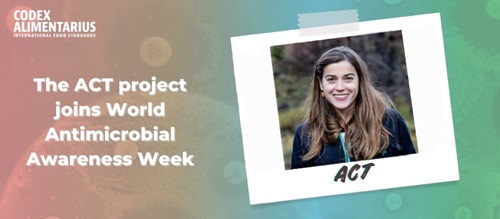
WAAW/ Meet the coordinator of the ACT project in Latin America and the Caribbean region
María de los Angeles Gatica is the regional coordinator for the Action to support implementation of Codex AMR texts (ACT) project, which helps countries contain foodborne antimicrobial resistance (AMR)....
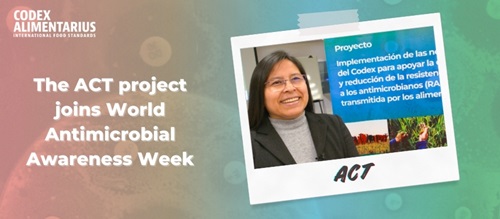
WAAW/ ACT project is helping the Plurinational State of Bolivia tackle the threat of foodborne AMR
The FAO-implemented and Republic of Korea-funded Action to support implementation of Codex AMR texts (ACT) project is being carried out in six countries, of which one is the Plurinational State of Bolivia....
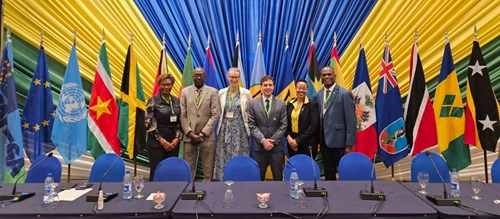
The Caribbean strengthens its commitment to Codex
The Government of Suriname hosted the Conference of the Caribbean Food Safety Task Force 10–12 September 2024, where more than one hundred participants from across the food chain in the region, including...
ACT/ New success story published!
A new success story has been published highlighting some achievements of the Action to support implementation of Codex AMR texts (ACT) project in the Plurinational State of Bolivia. The ACT project is...
.tmb-thb5x4.jpeg?Culture=en&sfvrsn=d13a5724_1)
CCLAC23/ Meeting concludes successfully from the “centre of the world!”
The Coordinating Committee for the Latin America and Caribbean region has concluded its 23rd session with the adoption of its report and agreement on a number of key points. Opening the final session,...
.tmb-thb5x4.jpeg?Culture=en&sfvrsn=4619b57a_1)
CCLAC23/ Coordinating Committee for Latin America and the Caribbean to address “vital agenda”
The 23rd session of the Coordinating Committee for Latin America and the Caribbean (CCLAC) has opened in a virtual session hosted by the Regional Coordinator, Ecuador. Opening remarks were offered by guests...
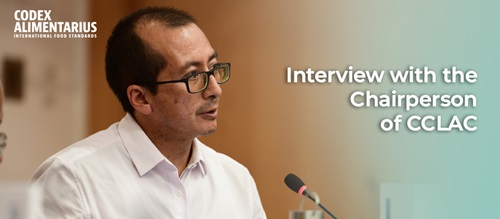
CCLAC23 / "Proud to have been able to work with the region in a strong and dynamic way"
The 23rd session of the FAO/WHO Coordinating Committee for Latin America and the Caribbean (CCLAC23) will take place virtually, 22-26 July 2024. As Members and Observers prepare for the meeting, we sat...
.tmb-thb5x4.jpeg?Culture=en&sfvrsn=b1f0859e_1)
ACT/ Regional meeting in Latin America reviews successes and agrees on future plans
The key actors in the FAO-implemented and Republic of Korea-funded Action to support implementation of Codex AMR Texts (ACT) project met for state-of-the-project discussions in the Plurinational State...
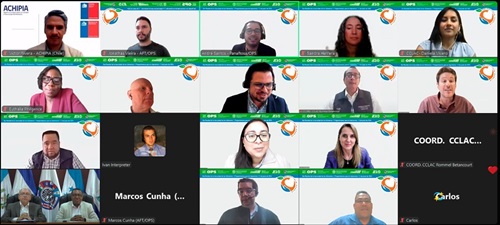
The CCLAC region celebrates World Food Safety Day 2024
For the fourth consecutive year, the Regional Office of the Food and Agriculture Organization of the United Nations (FAO RLC), the Pan American Center for Foot and Mouth Disease and Veterinary Public Health...

New International FAO Antimicrobial Resistance System (InFARM) launched and call for data announced-2
FAO has launched its ambitious and wide-ranging global information system aimed at developing and strengthening operational national surveillance systems so they can efficiently contribute to generating...

New International FAO Antimicrobial Resistance System (InFARM) launched and call for data announced
FAO has launched its ambitious and wide-ranging global information system aimed at developing and strengthening operational national surveillance systems so they can efficiently contribute to generating...

Codex goes for true blue
Codex texts impact positively on consumer health and the international food trade when they are applied and used to guide food safety authorities and food businesses on good practices and safe maximum...
CCLAC Coordinator
All information on Codex is public and free. For regional enquiries contact:
CCLAC Secretariat
Ministry of Industry, Energy and Mining
Montevideo
Email: cclac.uruguay@gmail.com